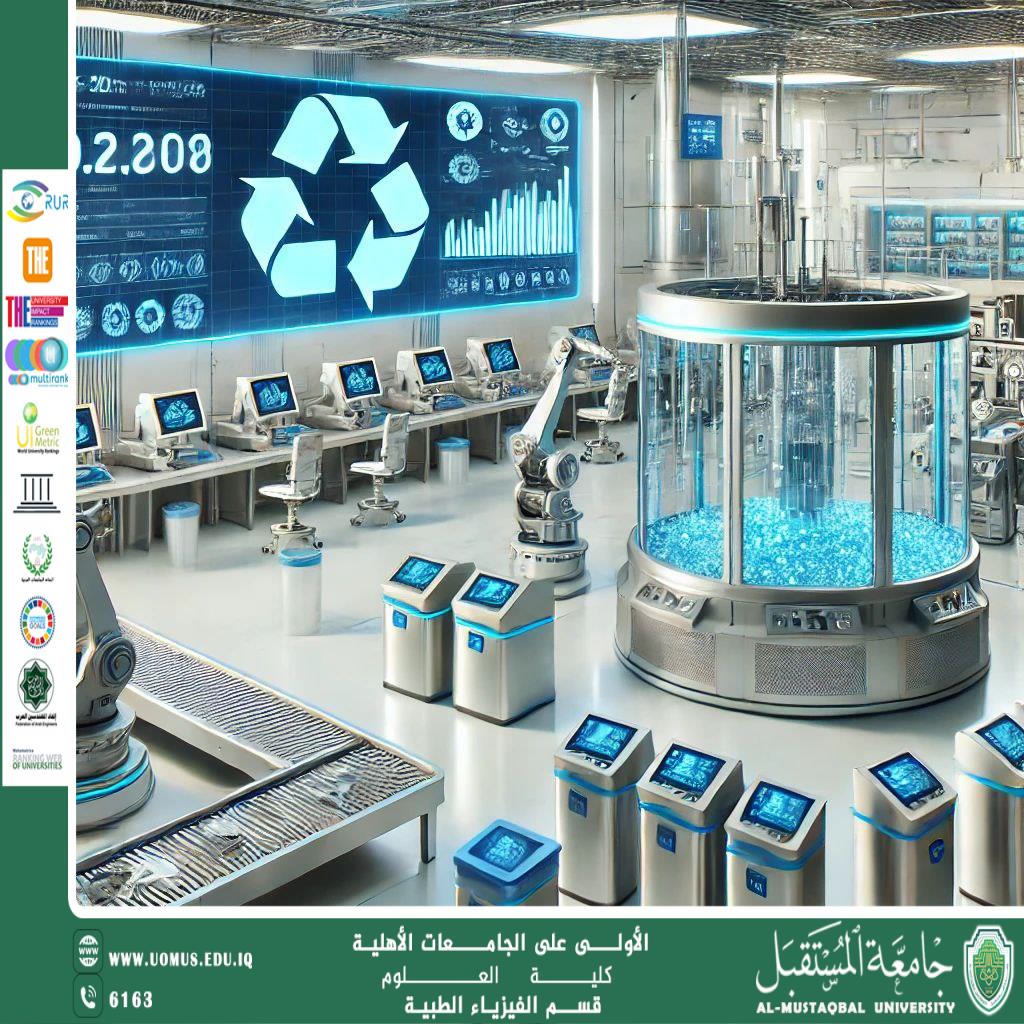
Recycling Medical Materials: An Environmental Solution or Just a Band-Aid? By: Assistant Lecturer Mohammed Jamal Aswad
10/03/2025 Share :
<br />Introduction<br />With the growing interest in environmental sustainability, the management of medical waste has become a significant issue that requires effective solutions. Hospitals and healthcare facilities generate vast amounts of waste daily, including plastics, glass, metals, and chemicals. Recycling these materials appears to be a promising solution—but is it truly an effective environmental remedy or merely a temporary fix to reduce environmental impact?<br /><br />Medical Waste: A Growing Problem<br />Medical waste includes various materials, such as:<br /><br />Plastic tools: syringes, gloves, and lab tubes.<br /><br />Metals: needles, surgical instruments, and some medical devices.<br /><br />Chemical substances: expired medications and medical solutions.<br /><br /><br />Due to their nature, these materials require special handling, as they may be contaminated or pose health and environmental risks if not disposed of properly.<br /><br />Recycling Medical Waste: Possibilities and Challenges<br /><br />Recycling Opportunities:<br /><br />1. Medical plastic recycling: Non-contaminated medical plastics can be sterilized and reused to manufacture new products.<br /><br /><br />2. Reusing metals: Metals used in medical equipment can be melted down and reformed into new tools.<br /><br /><br />3. Glass recycling: Some vials and glass tubes can be reused after sterilization.<br /><br /><br /><br />Challenges:<br /><br />1. Biological contamination: Much of the medical waste is contaminated with blood or chemicals, making recycling complex and hazardous.<br /><br /><br />2. High costs: Sterilization and recycling processes require advanced technologies and high operating costs.<br /><br /><br />3. Lack of infrastructure: Not all countries have specialized facilities for safe medical waste recycling.<br /><br /><br /><br />Recycling: An Environmental Solution or Just a Temporary Fix?<br />If implemented properly, recycling medical materials can reduce the amount of hazardous waste and decrease the need for producing new materials, helping conserve natural resources.<br />However, in some cases, recycling is merely a "temporary fix" that does not address the core issue, as not all biological risks are eliminated, and hazardous waste remains a health concern.<br /><br />Alternatives and Proposed Solutions<br /><br />Reducing the use of single-use materials by promoting reusable and sterilizable alternatives.<br /><br />Improving recycling technologies to minimize contamination and increase processing efficiency.<br /><br />Raising awareness and strengthening legislation to ensure strict standards in medical waste management.<br /><br /><br />Conclusion<br />Recycling medical waste can be part of the solution, but it is not the ultimate answer. It should be part of a broader strategy that includes reducing consumption, developing safer technologies, and enhancing sustainable waste management practices. True environmental solutions require a comprehensive vision that goes beyond recycling toward adopting more sustainable and safer systems.<br />"AL_mustaqbal University is the first university in Iraq"