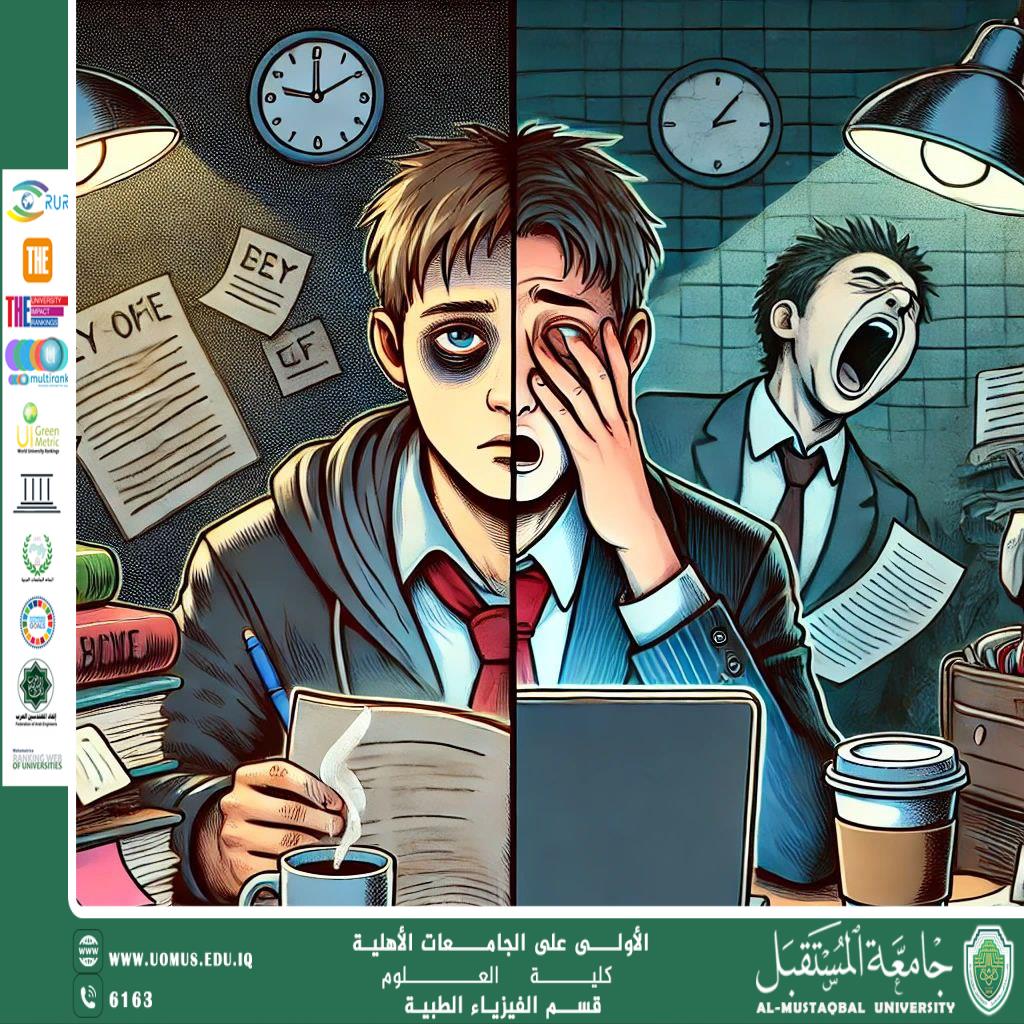
**How Does Staying Up Late Affect Academic and Professional Performance?** *By: Assistant Lecturer Hassan Hadi Saleh*
10/03/2025 Share :
Introduction<br /><br />Sleep is essential for maintaining both physical and mental health. However, in today’s fast-paced world, many students and employees sacrifice sleep to complete tasks, meet deadlines, or enjoy leisure activities. While staying up late may seem like a solution to time constraints, it negatively impacts academic and work performance. In this article, we will explore how sleep deprivation affects concentration, productivity, learning ability, and decision-making.<br /><br />1. The Impact of Staying Up Late on Academic Performance<br /><br />A. Reduced Focus and Attention<br /><br />Lack of sleep impairs brain function, making it difficult to concentrate and stay attentive during lectures or study sessions. Research shows that sleep deprivation decreases activity in the prefrontal cortex, which is responsible for problem-solving and critical thinking.<br /><br />B. Poor Memory and Learning Ability<br /><br />During sleep, the brain processes and consolidates information received throughout the day, strengthening memory and learning. Staying up late disrupts this process, making it harder to recall information during exams.<br /><br />C. Lower Academic Achievement<br /><br />Studies have found that students who regularly stay up late tend to have lower grades than those who get enough sleep. Sleep deprivation affects problem-solving skills, reading comprehension, and overall academic performance.<br /><br />2. The Impact of Staying Up Late on Work Performance<br /><br />A. Decreased Productivity and Creativity<br /><br />Adequate sleep enhances creativity and problem-solving skills, while sleep deprivation leads to mental fatigue, reducing efficiency and work quality. Employees who stay up late often struggle to complete tasks effectively.<br /><br />B. Increased Errors and Workplace Accidents<br /><br />Lack of sleep weakens coordination and decision-making, increasing the likelihood of mistakes and accidents, especially in jobs requiring precision, such as medicine, engineering, and driving.<br /><br />C. Strained Workplace Relationships<br /><br />Sleep deprivation can cause irritability and stress, leading to conflicts with colleagues and affecting teamwork and communication.<br /><br />3. How to Overcome Staying Up Late and Improve Performance<br /><br />Maintain a consistent sleep schedule to regulate the body’s internal clock and improve sleep quality.<br /><br />Avoid electronic devices before bedtime since blue light disrupts melatonin production, which is essential for sleep.<br /><br />Balance study/work and relaxation time to prevent task overload that leads to staying up late.<br /><br />Exercise regularly to reduce stress and promote better sleep.<br /><br />Adopt a healthy diet by avoiding caffeine and stimulants in the evening.<br /><br /><br />Conclusion<br /><br />While staying up late may seem beneficial for getting things done, it has long-term negative effects on academic and work performance. Sleep is not a luxury but a necessity for maintaining focus, productivity, and overall well-being. Developing healthy sleep habits is crucial for success in both education and career.<br /><br />"AL_mustaqbal University is the first university in Iraq"