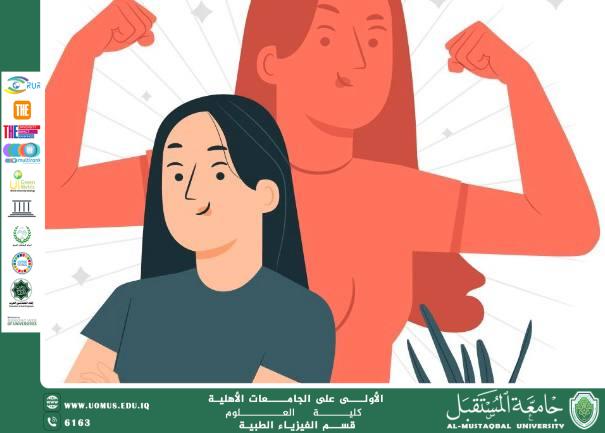
"Self-Fabrication and Self-Love" – A Scientific Article by Assistant Lecturer (Iftikhar Thamer Kamel)
18/03/2025 Share :
Introduction:<br />Since ancient times, philosophers and thinkers have been concerned with the concept of “self-love,” considering it a fundamental pillar of internal happiness and psychological stability. In modern times, psychology has approached this subject from a more scientific and objective perspective. One of the concepts that emerged in this context is “self-creation” or “self-representation,” which refers to an individual’s ability to shape and redefine themselves in ways that contribute to enhancing their self-image and self-love.<br /><br />Self-Creation: Its Concept and Applications<br />Self-creation is the process by which an individual relies on a set of thoughts and beliefs that shape their perceptions of themselves. This process is not only related to physical appearance or actual abilities, but also includes how a person views themselves in their social and professional relationships. Self-creation intersects with concepts like self-confidence, self-esteem, and social communication, where individuals actively participate in constructing their identity in ways that may be conscious or unconscious.<br /><br />Self-Love: Psychological and Physiological Aspects<br />Self-love is the respect and acceptance that an individual has for themselves, regardless of external circumstances. It is considered a fundamental element for mental health and overall well-being. According to psychological theories, self-love involves the ability to recognize one’s values and care for both body and mind, contributing to the development of psychological resilience. Self-love is also the foundation for self-creation, as individuals with a positive self-image are more capable of effectively dealing with life’s challenges.<br /><br />Self-Creation and Self-Love: The Interactive Relationship<br />The relationship between self-creation and self-love is interactive and complex. When a person is aware of their strengths and abilities, they can enhance their self-confidence, which in turn fosters feelings of self-love. Conversely, self-love can improve one’s self-image, thus reinforcing the ability to engage in self-creation. It is important to note that this process can be influenced by culture and society, as social norms may dictate how an individual should “love” themselves or exhibit positive feelings toward their own being.<br /><br />Self-Creation in the Digital Age<br />In modern times, with the advent of social media and technology, self-creation has become more complex. Individuals tend to present idealized images of themselves on digital platforms, which can affect feelings of self-love in both positive and negative ways. On one hand, these platforms can enhance social interaction and communication, but on the other hand, they may create unrealistic standards that lead to dissatisfaction with oneself.<br /><br />Conclusion:<br />In conclusion, self-creation and self-love are intertwined aspects of mental health and personal development. Self-creation reflects an individual’s ability to develop and grow in the face of life’s challenges, while self-love refers to self-acceptance and enhancement. To achieve a healthy balance between the two, individuals need to maintain continuous awareness of their self-concept and the challenges they may face in building their personal identity.<br />"AL_mustaqbal University is the first university in Iraq"