
Types of foundations and their role in the stability of buildings
23/03/2025 Share :
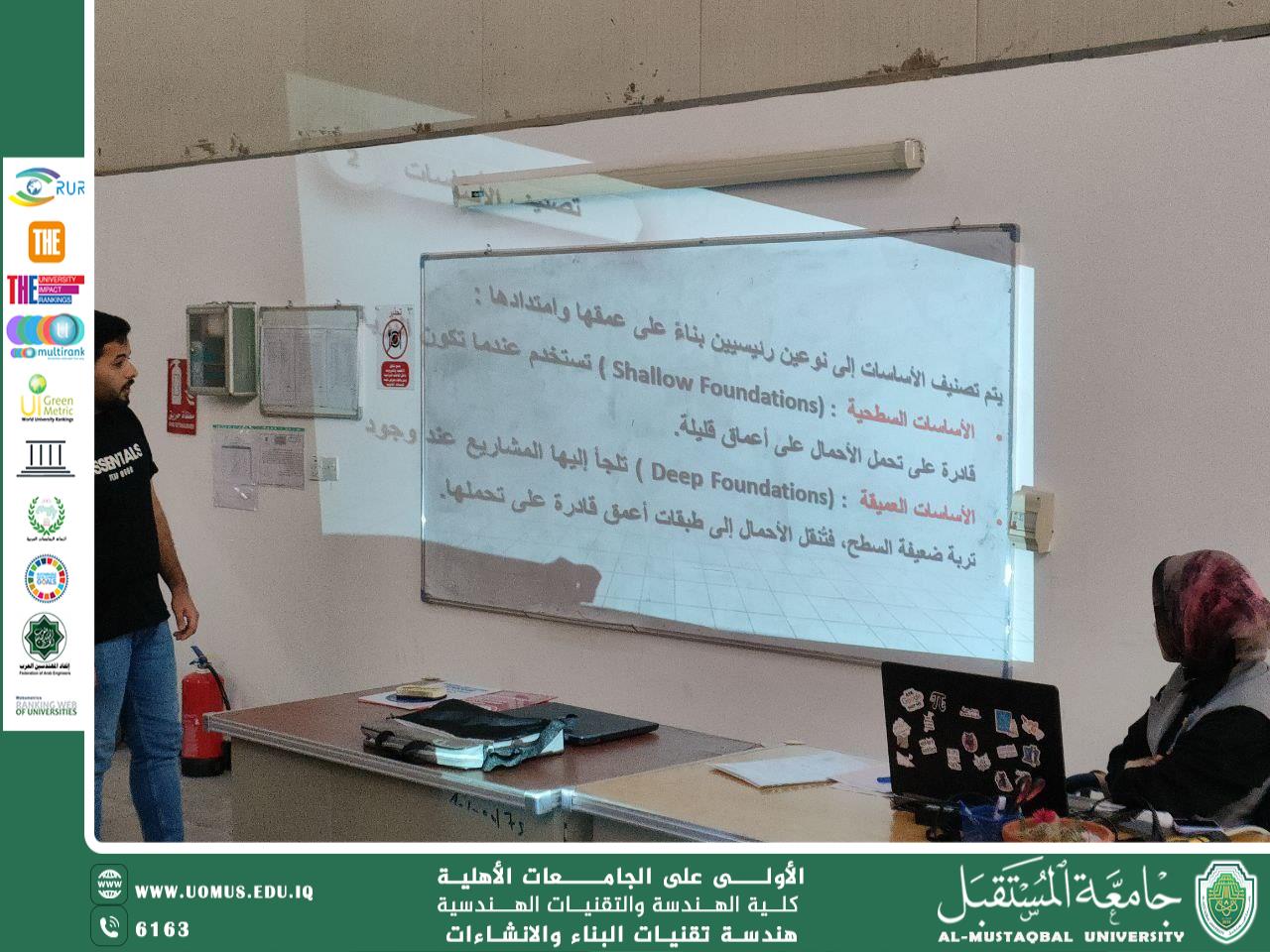
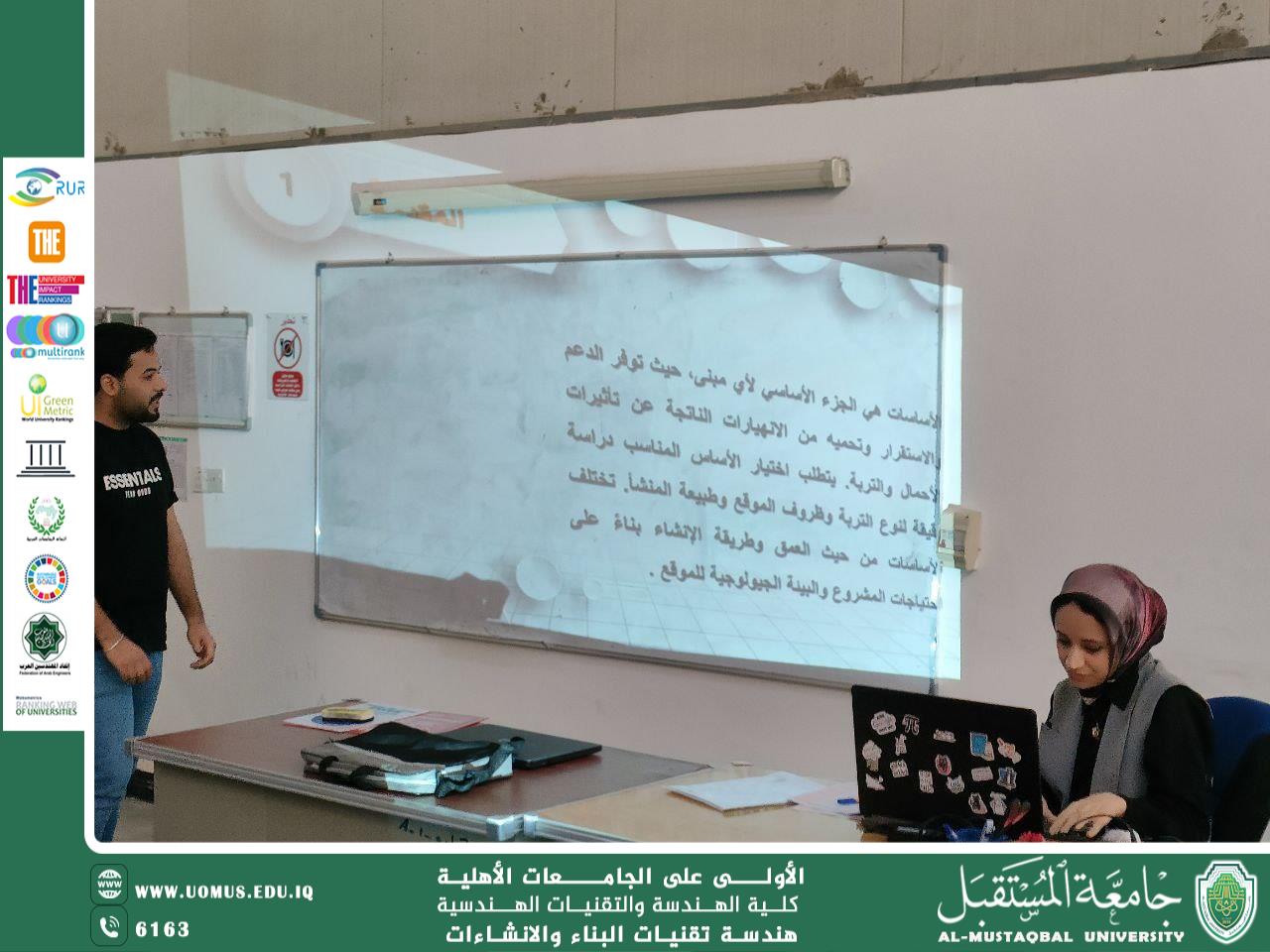
Under the supervision of the Head of the Civil and Construction Engineering Department and in alignment with the fourth goal of the Sustainable Development Goals (Quality Education), Lecturer Noora Fawzi organized an awareness activity titled "Types of Foundations and Their Role in Building Stability."<br /><br />Foundations are the fundamental component of any structure, providing support, stability, and protection against collapses caused by loads and soil conditions. Choosing the appropriate foundation requires careful study of soil type, site conditions, and the nature of the structure. Foundations vary in depth and construction method depending on project needs and geological conditions. They are classified into two main types based on their depth and extension:<br /><br />Types of Foundations<br />1. Shallow Foundations<br />Shallow foundations are used when the soil can bear the structure's loads at relatively shallow depths.<br /><br />Strip Foundation: Used to support continuous walls.<br /><br />Isolated Foundation: Designed to support individual columns.<br /><br />Slab and Beam Foundation: A combination of strip and isolated foundations, used for weak soil conditions to enhance stability.<br /><br />2. Deep Foundations<br />Deep foundations are necessary when the surface soil is weak, requiring the transfer of loads to deeper, more stable soil layers.<br /><br />Pile Foundations: Used to support buildings in areas with weak soil or when deep support is required.<br /><br />Caisson Foundations: Used in water or locations that require deep foundations to support structures effectively.<br /><br />Conclusion<br />Selecting the right type of foundation is essential to ensure the stability and safety of buildings. Whether shallow or deep, foundations play a crucial role in distributing structural loads and maintaining the integrity of constructions across different environments.<br /><br />University of Al-Mustaqbal – The First University in Iraq