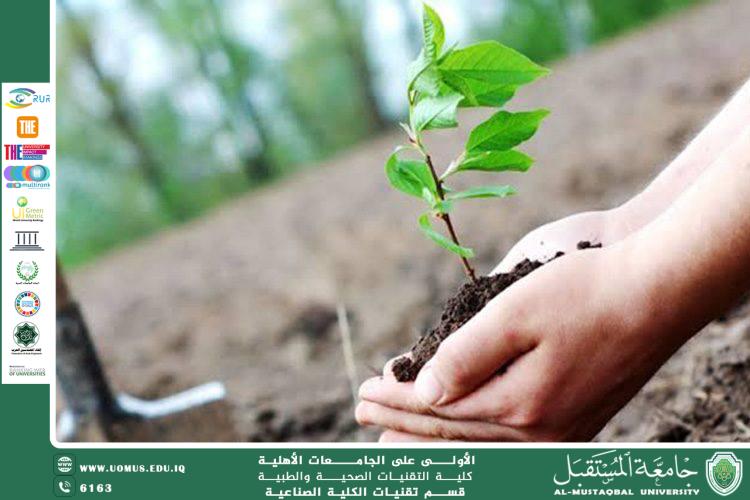
The Importance of Afforestation in Protecting the Environment
29/03/2025 Share :
Tabarak Ahmed Turki <br /> Bachelor of Science in Administrative Sciences / Business Administration<br />Introduction<br /><br />Afforestation is one of the most important environmental solutions to tackle the challenges facing the Earth, such as climate change, pollution, and the degradation of natural resources. Trees are not just living beings that beautify landscapes, but they play a vital role in maintaining ecological balance and enhancing the sustainability of life on Earth.<br /><br />1. Improving Air Quality<br /><br />Trees represent a natural air purification system. They absorb harmful carbon dioxide and release oxygen, which is essential for life. Trees also help reduce levels of air pollutants such as particulate matter and carbon monoxide, thus contributing to better air quality.<br /><br />2. Combating Climate Change<br /><br />Trees are effective in reducing greenhouse gas emissions that contribute to global warming. By absorbing carbon from the atmosphere, trees work to mitigate the effects of climate change. Planting trees in large areas can have a significant impact on reducing global temperature increases.<br /><br />3. Soil Protection and Combating Desertification<br /><br />One of the most important benefits of afforestation is strengthening the soil and protecting it from erosion. The roots of trees help anchor the soil, reducing its erosion due to wind and rain. This is particularly important in arid regions that suffer from desertification, as trees help restore soil balance and increase its fertility.<br /><br />4. Supporting Biodiversity<br /><br />Trees provide a natural habitat for many living creatures, including animals, birds, and insects, which helps maintain biodiversity. Forests, for example, are home to millions of species that rely on trees for food and shelter.<br /><br />5. Reducing Noise Pollution<br /><br />Trees can act as natural barriers against noise in urban areas, helping to reduce the noise generated by traffic and factories. This contributes to creating a quieter and healthier environment, especially in large cities.<br /><br />6. Promoting Public Health<br /><br />Areas with many trees and green spaces contribute to improving the mental and physical health of individuals. Being in a green environment can reduce stress and anxiety, encourage outdoor activities, and promote physical fitness and general well-being.<br /><br />Conclusion<br /><br />Afforestation is not just about planting trees; it is a long-term investment in the sustainability of the environment and the health of our planet. By promoting afforestation worldwide, we can help reduce pollution, mitigate climate change, and preserve biodiversity. Therefore, everyone must participate in this environmental effort to ensure a better and more sustainable future for generations to come.<br /><br />University of Al-Mustaqbal , the First in Iraq<br/><br/><a href=https://www.linkedin.com/school/uomus/posts/?feedView=all target=_blank>linkedin of Al-Mustaqbal University</a>