The Role of Individuals in Achieving Sustainability: A Collective Responsibility for a Sustainable Future artical by Mohammad jamal
03/04/2025 Share :
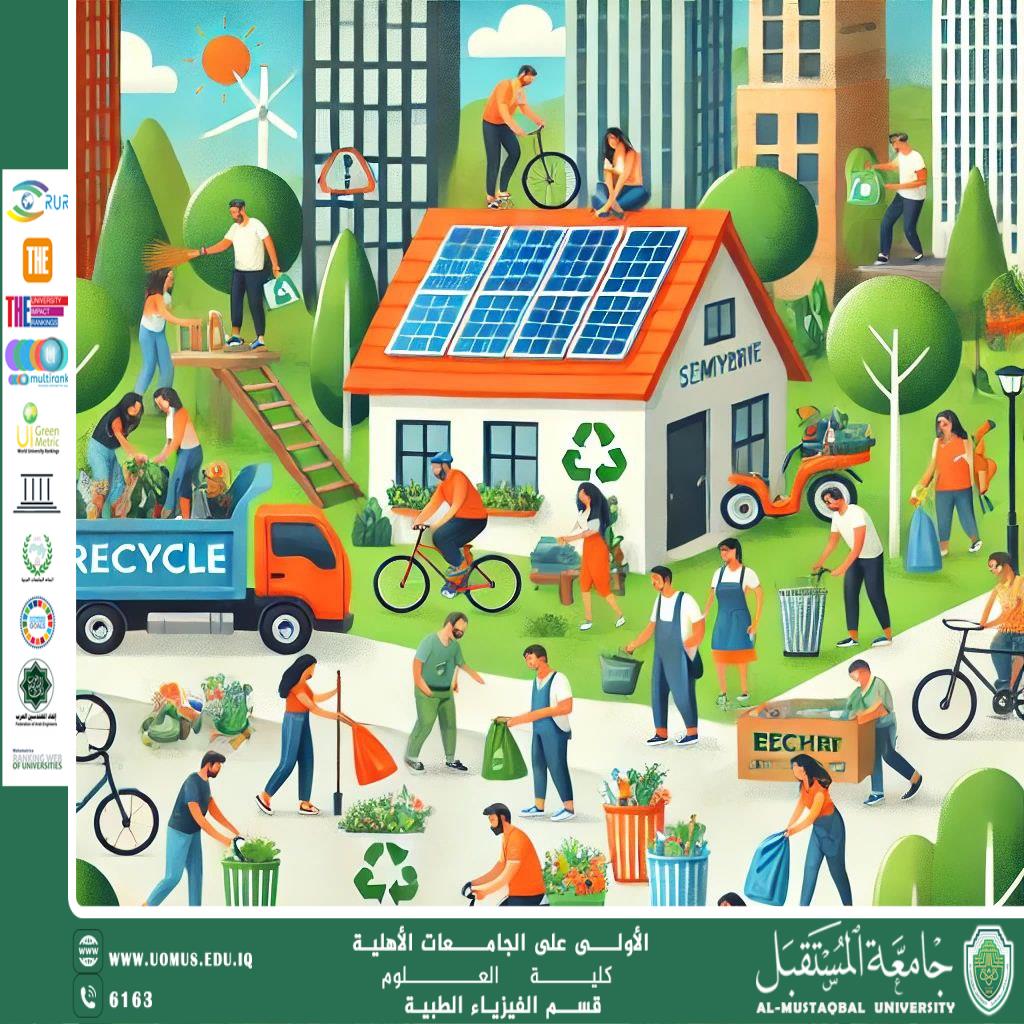
<br />Introduction<br /><br />Sustainability is a fundamental concept that aims to meet the needs of present generations without compromising the ability of future generations to meet their own needs. While governments and businesses play a pivotal role in adopting sustainable policies and practices, individuals are a crucial element in achieving sustainability. Individuals' daily practices, whether in resource consumption, waste management, or lifestyle choices, contribute significantly to environmental conservation and sustainable development.<br /><br />The Importance of Individuals in Achieving Sustainability<br /><br />Individuals directly and indirectly impact the environment through their daily activities. Therefore, adopting more sustainable habits can make a significant difference at the community and global levels. This includes reducing pollution, decreasing resource consumption, and promoting a circular economy based on reuse and recycling.<br /><br />Areas where Individuals Contribute to Sustainability<br /><br />1. Conscious Consumption of Resources<br /><br />Reducing water use by avoiding waste and repairing leaks.<br /><br />Reducing energy consumption by using energy-efficient appliances and turning off unused appliances.<br /><br /> Choose sustainable transportation methods such as walking, cycling, or using public transportation instead of private cars.<br /><br />2. Reduce Waste and Recycle<br /><br />Adopt the "Reduce, Reuse, Recycle" (3Rs) principle.<br /><br />Avoid products with excessive plastic packaging.<br /><br />Separate organic waste from recyclables to support efficient recycling processes.<br /><br />3. Adopt Sustainable Consumption Patterns<br /><br />Support local and sustainable products that rely on responsible sources.<br /><br />Choose clothing made from recycled or organic materials to reduce pollution caused by the fast fashion industry.<br /><br />Reduce meat consumption and adopt a more sustainable diet, such as increasing plant-based foods.<br /><br />4. Participate in Environmental and Community Initiatives<br /><br />Volunteer in beach and park clean-ups.<br /><br />Support environmental organizations and promote sustainable practices in the community.<br /><br />Raise awareness among friends and family about the importance of environmental conservation.<br /><br />5. Invest in Renewable Energy<br /><br />Install solar panels in homes if possible.<br /><br />Use energy-efficient light bulbs such as LEDs.<br /><br /> Reducing fossil fuel consumption by supporting environmental policies and encouraging governments to use clean energy sources.<br /><br />Challenges Facing Individuals in Achieving Sustainability<br /><br />Despite the significant benefits of sustainable practices, individuals face challenges such as the high costs of some sustainable products, a lack of awareness of the importance of these practices, and the lack of supporting infrastructure such as advanced recycling systems. However, these obstacles can be overcome by promoting environmental education and motivating governments and companies to provide affordable sustainable solutions.<br /><br />Conclusion<br /><br />Sustainability cannot be achieved through the efforts of governments and companies alone. Rather, it requires the active participation of individuals through adopting sustainable and responsible lifestyles. Every decision an individual makes, no matter how simple, can have a positive impact on the environment and society. Therefore, everyone must adopt sustainable behaviors to ensure a more balanced and sustainable future for future generations.<br />"AL_mustaqbal University is the first university in Iraq"<br/><br/><a href=https://uomus.edu.iq/Default.aspx target=_blank>al-mustaqbal University Website</a>