The impact of space on the human bodys artical By Eftikar Thamer Artical By Fatima Basim
04/04/2025 Share :
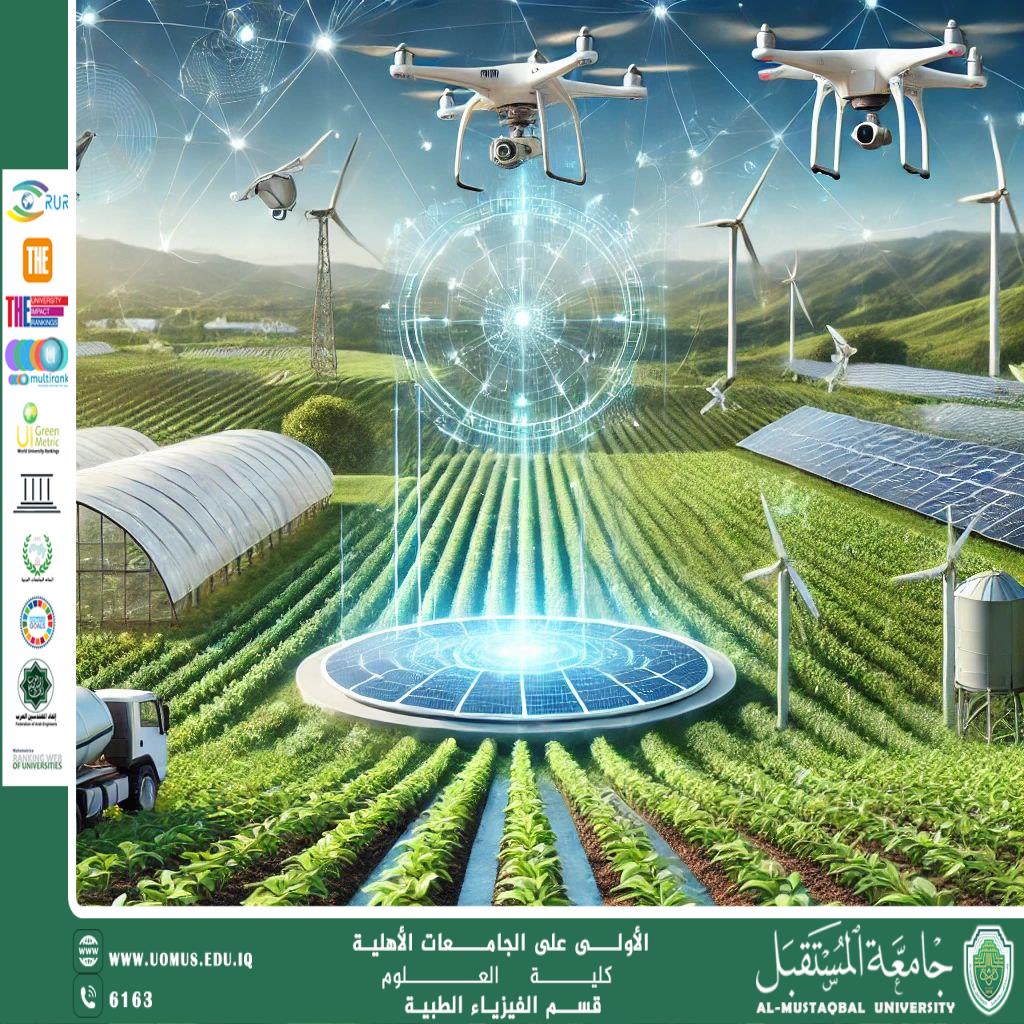
The Role of Physics in Improving Agricultural Efficiency and Reducing Pollution<br /><br />Introduction<br /><br />Physics plays a crucial role in developing modern agricultural techniques, helping to improve productivity while reducing environmental impact. By understanding physical principles, efficient irrigation systems can be designed, fertilizer use can be optimized, and advanced sensing technologies can be developed to monitor soil quality and minimize pollution. This article explores how physics contributes to making agriculture more sustainable and environmentally friendly.<br /><br />1. Physics in Modern Irrigation Systems<br /><br />Water is a vital factor in agricultural production, and using it efficiently helps conserve natural resources. Modern irrigation systems, such as drip and sprinkler irrigation, rely on physical principles related to fluid flow and pressure, allowing precise water distribution and reducing waste. Remote sensing technologies are also used to measure soil moisture levels, ensuring that crops are irrigated only when necessary, thereby reducing water waste and protecting groundwater from contamination.<br /><br />2. Remote Sensing and Soil Analysis<br /><br />Remote sensing technology relies on electromagnetic waves and spectral reflection measurements to analyze soil properties such as moisture levels and nutrient content. With these techniques, farmers can identify areas that require fertilizers and water, minimizing excessive chemical use that could lead to soil and groundwater pollution.<br /><br />3. The Use of Radiation and Ultrasound in Pest Control<br /><br />Ultraviolet radiation and ultrasonic waves can serve as eco-friendly alternatives to chemical pesticides. These technologies disrupt the communication systems of harmful insects or interfere with their life cycles, reducing the need for chemical pesticides that contaminate soil and water and pose health risks to humans.<br /><br />4. Applications of Renewable Energy in Agriculture<br /><br />Many modern farms rely on solar and wind energy to power irrigation systems, lighting, and greenhouse heating. These technologies are based on the physics of energy conversion, helping to reduce dependence on fossil fuels and lowering pollutant emissions.<br /><br />5. Nanotechnology for Enhancing Agricultural Production<br /><br />Physics plays a role in the development of nanotechnology, which is used to create more efficient and environmentally friendly fertilizers and pesticides. Nanoparticles can also be used for water purification, ensuring a clean water supply for irrigation without causing environmental harm.<br /><br />Conclusion<br /><br />Physics has proven to be an essential element in developing sustainable agricultural solutions, contributing to efficient resource use and environmental pollution reduction. By applying physical principles in irrigation, soil analysis, renewable energy, and nanotechnology, agriculture can become more productive and eco-friendly, ensuring the sustainability of resources for future generations.<br />"AL_mustaqbal University is the first university in Iraq"<br/><br/><a href=https://uomus.edu.iq/Default.aspx target=_blank>al-mustaqbal University Website</a>