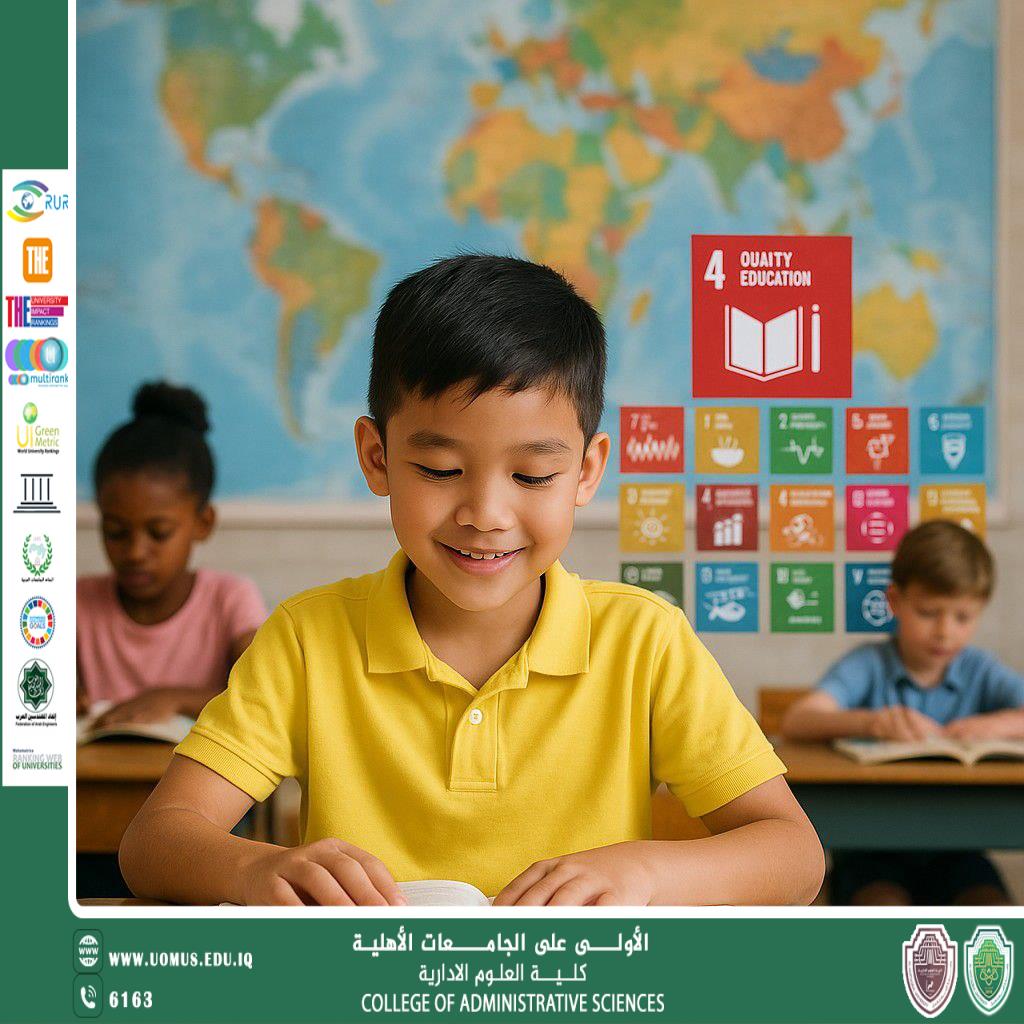
Quality Education as a Foundation for Sustainable Development: Goal 4 Under the Microscope
05/04/2025 Share :
Quality Education as a Foundation for Sustainable Development: Goal 4 Under the Microscope<br />Assistant Professor: Ahmed Mohamed Gawad<br />Faculty of Administrative Sciences- Al-Mustaqbal University <br /><br />Introduction:<br />The Sustainable Development Goals (SDGs), adopted by the United Nations in 2015, represent an ambitious global agenda to eradicate poverty, protect the planet, and ensure prosperity for all by 2030. Goal 4, which aims to "ensure inclusive and equitable quality education and promote lifelong learning opportunities for all," stands as one of the most critical pillars of this agenda due to the central role education plays in empowering individuals, communities, and building sustainable economies.<br />The Importance of Education in the Context of Sustainable Development<br />Education is a key driver of all other sustainable development goals. Quality education goes beyond the transmission of knowledge—it instills values of global citizenship, gender equality, environmental responsibility, and informed decision-making. Educated individuals are more likely to participate effectively in the workforce, enjoy better health outcomes, and engage actively in civic life.<br />Deconstructing Goal 4<br />Goal 4 includes seven key targets and three means of implementation. Among the most significant are:<br />Ensuring free, equitable, and quality primary and secondary education for all.<br />Expanding access to technical and vocational education and training.<br />Eliminating gender disparities and ensuring equal access for all, including persons with disabilities and those in rural areas.<br />Enhancing the quality of teaching through continuous training and professional development.<br />Existing Challenges<br />Despite progress, over 250 million children and youth worldwide remain out of school, and millions more fail to acquire basic literacy and numeracy skills. Major challenges include:<br />Insufficient funding for education, especially in developing countries.<br />The digital divide, which widened during the COVID-19 pandemic.<br />Armed conflicts and forced displacement that disrupt educational continuity.<br />Inaduate infrastructure and a shortage of qualified teachers.<br />Opportunities and Recommendations<br />To achieve Goal 4 by 2030, it is crucial to:<br />Increase investments in education, particularly in fragile contexts.<br />Integrate technology to improve access and quality of learning.<br />Strengthen international cooperation in teacher training and curriculum development.<br />Engage local communities and parents in supporting education.<br /><br />Conclusion<br />Quality education is not merely a stand-alone goal; it is an enabling factor for all other sustainable development objectives. Without strong educational systems, efforts to reduce poverty, achieve equality, ensure health, and protect the environment are significantly undermined. Thus, focusing on Goal 4 and tracking its implementation seriously are essential steps toward a more just and sustainable future.<br />Al-Mustaqbal University is the premier university in Iraq.<br />