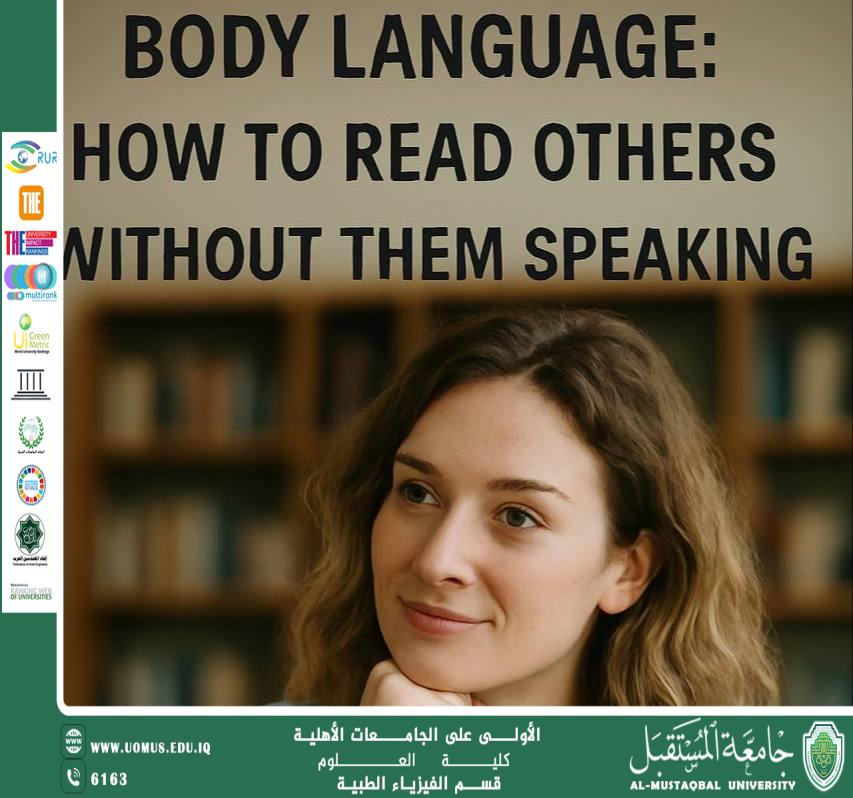
A scientific article by teaching assistant Hanin Hani entitled "Body Language"
08/04/2025 Share :
Body language is a powerful form of non-verbal communication that allows people to express their emotions and thoughts without speaking. Many rely on it to understand others and interact more effectively. In this article, we will explore key body language signals that can help you read people with ease.<br /><br />⸻<br /><br />1. Facial Expressions: The True Mirror of Emotions<br /><br />The face is the first thing we notice when communicating with someone, and it reveals genuine emotions that words may hide. Key facial expressions include:<br /> • A genuine smile: A real smile creates wrinkles around the eyes, showing true happiness. A fake smile, on the other hand, only affects the mouth without engaging the rest of the face.<br /> • Raised eyebrows: This indicates surprise or disbelief and may also signal hesitation.<br /> • Frowning or pressing the lips together: Often a sign of discomfort, concern, or an attempt to hide true feelings.<br /><br />⸻<br /><br />2. Eye Contact: The Window to the Soul<br /><br />Eyes are one of the most expressive parts of the body, and they can reveal much about a person’s intentions:<br /> • Direct eye contact: Indicates confidence and interest, but too much can feel intimidating.<br /> • Avoiding eye contact: May suggest shyness, discomfort, or even dishonesty in some cases.<br /> • Dilated pupils: Often a sign of excitement or deep focus on something interesting.<br /><br />⸻<br /><br />3. Body Posture: The Language of the Subconscious<br /><br />The way a person sits or stands speaks volumes about their state of mind. Some important signals include:<br /> • An open and relaxed posture: Suggests confidence and comfort.<br /> • Crossed arms: Could indicate defensiveness or discomfort, but sometimes it’s just a habit.<br /> • Leaning forward during a conversation: Shows interest and engagement.<br /> • Sitting with legs spread apart: Often a sign of confidence and relaxation.<br /><br />⸻<br /><br />4. Hand Gestures: The Silent Expression<br /><br />Hands play a crucial role in non-verbal communication, and certain movements can reveal a lot:<br /> • Rubbing hands together: Can signal nervousness or excitement.<br /> • Covering the mouth while speaking: May indicate an attempt to hide something or uncertainty.<br /> • Touching the neck or ears: Often a sign of anxiety or hesitation.<br /> • Showing open palms while speaking: Reflects honesty and openness.<br /><br />⸻<br /><br />5. Foot Movements: Unconscious Clues<br /><br />While most people focus on the face and hands, feet movements can be very revealing:<br /> • Constantly shaking the legs: Indicates nervousness or anxiety.<br /> • Pointing feet toward someone during a conversation: Shows interest and engagement.<br /> • Pulling feet away or fidgeting: May suggest discomfort or a desire to leave the conversation.<br /><br />⸻<br /><br />How to Use Body Language to Your Advantage<br /> • Be aware of your own gestures: Control your body language to ensure you’re sending the right signals.<br /> • Observe carefully: Don’t jump to conclusions based on a single gesture—look for multiple signs to get a clearer picture.<br /> • Use positive body language: Smiling, good eye contact, and open postures help build trust and confidence.<br /> • Consider cultural differences: Some gestures have different meanings across cultures, so be mindful when interpreting body language.<br /><br />⸻<br /><br />Conclusion<br /><br />Body language is a powerful tool that helps you understand others, analyze their emotions, and detect their true intentions without words. By paying attention to facial expressions, eye movements, posture, and gestures, you can enhance your ability to communicate effectively.<br /><br />Mastering body language allows you to connect with people more confidently and uncover what lies beyond words.<br /><br /><br />"AL_mustaqbal University is the first university in Iraq"<br/><br/><a href=https://uomus.edu.iq/Default.aspx target=_blank>al-mustaqbal University Website</a>