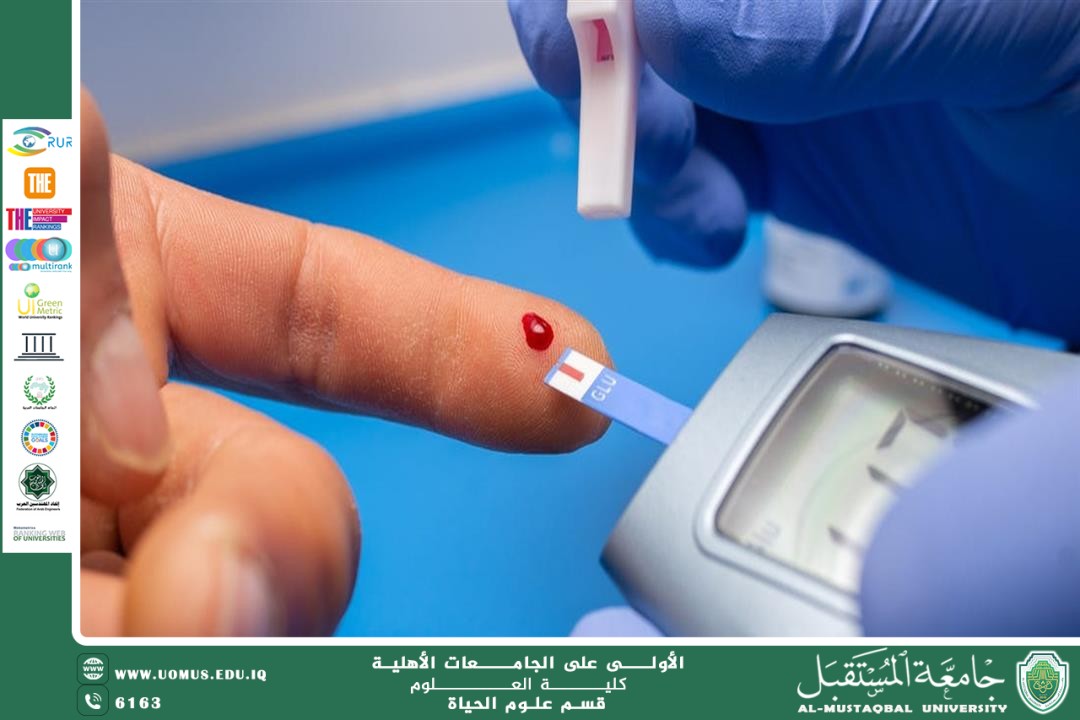
A scientific article by the lecturer (Assistant Professor Zainab Nazim Aziz) entitled “Diabetes”
09/04/2025 Share :
Diabetes is a common chronic disease that affects the body's ability to regulate blood sugar (glucose) levels. It occurs due to a defect in insulin production or in the cells' response to it, leading to high blood sugar levels. Diabetes is a disease that requires continuous monitoring and a healthy lifestyle to control it and reduce its complications.<br />Types of Diabetes<br />1. Type 1 Diabetes<br />An autoimmune disease that occurs when the immune system attacks the insulin-producing cells in the pancreas.<br />It is often diagnosed in children and young adults.<br />Patients require daily insulin injections for life.<br />2. Type 2 Diabetes<br />It is more common and occurs due to the body's resistance to insulin or insufficient production.<br />It is associated with an unhealthy lifestyle, such as obesity and physical inactivity.<br />It can be controlled through diet, exercise, and medication.<br />3. Gestational Diabetes<br />It affects women during pregnancy due to hormonal changes that affect the body's response to insulin. It often disappears after birth, but it may increase the risk of developing type 2 diabetes later in life.<br />Causes and Risk Factors<br />Genetic factors: A family history of diabetes increases the risk.<br />Obesity and being overweight are major risk factors for type 2 diabetes.<br />Physical inactivity: This leads to a poor response to insulin.<br />Unhealthy diet: Consuming large amounts of sugars and unhealthy fats.<br />Hormonal factors and pregnancy: These affect insulin levels, especially in gestational diabetes.<br /><br />Symptoms of Diabetes<br />Excessive thirst and frequent urination due to high blood sugar.<br />Constant hunger despite eating.<br />Fatigue and exhaustion due to the body's inability to use sugar for energy.<br />Blurred vision due to damage to the lens of the eye caused by high blood sugar.<br />Slow-healing wounds and an increased risk of skin infections.<br />Possible Complications<br />Cardiovascular disease: Diabetes increases the risk of high blood pressure and heart attacks.<br />Kidney problems (nephropathy): This can lead to kidney failure in severe cases.<br />Diabetic retinopathy: May cause blindness due to damage to the blood vessels in the eye.<br />Nerve problems (neuropathy): May lead to loss of sensation in the extremities.<br />Diabetic foot: Sores and infections can develop, which may require amputation in severe cases.<br />Diagnosis and tests<br />Fasting blood glucose test: Glucose levels are measured after fasting for 8 hours.<br />Oral glucose tolerance test: Measures the body's response to glucose after ingestion.<br />HbA1c test: Determines average blood glucose levels over the past three months.<br />Treatment and management<br />1. Lifestyle modification<br />Healthy diet: Eat foods rich in fiber, vegetables, and proteins, and limit sugars and saturated fats.<br />Exercise: Such as walking and moderate exercise for 30 minutes daily.<br />Weight loss: Helps improve the body's response to insulin.<br />2. Medications and treatments<br />Insulin: Essential for type 1 diabetes, and in some cases type 2.<br />Oral medications: Such as metformin, which helps improve the body's sensitivity to insulin.<br /><br />Monitor blood sugar regularly: To maintain glucose levels within the normal range.<br />Prevent diabetes:<br />Eat a healthy, balanced diet.<br />Exercise regularly.<br />Avoid weight gain and obesity.<br />Monitor blood sugar levels, especially if you have a family history.<br /><br /><br />Al-Mustaqbal University is the first university in Iraq.