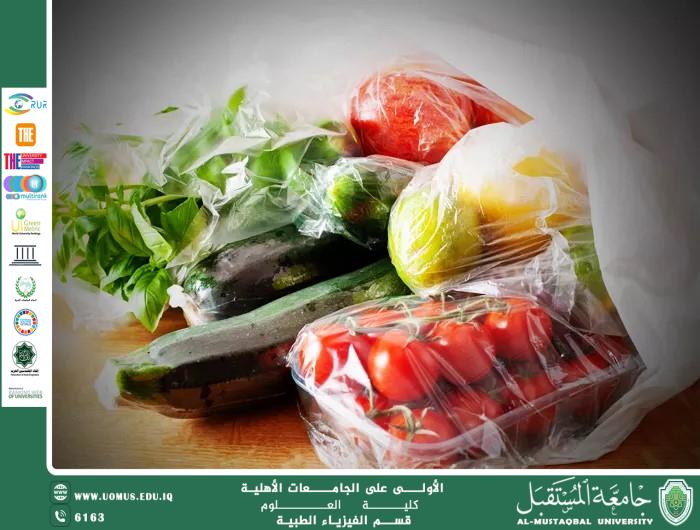
A scientific article by the lecturer (Dr. Mukhallad Ali) entitled “The health and environmental risks of using plastic bags to preserve food and eating.”
14/04/2025 Share :
Introduction<br />Plastic bags are commonly used for storing and transporting food due to their availability and low cost, but they pose significant health and environmental risks. These bags contain harmful chemicals that can leach into food, affecting human health and contributing to environmental pollution. This article aims to highlight the most significant risks associated with the use of plastic bags for food preservation, while presenting safer alternatives.<br />1. Health Risks of Using Plastic Bags<br />A. Chemical Migration into Food<br />Plastic bags, especially those made of polyethylene and polyvinyl chloride (PVC), contain chemicals such as:<br />• Phthalates: Added to increase the flexibility of plastic, these are carcinogens that may cause hormonal disruption and liver and kidney disease.<br />• Bisphenol A (BPA): Linked to endocrine disruption and may lead to infertility, heart disease, and obesity.<br />When plastic bags are exposed to heat (such as when hot foods are placed in them), the likelihood of these substances migrating into food increases, posing a health risk.<br />B. Microbial Contamination<br />Plastic bags not designed for food storage may contain microscopic cracks that allow bacteria such as E. coli and Salmonella to accumulate, increasing the risk of food poisoning.<br />C. Risks to Children and Pregnant Women<br />Children and pregnant women are more susceptible to the effects of chemicals in plastic, as they can affect fetal neurodevelopment and cause birth defects.<br />2. Environmental Risks of Plastic Bags<br />A. Plastic Pollution and Difficulty in Decomposing<br />Plastic bags take hundreds of years to decompose, leading to:<br />• Soil and water pollution.<br />• Suffocation of marine organisms when they reach the oceans.<br />• The formation of microplastics that enter the food chain.<br />B. Depletion of Natural Resources<br />Plastic manufacturing relies on petroleum, which increases carbon emissions and energy consumption.<br />3. Safe Alternatives for Food Storage<br />To avoid the risks of plastic bags, safer alternatives can be used, such as:<br />• Paper bags treated with environmentally friendly materials.<br />• Glass or pottery containers.<br />• Reusable cotton cloth bags.<br />• Stainless steel food storage containers.<br />Conclusion<br />The excessive use of plastic bags for food storage poses significant health and environmental risks. Therefore, it is essential to raise awareness of their dangers and adopt sustainable alternatives that reduce plastic pollution and protect human health. <br /><br /><br /><br />"AL_mustaqbal University is the first university in Iraq"<br/><br/><a href=https://uomus.edu.iq/Default.aspx target=_blank>al-mustaqbal University Website</a>