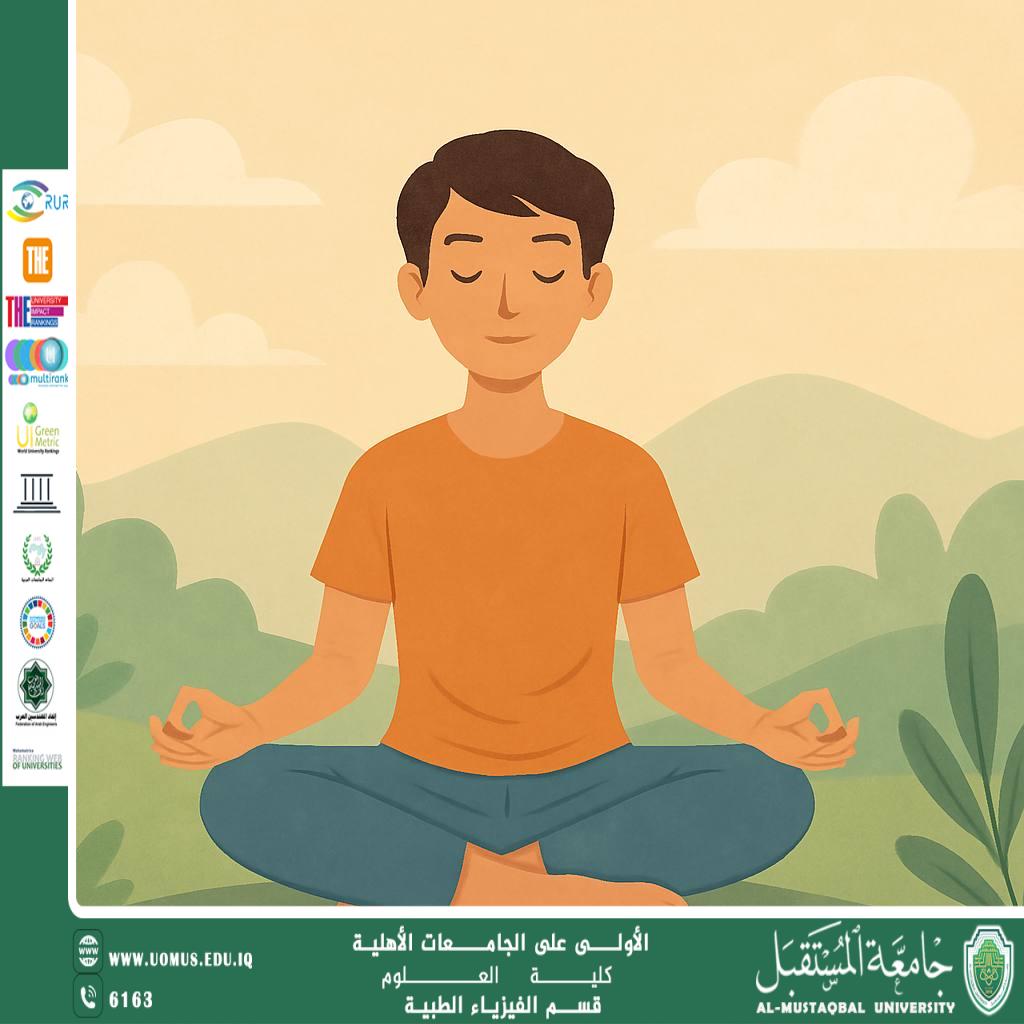
A scientific article by the teaching assistant (Nour Al-Huda Ahmed) entitled “Inner Peace: Its Concept, Importance, and Factors Affecting It”
15/04/2025 Share :
Introduction<br /><br />In the midst of growing pressures in modern life, the pursuit of inner peace has become a vital necessity for both mental and physical health. Inner peace is not merely the absence of stress and anxiety; it is a state of emotional balance, self-satisfaction, and reconciliation with oneself and the surrounding world.<br /><br />⸻<br /><br />Definition of Inner Peace<br /><br />Inner peace is defined as a mental and emotional state of calmness and psychological stability, where a person is able to face challenges and stress without negatively affecting their inner balance. It is closely linked to concepts such as acceptance, self-awareness, gratitude, and forgiveness.<br /><br />From the perspective of positive psychology, inner peace is considered one of the key components of psychological well-being, and is seen as a crucial factor in overall quality of life.<br /><br />⸻<br /><br />The Importance of Inner Peace<br /> 1. Mental Health: Inner peace is associated with lower levels of anxiety, depression, and stress (Hölzel et al., 2011).<br /> 2. Physical Health: Individuals with inner peace tend to have lower blood pressure, improved sleep quality, and stronger immunity (Chiesa & Serretti, 2009).<br /> 3. Social Relationships: It enhances communication skills and promotes forgiveness, contributing to healthy and balanced relationships.<br /> 4. Personal Effectiveness: It supports better decision-making, increased focus, and productivity.<br /><br />⸻<br /><br />Factors Influencing Inner Peace<br /> 1. Self-Awareness and Meditation: Practices like mindfulness and meditation help calm the mind and increase present-moment awareness.<br /> 2. Personal Values: Living in alignment with one’s values (such as honesty and compassion) creates internal harmony.<br /> 3. Stress Management: Learning coping skills (like breathing techniques and positive thinking) reduces tension.<br /> 4. Supportive Relationships: Social support from friends and family significantly influences psychological stability.<br /> 5. Forgiveness and Letting Go: Releasing past resentments clears the mind and eases psychological burdens.<br /><br />⸻<br /><br />Conclusion<br /><br />Inner peace is not a fixed state, but a continuous practice that requires awareness and commitment. Through developing self-awareness and healthy stress coping mechanisms, anyone can take meaningful steps toward achieving long-term psychological and spiritual balance.<br /><br /><br />"AL_mustaqbal University is the first university in Iraq"<br/><br/><a href=https://uomus.edu.iq/Default.aspx target=_blank>al-mustaqbal University Website</a>