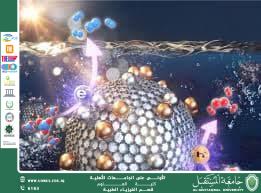
A scientific article by the lecturer (Dr. Mukhallad Ali) entitled “Photodegradation in the field of sustainability: mechanisms and applications”
16/04/2025 Share :
Abstract<br />Photolysis is a fundamental biochemical process that contributes significantly to environmental sustainability. It relies on the decomposition of pollutant molecules using light energy, offering a promising solution for addressing environmental pollution. This article explores the mechanisms of photodegradation and its applications in sustainable fields, focusing on water and air treatment and clean energy production.<br />1. Introduction<br />Environmental pollution is a global challenge that requires innovative solutions. Photodegradation is one such solution, using light energy (usually from the sun) to decompose pollutants into less harmful or harmless components. This technology is based on the principles of photochemistry and materials science, making it a sustainable option in terms of energy consumption and reducing secondary waste.<br />2. Photodegradation Mechanisms<br />2.1 Direct Photodegradation<br />This occurs when pollutant molecules directly absorb photons of light, leading to the breaking of chemical bonds. This process typically requires light of specific wavelengths that match the binding energy of the target molecules.<br />2.2 Catalytic photolysis<br />The most common in practical applications, where catalysts (such as titanium dioxide, TiO₂) are used to increase the efficiency of the process. These catalysts:<br />• Absorb light more efficiently<br />• Generate electron-hole pairs (e⁻-h⁺)<br />• Produce reactive oxygen species (ROS) that attack pollutants<br />3. Sustainable Applications of Photodegradation<br />3.1 Contaminated Water Treatment<br />• Degradation of complex organic compounds (such as pesticides and detergents)<br />• Degradation of pharmaceutical contaminants in wastewater<br />• Removal of heavy metals via photooxidation processes<br />3.2 Air Purification<br />• Degradation of volatile organic compounds (VOCs)<br />• Oxidation of nitrogen oxides (NOx) and sulfur oxides (SOx)<br />• Applications in indoor ventilation systems for buildings<br />3.3 Clean Energy Production<br />• Photodegradation of water to produce hydrogen as a clean fuel<br />• Improving the efficiency of solar cells via photodegradation processes<br />• Integration of photodegradation systems into photobioreactors<br />4. Sustainability Aspects of Photodegradation<br />4.1 Advantages<br />• Use of a renewable energy source (sunlight)<br />• No toxic byproducts produced in most cases<br />• Possibility Operation in normal environmental conditions<br />• Relatively low operating costs after installation<br />4.2 Challenges<br />• Need to improve photoconversion efficiency<br />• Limited performance in low-light conditions<br />• Potential for the formation of toxic intermediates in some cases<br />• High initial costs for some advanced catalyst systems<br />5. Future Developments and Ongoing Research<br />Recent research focuses on:<br />• Development of new photocatalysts (e.g., hybrid nanomaterials)<br />• Optimizing photoreactor designs to increase the light-exposed surface area<br />• Incorporating artificial intelligence to optimize reaction conditions<br />• Applications in the treatment of emerging pollutants (e.g., microplastics)<br /><br />6. Conclusion<br />Photolysis offers a promising solution to many environmental challenges, combining efficiency and sustainability. With continued advances in materials science and nanotechnology, this technology is expected to become more effective and widespread in the near future, significantly contributing to the achievement of sustainable development goals.<br /><br /><br /><br />"AL_mustaqbal University is the first university in Iraq"<br/><br/><a href=https://uomus.edu.iq/Default.aspx target=_blank>al-mustaqbal University Website</a>