A scientific article by the administrator (Narrjes Jassem) entitled “The Importance of Radiation Therapy in Modern Medicine”
16/04/2025 Share :
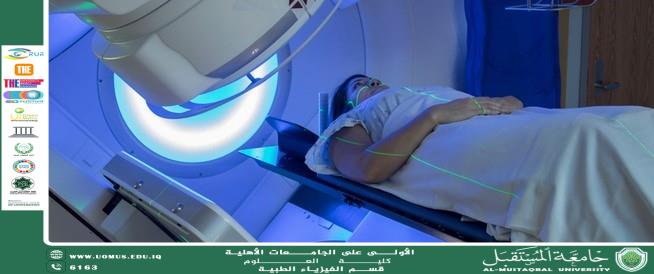
Radiation therapy is one of the most prominent methods for treating cancer and malignant tumors in modern medicine. This type of treatment relies on the use of specific types of ionizing radiation to destroy cancer cells or inhibit their growth. With scientific and technological advances in medical physics and biomedical engineering, radiation therapy techniques have become more precise and safer, contributing to improved recovery rates and reduced side effects.<br /><br />Concept of Radiation Therapy<br />Radiation therapy involves the use of high-energy rays, such as gamma rays, X-rays, or protons, to damage the DNA of cancer cells, leading to their death or the cessation of their division. The radiation is precisely targeted at the tumor to minimize damage to the surrounding healthy tissue.<br /><br />Types of Radiation Therapy<br />External Beam Radiation Therapy (EBRT):<br />A machine delivers focused radiation beams directly to the tumor site.<br />Common types include X-ray therapy, proton therapy, 3D Conformal Radiation Therapy (3D CRT), and Intensity-Modulated Radiation Therapy (IMRT).<br /><br />Brachytherapy (Internal Radiation Therapy):<br />Radioactive materials are placed inside or near the tumor.<br />It is used for certain types of cancers such as cervical, prostate, and breast cancer.<br /><br />Systemic Radiation Therapy:<br />The patient receives a radioactive substance orally or intravenously, which travels through the bloodstream to target cancer cells.<br /><br />Importance of Radiation Therapy in Medicine<br />Effective Cancer Treatment:<br />Used as a primary treatment for many types of cancer or post-surgery to eliminate remaining cancer cells.<br />Helps shrink tumors before surgery (neoadjuvant therapy).<br /><br />Reduced Need for Surgery:<br />In some cases, radiation therapy can replace surgical intervention, especially when tumors are in hard-to-reach areas.<br /><br />Symptom Control:<br />Used to alleviate symptoms such as pain or bleeding in advanced cancer cases, improving patients’ quality of life.<br /><br />Integration with Other Treatments:<br />Often combined with chemotherapy or surgery as part of a comprehensive treatment plan.<br /><br />Challenges and Potential Side Effects<br />Despite its high effectiveness, radiation therapy may cause some side effects, such as:<br /><br />General fatigue and loss of appetite<br /><br />Skin inflammation in the treated area<br /><br />Effects on nearby healthy tissues, such as difficulty swallowing or intestinal inflammation<br /><br />However, most of these symptoms are temporary and can be effectively managed medically.<br /><br />Recent Advances in Radiation Therapy<br />Image-Guided Radiation Therapy (IGRT):<br />Uses real-time imaging to enhance targeting precision.<br /><br />Proton Therapy:<br />Delivers more precise doses with less damage to healthy tissues.<br /><br />Artificial Intelligence and Radiation Planning:<br />Helps customize doses and reduce human error.<br /><br />Radiation therapy is a cornerstone in the fight against cancer and has helped save millions of lives worldwide. With the ongoing development of technology and research, its precision and effectiveness continue to improve, leading to better outcomes and fewer side effects. It is expected to evolve further, becoming more personalized and integrated with immunotherapy and genetic treatments in the future.<br /><br /><br />"AL_mustaqbal University is the first university in Iraq<br/><br/><a href=https://uomus.edu.iq/Default.aspx target=_blank>al-mustaqbal University Website</a>