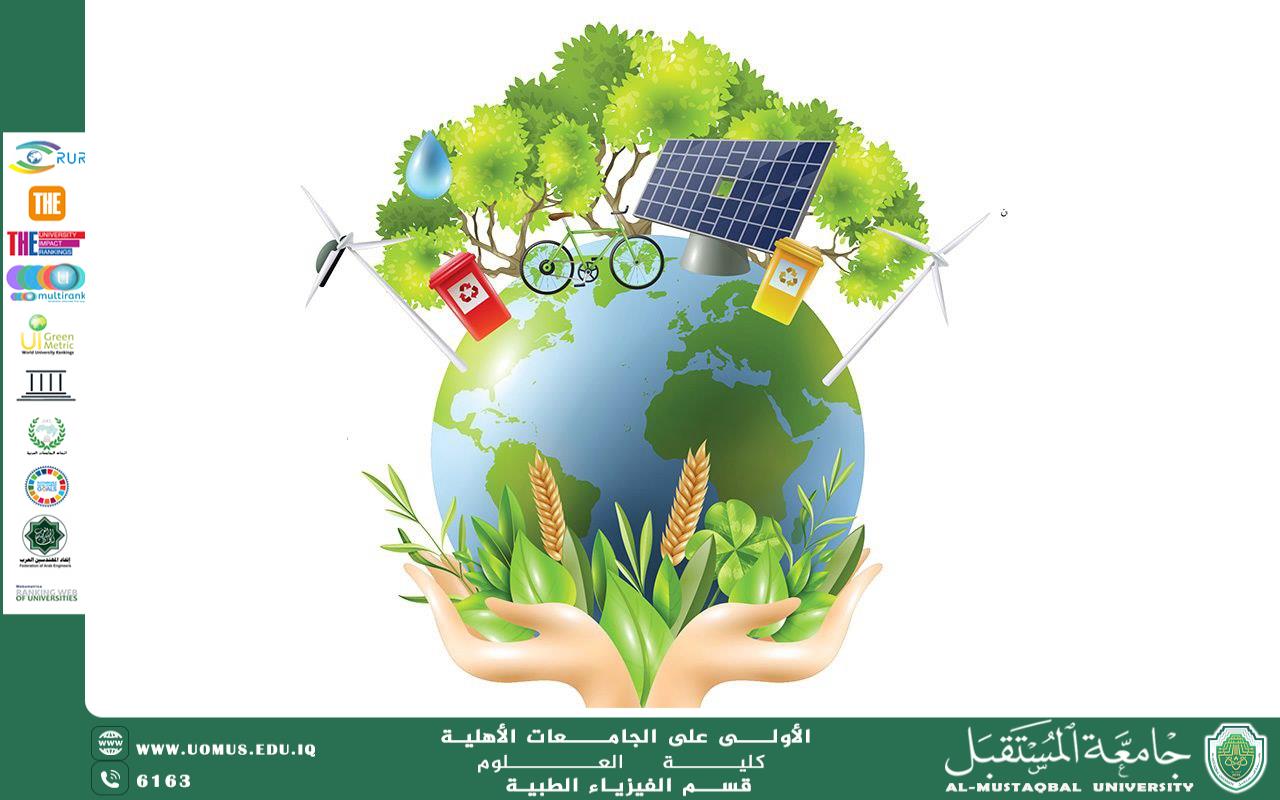
A scientific article by the teaching assistant (Ahmed Abdel Salam) entitled "The benefits of sustainability in achieving a better future"
17/04/2025 Share :
Introduction:<br /><br />Sustainability is one of the most important contemporary concepts that seeks to achieve a balance between human needs and available natural resources. It encompasses environmental, economic, and social aspects and aims to meet the needs of the present without compromising the ability of future generations to meet their own needs.<br /><br />First: Environmental Benefits of Sustainability<br /><br />Sustainability directly contributes to environmental protection by reducing pollution, preserving biodiversity, and reducing the consumption of non-renewable resources. By adopting sustainable agricultural practices and using renewable energy, the environmental impact can be reduced and the effects of climate change mitigated.<br /><br />Second: Economic Benefits<br /><br />Sustainability enhances the efficiency of resource use, leading to lower costs in the long term. It also encourages innovation in the fields of energy, construction, and transportation, opening new avenues for investment and creating green job opportunities. Economies that adopt sustainable practices are more resilient to environmental and economic crises.<br /><br />Third: Social Benefits<br /><br />Sustainability promotes social justice by ensuring the equitable distribution of resources and promoting human rights. It also contributes to improving the quality of life by providing a healthy environment, safe food, clean water, and adequate housing. It also helps build more cohesive and stable societies.<br /><br />Conclusion:<br /><br />Sustainability is not an option; it is a necessity for humanity's survival and prosperity. By adopting sustainable policies and practices, we can build a more just, prosperous, and stable world that guarantees the rights of current and future generations.<br /><br /><br />"AL_mustaqbal University is the first university in Iraq"<br/><br/><a href=https://uomus.edu.iq/Default.aspx target=_blank>al-mustaqbal University Website</a>