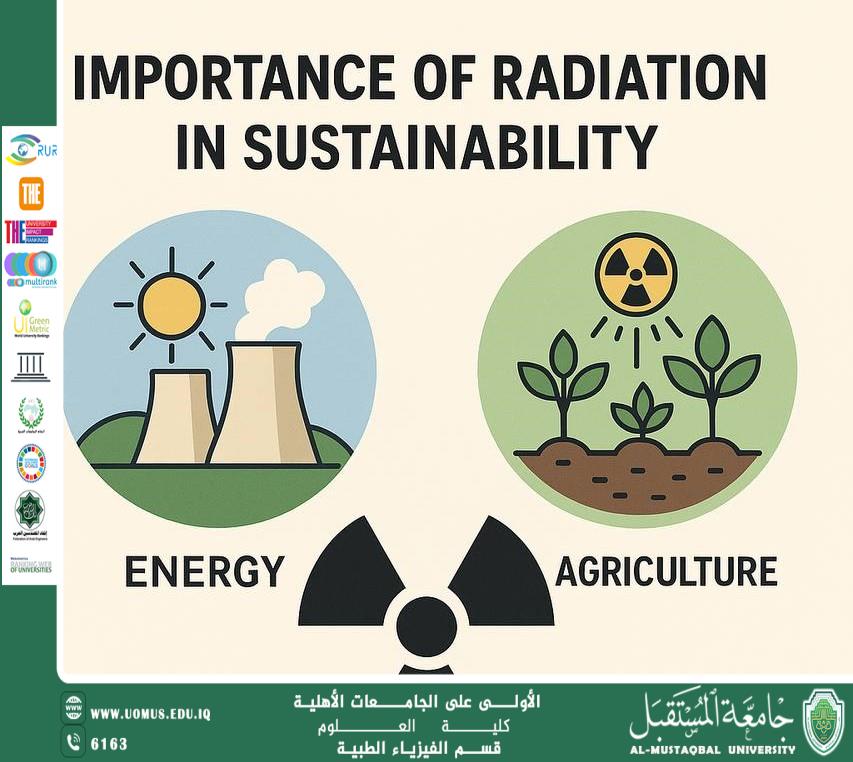
A scientific article by the teaching assistant (Zahraa Basem Hamza) entitled "The Importance of Radiation in Achieving Sustainability: Between Energy, Medicine and the Environment"
17/04/2025 Share :
Abstract:<br />Radiation plays a vital role in multiple fields that contribute to sustainable development goals, particularly in energy, medicine, agriculture, and environmental protection. Through the peaceful and safe use of radiation technologies, countries can improve quality of life, conserve resources, and reduce harmful emissions. This article explores the various benefits of radiation in supporting sustainability while addressing the associated challenges and safety practices.<br /><br />⸻<br /><br />Introduction:<br /><br />Sustainability means meeting the needs of the present without compromising the ability of future generations to meet their own. To achieve this, scientific and technological solutions must be developed to protect the environment and maintain a balance between economic growth and social well-being. Radiation has proven to be one of the most important scientific tools used to meet these objectives.<br /><br />⸻<br /><br />1. Radiation and Sustainable Energy<br /> • Nuclear Energy:<br />A clean energy source that produces large amounts of electricity without carbon emissions during operation.<br /> • Reducing Dependence on Fossil Fuels:<br />Helps decrease global warming and strengthens energy security.<br /><br />⸻<br /><br />2. Radiation in Agriculture and Food<br /> • Crop Improvement:<br />Radiation is used to develop plant varieties that are resistant to diseases and drought.<br /> • Food Preservation:<br />Irradiation techniques kill bacteria and parasites without affecting nutritional value, extending shelf life and reducing food waste.<br /><br />⸻<br /><br />3. Radiation in Environmental Protection<br /> • Pollution Monitoring:<br />Nuclear techniques are used to trace the movement of pollutants in water, soil, and air.<br /> • Wastewater Treatment:<br />Radiation can disinfect wastewater and remove harmful substances.<br /><br />⸻<br /><br />4. Radiation in Healthcare<br /> • Diagnosis and Treatment:<br />Widely used in imaging (like X-rays and MRI) and in treating diseases such as cancer.<br /> • Improving Quality of Life:<br />Contributes to health and well-being, key goals in sustainability strategies.<br /><br />⸻<br /><br />5. Challenges and Safe Practices<br /> • The need for safe radiation practices and adherence to nuclear safety protocols.<br /> • Training professionals in the proper use of radiation technologies.<br /> • International cooperation in regulation and oversight.<br /><br />⸻<br /><br />Conclusion:<br /><br />Radiation is a powerful scientific tool that contributes to sustainability across many fields—from clean energy production and agricultural innovation to advanced healthcare. With responsible and safe use, radiation can be a true partner in building a sustainable future for humanity.<br /><br /><br />"AL_mustaqbal University is the first university in Iraq"<br/><br/><a href=https://uomus.edu.iq/Default.aspx target=_blank>al-mustaqbal University Website</a>