A scientific article by the administrator (Narrjes Jassem) entitled “Medical Nuclear Physics: A Bridge Between Science and Medicine”
17/04/2025 Share :
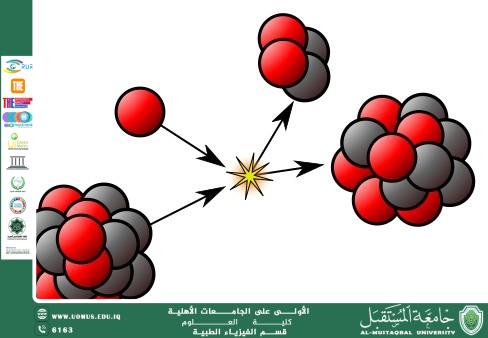
Medical nuclear physics is a vital field that combines the principles of nuclear physics with their applications in the medical field, particularly in diagnosis and treatment. With the advancement of medical technology, this branch has become one of the fundamental pillars of modern medicine, relying on the use of radioactive isotopes and ionizing radiation to enhance healthcare through early disease detection and precise, effective treatments.<br /><br />Definition of Medical Nuclear Physics<br />Medical nuclear physics is the science that applies principles of nuclear physics—such as radioactive decay and subatomic particle interactions—in medicine. These principles are used to develop diagnostic techniques (such as Positron Emission Tomography - PET and Single Photon Emission Computed Tomography - SPECT) and radiation therapy for certain diseases, particularly cancer.<br /><br />Key Applications of Medical Nuclear Physics<br />Nuclear Imaging<br />PET (Positron Emission Tomography):<br />Used to visualize metabolic processes in the body and is one of the most accurate methods for detecting tumors and cancerous cells.<br /><br />SPECT (Single Photon Emission Computed Tomography):<br />Used to diagnose conditions affecting the heart, brain, and bones by tracking the movement of radioactive isotopes inside the body.<br /><br />Radioisotope Therapy<br />Iodine-131 Therapy:<br />Used to treat thyroid disorders, especially hyperthyroidism or thyroid cancer.<br /><br />Radium-223 and Lutetium-177 Therapy:<br />Applied in the treatment of certain types of metastatic cancer, such as prostate cancer or neuroendocrine tumors.<br /><br />Radiation Dosimetry<br />Medical nuclear physicists calculate and evaluate radiation doses with precision to ensure effective treatment while avoiding overexposure for both patients and medical staff.<br /><br />Importance of Medical Nuclear Physics<br />Early and Accurate Disease Detection<br />Nuclear imaging techniques enable the identification of functional changes in organs before anatomical changes occur, facilitating early diagnosis.<br /><br />Targeted Therapy<br />Radioactive isotopes deliver treatment directly to targeted cells, enhancing treatment effectiveness and minimizing side effects.<br /><br />Improving Healthcare Quality<br />Medical nuclear physics techniques help evaluate treatment efficacy and improve therapeutic plans based on the patient’s response.<br /><br />Radiation Safety and Protection<br />Working in this field requires strict attention to radiation safety through:<br /><br />Monitoring radiation exposure using dosimetry tools.<br /><br />Employing protective shielding and specialized techniques to reduce unnecessary exposure.<br /><br />Training medical personnel in the safe handling of radioactive materials.<br /><br />Future Developments in Medical Nuclear Physics<br />Targeted radiotherapy using compounds designed to attack only diseased cells.<br /><br />Integration of artificial intelligence with imaging technologies to accelerate and improve diagnostic accuracy.<br /><br />Development of new isotopes that are safer and more effective in treatment.<br /><br />Conclusion<br />Medical nuclear physics is a field that merges scientific precision with human-centered application, directly contributing to saving lives and improving patients' quality of life. Thanks to rapid advances in technology and physics, this field is expected to witness a significant breakthrough in the coming decades, integrating with bioengineering and artificial intelligence to provide more personalized and effective healthcare.<br /><br /><br /><br /><br />"AL_mustaqbal University is the first university in Iraq"<br/><br/><a href=https://uomus.edu.iq/Default.aspx target=_blank>al-mustaqbal University Website</a>