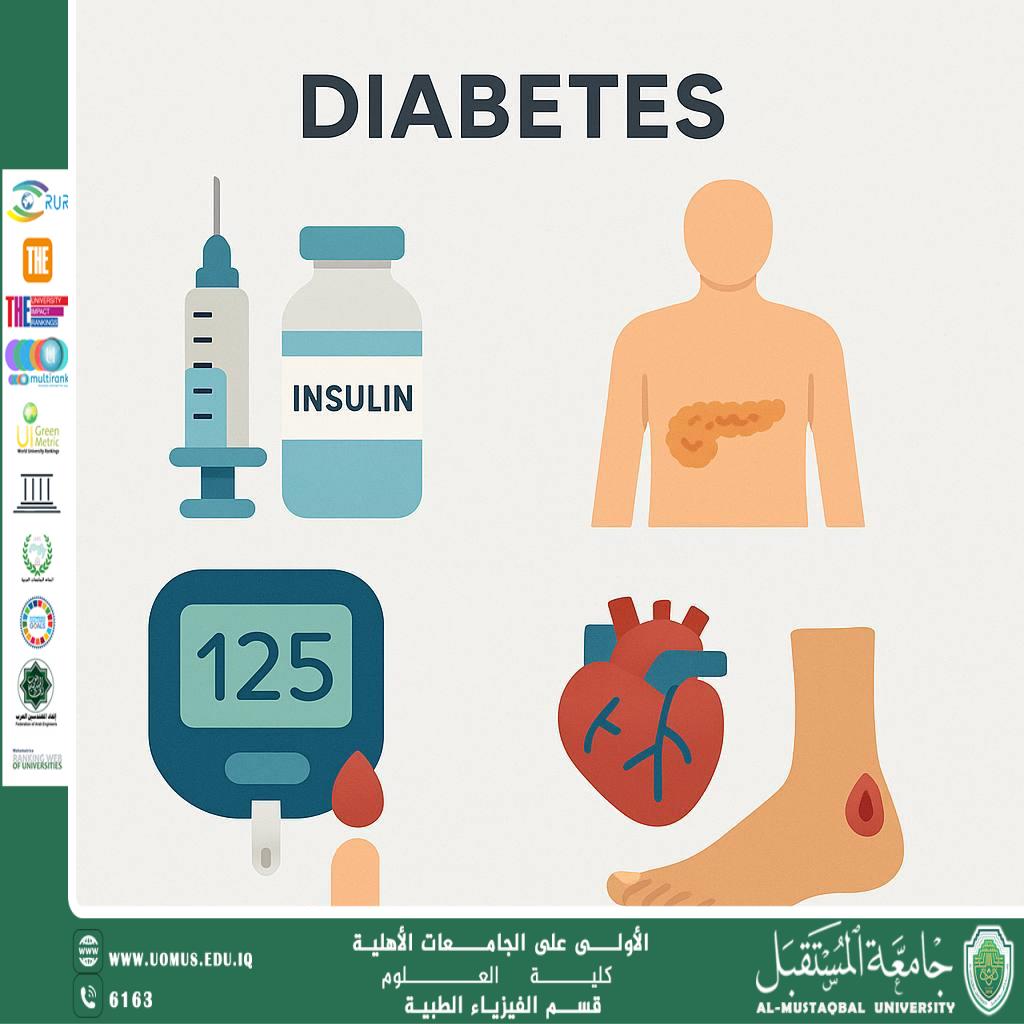
A scientific article by the teaching assistant (Hanin Hani) entitled “Diabetes: Its Types, Causes, and Complications”
23/04/2025 Share :
Introduction<br /><br />Diabetes Mellitus is one of the most common chronic diseases worldwide. It is characterized by high levels of glucose (sugar) in the blood due to either insufficient insulin production or the body’s inability to effectively use insulin. If not properly managed, diabetes can lead to serious complications affecting the heart, kidneys, nerves, and eyes.<br /><br />⸻<br /><br />Types of Diabetes<br /> 1. Type 1 Diabetes:<br /> • Also known as insulin-dependent diabetes.<br /> • Caused by an autoimmune reaction where the body attacks the insulin-producing cells in the pancreas.<br /> • Typically appears in childhood or adolescence.<br /> 2. Type 2 Diabetes:<br /> • The most common type, accounting for about 90% of cases.<br /> • Caused by insulin resistance and often a reduction in insulin production.<br /> • Common risk factors include obesity, physical inactivity, and genetic predisposition.<br /> 3. Gestational Diabetes:<br /> • Occurs in some women during pregnancy and usually disappears after delivery.<br /> • Increases the risk of developing type 2 diabetes later in life.<br /><br />⸻<br /><br />Causes of Diabetes<br /> • Genetic factors<br /> • Obesity and physical inactivity<br /> • Unhealthy diet<br /> • Aging<br /> • Autoimmune diseases (mainly in type 1)<br /><br />⸻<br /><br />Common Symptoms of Diabetes<br /> • Excessive thirst and frequent urination<br /> • Constant hunger<br /> • Unexplained weight loss<br /> • Fatigue<br /> • Slow wound healing<br /> • Frequent infections (especially skin and gum infections)<br /><br />⸻<br /><br />Complications of Diabetes<br /><br />Without proper treatment, diabetes may lead to:<br /> • Cardiovascular diseases<br /> • Kidney failure<br /> • Nerve damage (neuropathy)<br /> • Vision problems and potential blindness<br /> • Diabetic foot, which can result in amputations in severe cases<br /><br />⸻<br /><br />Prevention and Treatment<br /> • Prevention:<br /> • Eating a healthy diet<br /> • Regular physical activity<br /> • Maintaining a healthy weight<br /> • Routine medical checkups<br /> • Treatment:<br /> • Insulin therapy (especially for type 1)<br /> • Oral medications (commonly for type 2)<br /> • Regular blood sugar monitoring<br /> • Lifestyle modifications<br /><br />⸻<br /><br />Conclusion<br /><br />Diabetes is not a life-ending condition—it can be effectively managed through awareness, medical follow-up, and commitment to treatment. Early detection and adopting a healthy lifestyle are key to preventing the disease and its serious <br />complications.<br /><br /><br /><br />"AL_mustaqbal University is the first university in Iraq"<br/><br/><a href=https://uomus.edu.iq/Default.aspx target=_blank>al-mustaqbal University Website</a>