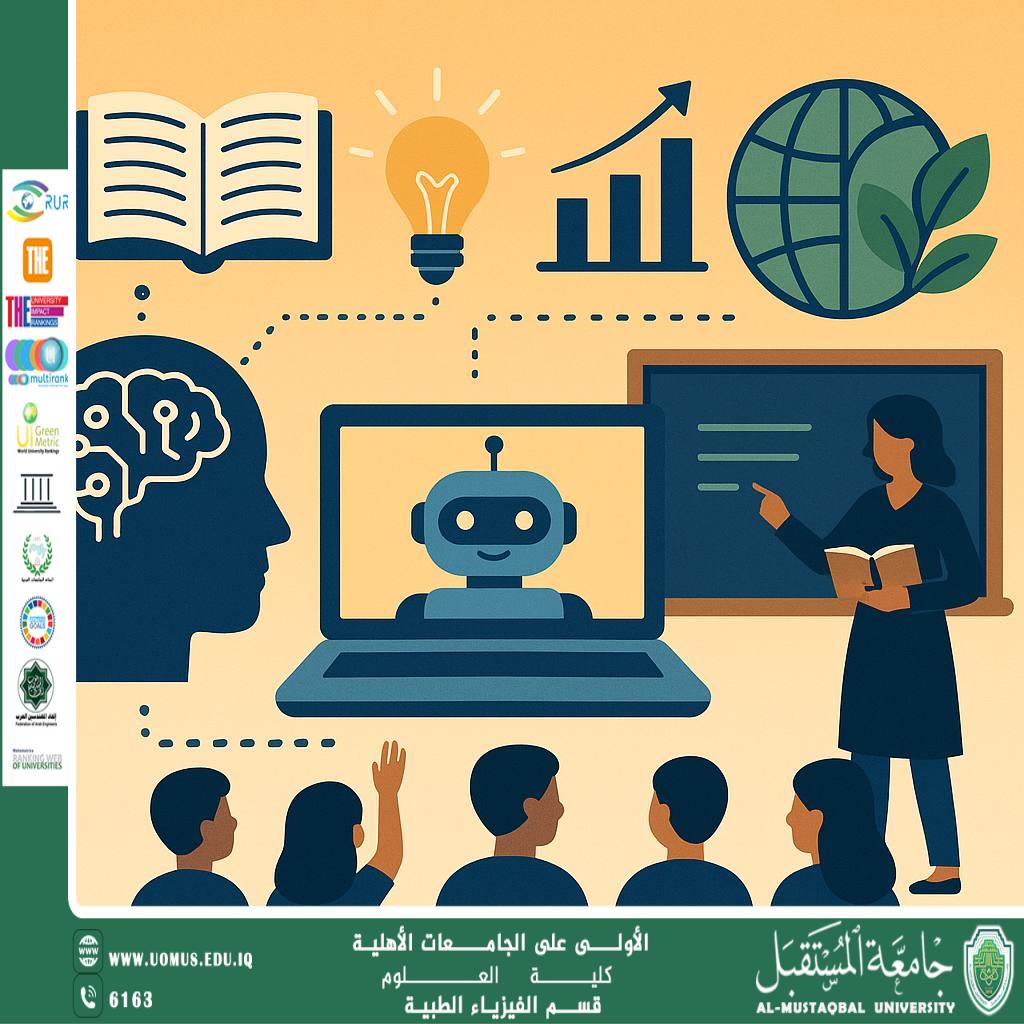
A scientific article by programmer Nour Firas entitled "Sustainable Education in the Age of Artificial Intelligence: Integrating Technology for a Sustainable Educational Future"
24/04/2025 Share :
Introduction<br />Sustainable education is a fundamental pillar in achieving the United Nations Sustainable Development Goals (SDGs). It aims to equip individuals with the knowledge and skills necessary to become active citizens capable of addressing environmental, social, and economic challenges. With the rapid advancement of Artificial Intelligence (AI) technologies, new opportunities are emerging that can enhance and expand the reach of sustainable education.<br /><br />What is Sustainable Education?<br />Sustainable education focuses on raising awareness about environmental issues, promoting social equity, and fostering responsible economic growth. It empowers learners to make informed decisions that positively impact their lives, communities, and the environment.<br /><br />Artificial Intelligence and Education: A Promising Intersection<br />AI, through technologies like machine learning, data analytics, and adaptive learning systems, is playing an increasingly vital role across all levels of education. Its integration into sustainable education offers several key benefits:<br /><br />1. Personalized and Adaptive Learning<br />AI-powered educational systems can track each learner’s progress and tailor educational content to match their needs and interests. This enhances motivation and reduces educational waste.<br /><br />2. Data-Driven Insights for Educational Sustainability<br />By collecting and analyzing learning data, educational institutions can assess program effectiveness, identify gaps, and allocate resources more efficiently and sustainably.<br /><br />3. Expanding Access to Inclusive Education<br />AI can help deliver quality education to remote or underserved areas through smart learning platforms, virtual classrooms, and low-cost technologies, promoting educational equity.<br /><br />4. Fostering Critical Thinking and Problem-Solving Skills<br />AI-supported interactive learning environments encourage the development of 21st-century skills, such as critical thinking, creativity, and collaborative problem-solving, which are core to sustainable education.<br /><br />Challenges of Integrating AI in Sustainable Education<br />Despite its potential, the integration of AI in education presents several challenges:<br /><br />Data privacy and protection for learners.<br /><br />The digital divide between and within countries.<br /><br />The need to train educators to effectively use AI technologies.<br /><br />Conclusion<br />Artificial intelligence presents a real opportunity to support and transform sustainable education. However, its implementation must be guided by a comprehensive vision and collaborative effort among governments, educational institutions, and technology providers. When integrated responsibly and thoughtfully, AI can help build a more equitable, efficient, and sustainable educational future.<br /><br /><br /><br />"AL_mustaqbal University is the first university in Iraq"<br/><br/><a href=https://uomus.edu.iq/Default.aspx target=_blank>al-mustaqbal University Website</a>