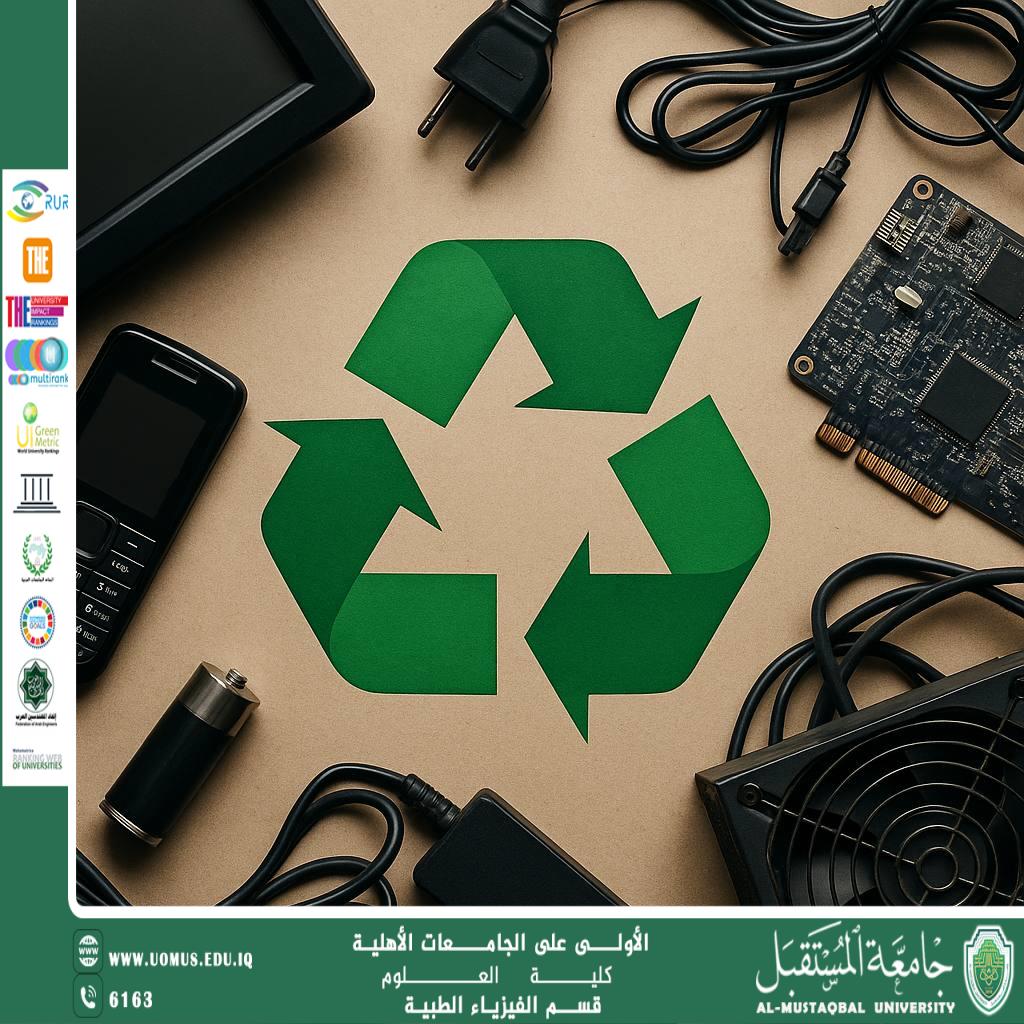
A scientific article by the teaching assistant (Amir Sobhi) entitled “Electronic Waste Recycling: An Environmental and Economic Necessity”
24/04/2025 Share :
Introduction:<br />In today’s fast-paced technological era, the volume of electronic waste (e-waste) is growing at an alarming rate. E-waste includes discarded devices such as mobile phones, computers, televisions, and other electronic appliances that are frequently replaced. While these devices contain valuable materials, improper disposal poses serious environmental and economic threats.<br /><br />What is E-Waste?<br />E-waste refers to any discarded electrical or electronic device that is no longer in use or has become non-functional. This includes batteries, electronic circuit boards, monitors, cables, and any item containing electronic components.<br /><br />Environmental Hazards of Improper Disposal:<br /> 1. Soil and Water Contamination: E-waste contains heavy metals like mercury, lead, and cadmium, which can leach into soil and groundwater, causing long-term pollution.<br /> 2. Toxic Emissions: Burning e-waste releases harmful gases such as dioxins, which can damage the respiratory system and are linked to serious health conditions.<br /> 3. Harm to Biodiversity: Pollutants from e-waste can affect ecosystems and wildlife, reducing biodiversity in contaminated areas.<br /><br />Economic Benefits of Recycling:<br /> 1. Recovery of Valuable Materials: E-waste contains rare and precious metals like gold, silver, copper, and platinum that can be recovered and reused in manufacturing.<br /> 2. Job Creation: The recycling industry generates employment in collection, sorting, processing, and technology development sectors.<br /> 3. Reduced Dependence on Natural Resources: Recycling minimizes the need to extract new raw materials, lowering production costs and preserving natural reserves.<br /><br />Challenges and Solutions:<br /> • Lack of Awareness: Many people are unaware of the importance of e-waste recycling. Public awareness campaigns and education are key solutions.<br /> • Infrastructure Deficiency: Developing nations often lack proper facilities to handle e-waste. Investment in recycling centers is essential.<br /> • Policy and Regulation: Governments should implement strict laws that encourage recycling and require manufacturers to take responsibility for end-of-life products.<br /><br />Conclusion:<br />Recycling electronic waste is no longer a choice—it is a necessity driven by environmental concerns and economic opportunities. Investing in e-waste recycling provides a sustainable way to manage waste, recover valuable resources, and protect our planet. Collaboration among governments, individuals, and corporations is crucial to building an effective and eco-friendly recycling system.<br /><br /><br /><br /><br />"AL_mustaqbal University is the first university in Iraq"<br/><br/><a href=https://uomus.edu.iq/Default.aspx target=_blank>al-mustaqbal University Website</a>