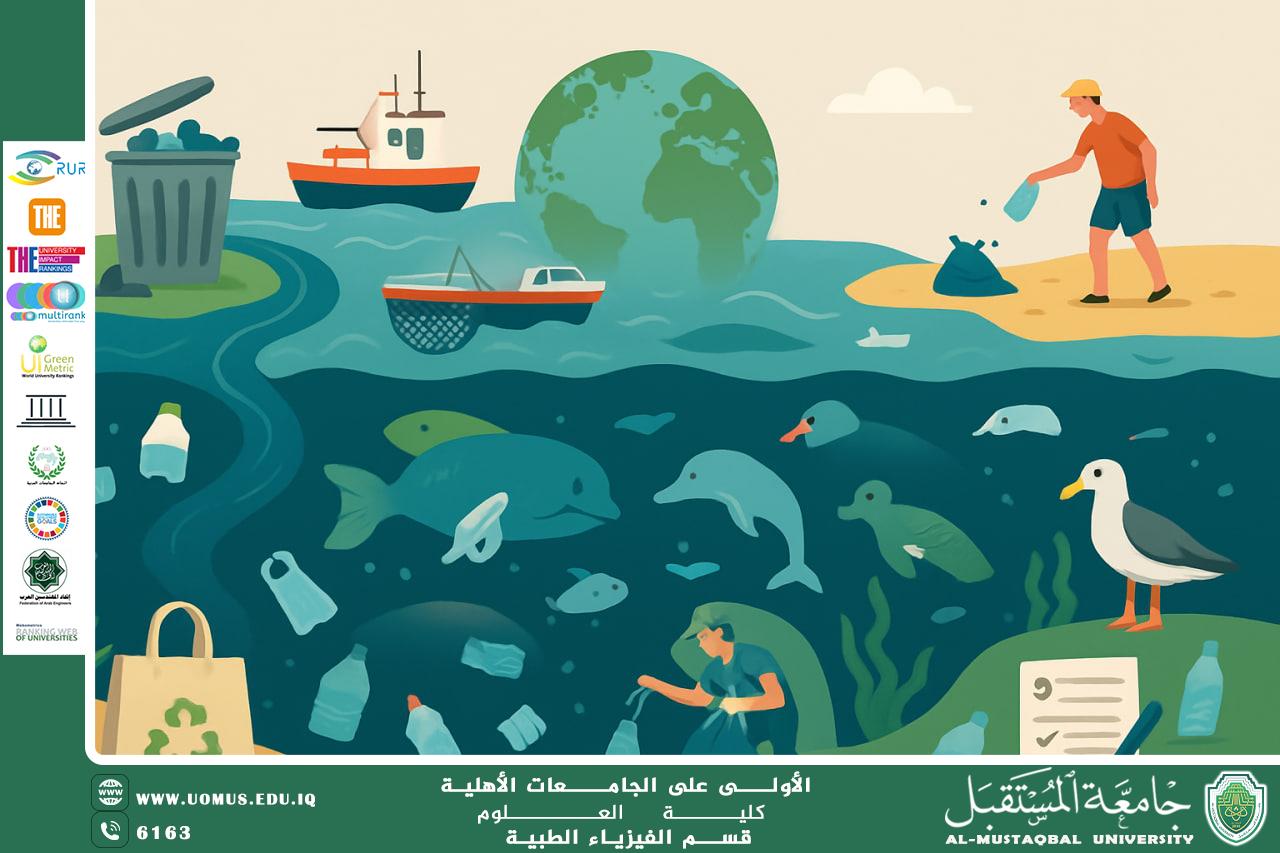
A scientific article by the lecturer ( Assistant Lecturer Ammar Karim) entitled "Plastic Pollution in the Oceans: Risks and Solutions"
24/04/2025 Share :
Introduction:<br />Plastic pollution is one of the most serious environmental threats facing our planet today, especially in oceans and seas. It is estimated that millions of tons of plastic waste enter the oceans every year, posing significant risks to marine life, human health, and global ecosystems.<br /><br />Causes of Plastic Pollution in the Oceans:<br /> 1. Improper Waste Management: A large portion of plastic pollution comes from land-based sources, where plastic waste is dumped into rivers and waterways that eventually lead to the sea.<br /> 2. Fishing Industry: Abandoned plastic fishing nets, ropes, and other gear contribute to what’s called “ghost fishing,” where marine animals are trapped and killed without human involvement.<br /> 3. Marine Tourism: Tourists often discard waste on beaches or directly into the sea, worsening the problem.<br /><br />Environmental Risks of Plastic Pollution:<br /> 1. Killing Marine Life: Many fish, turtles, and seabirds mistake plastic for food, leading to intestinal blockages and death.<br /> 2. Choking and Chemical Contamination: Marine creatures can become entangled in plastic or absorb toxic substances released as plastic breaks down.<br /> 3. Disruption of the Food Chain: Microplastics are consumed by small organisms, entering the marine food web and potentially reaching humans.<br /><br />Risks to Humans:<br /> • Contaminated Seafood: Fish and shellfish may contain microplastics or toxins from degraded plastics.<br /> • Health Concerns: Some studies suggest that microplastics can cause hormonal disruptions or even increase cancer risks, though further research is still ongoing.<br /><br />Proposed Solutions:<br /> 1. Reducing Plastic Production and Consumption: Encourage the use of biodegradable alternatives such as paper and bio-plastics.<br /> 2. Improved Waste Management Systems: Develop effective recycling and waste treatment facilities to prevent plastic from entering waterways.<br /> 3. Support for Cleanup Campaigns: Promote and participate in community efforts to clean up beaches and coastal areas.<br /> 4. Legislation and Policy: Implement laws banning single-use plastics and requiring companies to limit plastic packaging.<br /> 5. Awareness and Education: Educate communities and individuals about the dangers of plastic pollution and how to take action.<br /><br />Conclusion:<br />Plastic pollution in the oceans is a global crisis that demands urgent and collective action. From individual lifestyle choices to international policies, every step matters. Protecting our oceans ensures a healthier environment for all living beings and preserves our planet for future generations.<br /><br /><br /><br />"AL_mustaqbal University is the first university in Iraq"<br/><br/><a href=https://uomus.edu.iq/Default.aspx target=_blank>al-mustaqbal University Website</a>