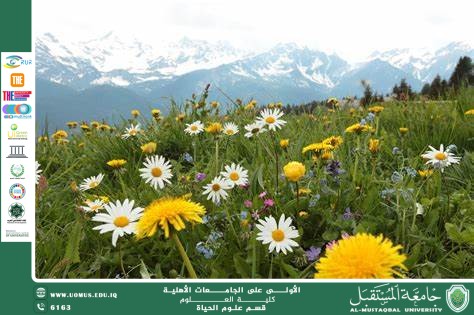
A scientific article by Ms. Nour El-Huda Azmi Hassan entitled "Environmental Impacts and Interaction with Nature of Flowering Plants"
22/04/2025 Share :
Flowering plants are an integral part of the ecosystem, significantly contributing to improving the quality of the environment we live in. Not only do they add beauty to the landscape, but they also have profound impacts on the health of the environment and the ecosystem as a whole. In this article, we will discuss the environmental impacts of flowering plants and their role in interacting with nature.<br /><br />1. Improving Air Quality<br />One of the most important environmental benefits of flowering plants is their ability to improve air quality. Plants, including flowers, photosynthesize, absorbing carbon dioxide and releasing oxygen. This process helps reduce the concentration of harmful gases in the air and increases oxygen levels, contributing to better breathing and cleaner air in the surrounding environment.<br /><br />In addition, flowering plants absorb many other air pollutants, such as nitrogen and sulfur, helping to reduce the effects of industrial pollution in cities. Some flowering plants are important environmental filtration agents, absorbing chemical pollutants and particulate matter suspended in the air.<br /><br />2. Promoting Biodiversity<br />Flowering plants play a fundamental role in promoting biodiversity in the ecosystem. They provide food and shelter for a wide range of organisms, including insects (such as bees and butterflies), birds, and small animals. Flowers play a pivotal role in the pollination process, attracting insects and birds that transfer pollen between plants, enhancing the plants' ability to reproduce. This interaction between plants and animals promotes biodiversity in the environment.<br /><br />Flowering plants, therefore, are not only a source of natural beauty; they are also an essential part of a complex and interconnected food web among the various organisms in an ecosystem.<br /><br />3. Combating Desertification and Soil Conservation<br />Flowering plants help combat desertification and maintain soil health. Their roots stabilize the soil and prevent it from being eroded by wind and water. They also absorb water effectively, helping to improve the soil's water-holding capacity, thereby reducing the risk of drought and desertification.<br /><br />Flowering plants that grow in desert and arid regions can play an important role in land rehabilitation and combating agricultural land degradation. Many flowers and other plants contribute to the restoration of devastated lands by providing vegetation that protects the soil from negative environmental factors.<br /><br />4. Improving the Urban Environment<br />Floral plants play a significant role in improving the urban environment and making it more sustainable. In large cities suffering from pollution and congestion, parks and green spaces planted with flowering plants can help mitigate the effects of the urban environment. They provide recreational spaces for relaxation, while also improving air quality and reducing noise and heat.<br /><br />Floral plants improve the urban climate by regulating the surrounding temperature. They help reduce the heat island effect in cities, which results from the accumulation of heat in hard surfaces such as asphalt and concrete. Flowering plants provide shade and contribute to lowering temperatures, making the environment more comfortable and healthy to live in.<br /><br />5. Promoting Human Health and Well-being<br />In addition to their environmental impacts, interacting with flowering plants enhances human health. The constant presence of plants in our environment has positive effects on mental and emotional health, helping to reduce stress and anxiety levels and improving mood. Studies have shown that interacting with plants can improve concentration and increase creativity.<br /><br />Flowers, in particular, are considered an effective tool in aromatherapy (such as lavender and jasmine oils) used to calm the nerves and improve sleep. Furthermore, people living in flower-filled environments can feel a stronger sense of connection with nature, which enhances their overall well-being.<br /><br />6. The Role of Flowers in Reducing Light Pollution<br />Although flowers are not considered a direct component in combating light pollution, several studies indicate that gardens and botanical gardens containing flowering plants play a role in reducing the intensity of excessive artificial light in urban areas. Plants can act as a shield against unwanted light reflections, contributing to a calmer and more relaxing environment.<br /><br />al Mustaqbal University, the first university in Iraq