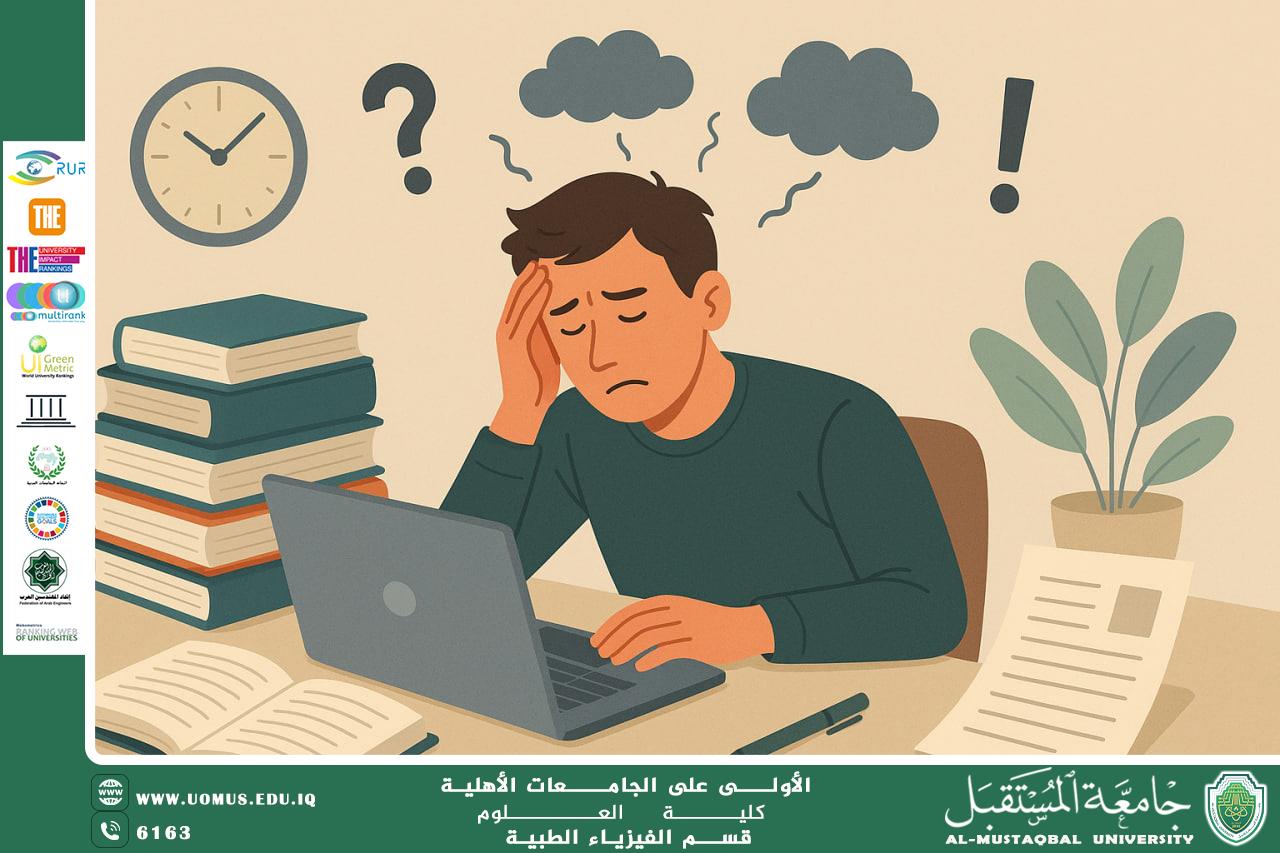
A scientific article by the teaching assistant (Mohamed Abdel Zahra) entitled “The impact of psychological pressure on academic and professional performance”
26/04/2025 Share :
Abstract:<br />Psychological stress is a common factor that significantly affects individuals’ performance in various aspects of life, particularly in academic and professional settings. This paper aims to explore the effects of stress on productivity, academic achievement, and decision-making abilities, while highlighting the causes, consequences, and possible interventions to mitigate its negative impact.<br /><br />1. Introduction:<br />Stress is the body’s natural response to challenges or perceived threats. While it can sometimes be beneficial in motivating individuals, chronic or excessive stress often leads to harmful psychological and physiological outcomes. In both academic and professional environments, stress can be a major barrier to optimal performance, necessitating focused attention and management.<br /><br />2. Psychological Stress and Academic Performance:<br />Numerous studies indicate a strong correlation between high levels of stress and poor academic outcomes. Common manifestations include:<br /><br />Difficulty concentrating and decreased attention span.<br /><br />Excessive anxiety, especially during exams, negatively impacting working memory.<br /><br />Lack of motivation, leading to procrastination or neglect of academic duties.<br /><br />Academic withdrawal, which may escalate to dropping out completely.<br /><br />3. Psychological Stress and Professional Performance:<br />In the workplace, chronic stress can result in:<br /><br />Decreased productivity due to mental and physical fatigue.<br /><br />Increased error rates caused by lack of focus.<br /><br />Reduced job satisfaction, which may trigger job changes or complete withdrawal from the labor market.<br /><br />Burnout, a state of emotional, physical, and mental exhaustion caused by prolonged stress.<br /><br />4. Common Causes of Stress:<br />Heavy workloads or intense academic schedules.<br /><br />Lack of social support or poor interpersonal relationships.<br /><br />High self-expectations or pressure from others.<br /><br />Unclear objectives or undefined responsibilities.<br /><br />5. Psychological and Physical Effects:<br />Sleep disturbances, headaches, and digestive problems.<br /><br />Anxiety, depression, and loss of self-confidence.<br /><br />Impaired decision-making and rational thinking.<br /><br />6. Coping Strategies and Proposed Solutions:<br />Effective time management and prioritization of tasks.<br /><br />Relaxation techniques, such as deep breathing and mindfulness.<br /><br />Seeking psychological or academic/career counseling.<br /><br />Regular physical activity and engagement in recreational activities.<br /><br />Self-awareness enhancement through practices like meditation or yoga.<br /><br />7. Conclusion:<br />Psychological stress poses a significant threat to academic and professional success if left unmanaged. Through the implementation of proper coping strategies, individuals can maintain their productivity and mental well-being. Educational and professional institutions must play an active role in creating supportive environments and providing adequate resources to reduce stress and enhance individuals’ quality of life.<br /><br /><br /><br />"AL_mustaqbal University is the first university in Iraq"<br/><br/><a href=https://uomus.edu.iq/Default.aspx target=_blank>al-mustaqbal University Website</a>