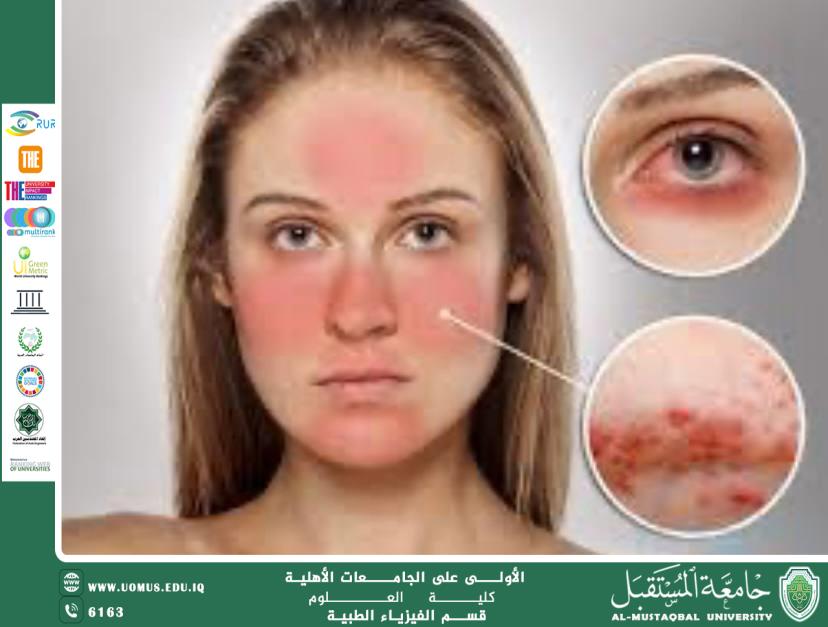
A scientific article by the teaching assistant (Iftikhar Thamer Kamel) entitled “The Effect of Sunlight on the Skin: Between Benefits and Risks”
27/04/2025 Share :
Introduction<br />Sunlight is a primary source of energy and light, and it plays a crucial role in stimulating the production of vitamin D in the human body. However, excessive exposure to sunlight—especially ultraviolet (UV) rays—can cause significant damage to the skin. This article explores the positive and negative effects of sunlight on the skin, highlights the physiological mechanisms involved, and presents effective protection methods.<br /><br />First: Components of Sunlight<br />Ultraviolet rays are divided into three main types:<br /> • UVA (long-wave): Penetrates the skin deeply and contributes to premature aging.<br /> • UVB (medium-wave): Affects the outer layers of the skin and causes sunburn.<br /> • UVC (short-wave): Almost entirely absorbed by the ozone layer and does not reach the Earth’s surface.<br /><br /><br />Second: Potential Benefits of Sunlight<br /> 1. Vitamin D Production: Moderate sun exposure enhances the body’s ability to produce vitamin D, essential for bone health and the immune system.<br /> 2. Mood Improvement: Natural sunlight boosts serotonin levels, which can positively impact mood and mental well-being.<br /> 3. Treatment of Skin Conditions: Sunlight (or phototherapy) is used under medical supervision to treat conditions like psoriasis and eczema.<br /><br />Third: Damages Caused by Excessive Exposure<br /> 1. Sunburn: Caused by prolonged exposure to UVB rays, leading to inflammation, redness, and skin peeling.<br /> 2. Premature Aging: UVA rays damage collagen fibers, resulting in wrinkles and loss of skin elasticity.<br /> 3. Skin Cancer: Frequent and excessive exposure to UV rays increases the risk of various types of skin cancer, such as basal cell carcinoma and melanoma.<br /> 4. Hyperpigmentation and Sunspots: UV rays stimulate melanin production, leading to irregular dark spots on the skin.<br /><br />Fourth: Protective Measures<br /> • Use broad-spectrum sunscreen with an SPF of at least 30.<br /> • Wear protective clothing, hats, and sunglasses.<br /> • Avoid direct sun exposure between 10 a.m. and 4 p.m.<br /> • Reapply sunscreen every two hours or after swimming or heavy sweating.<br /><br />Conclusion<br />While sunlight is essential for human health, cautious and moderate exposure is crucial. Scientific awareness of the effects of ultraviolet rays provides the best ways to benefit from sunlight while minimizing potential skin damage.<br /><br /><br />"AL_mustaqbal University is the first university in Iraq"<br/><br/><a href=https://uomus.edu.iq/Default.aspx target=_blank>al-mustaqbal University Website</a>