A scientific article by the teaching assistant (Hanin Hani) entitled "Innovation in organ transplantation via 3D printing"
27/04/2025 Share :
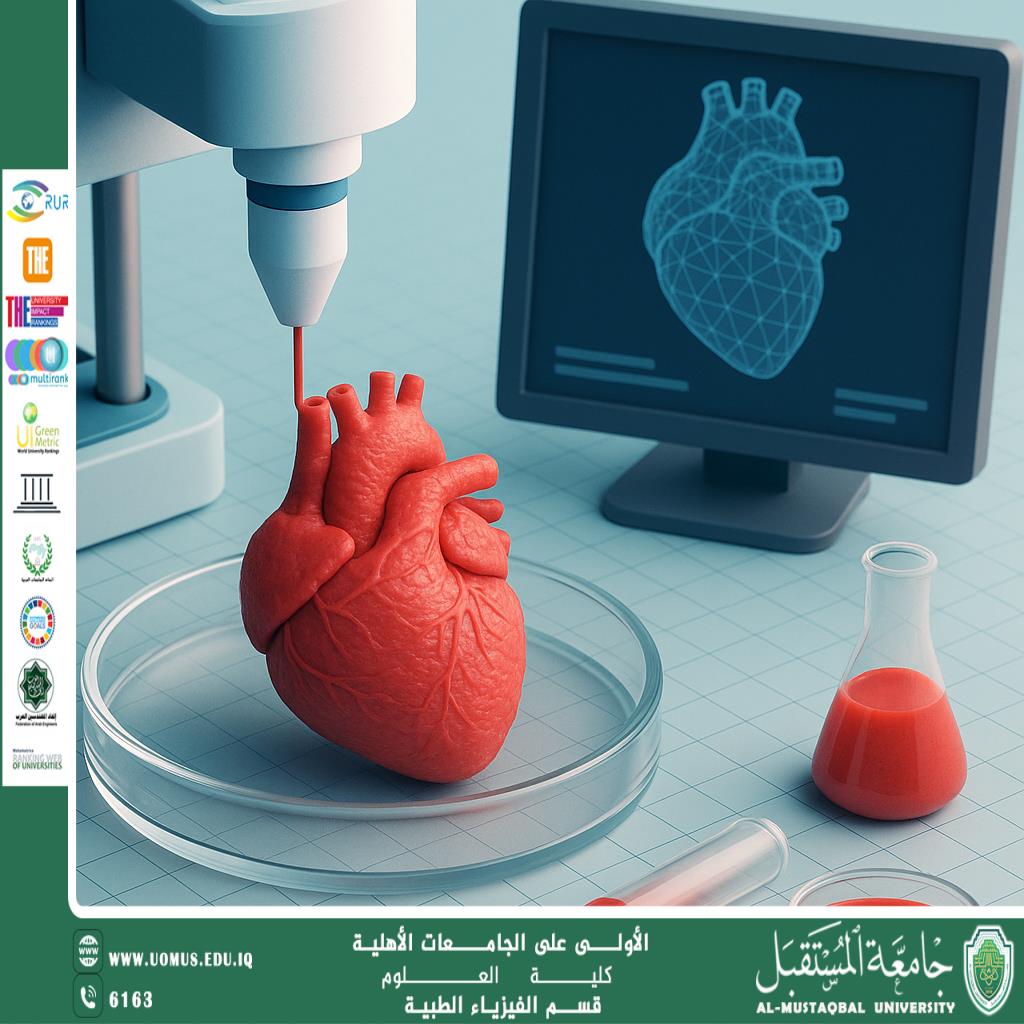
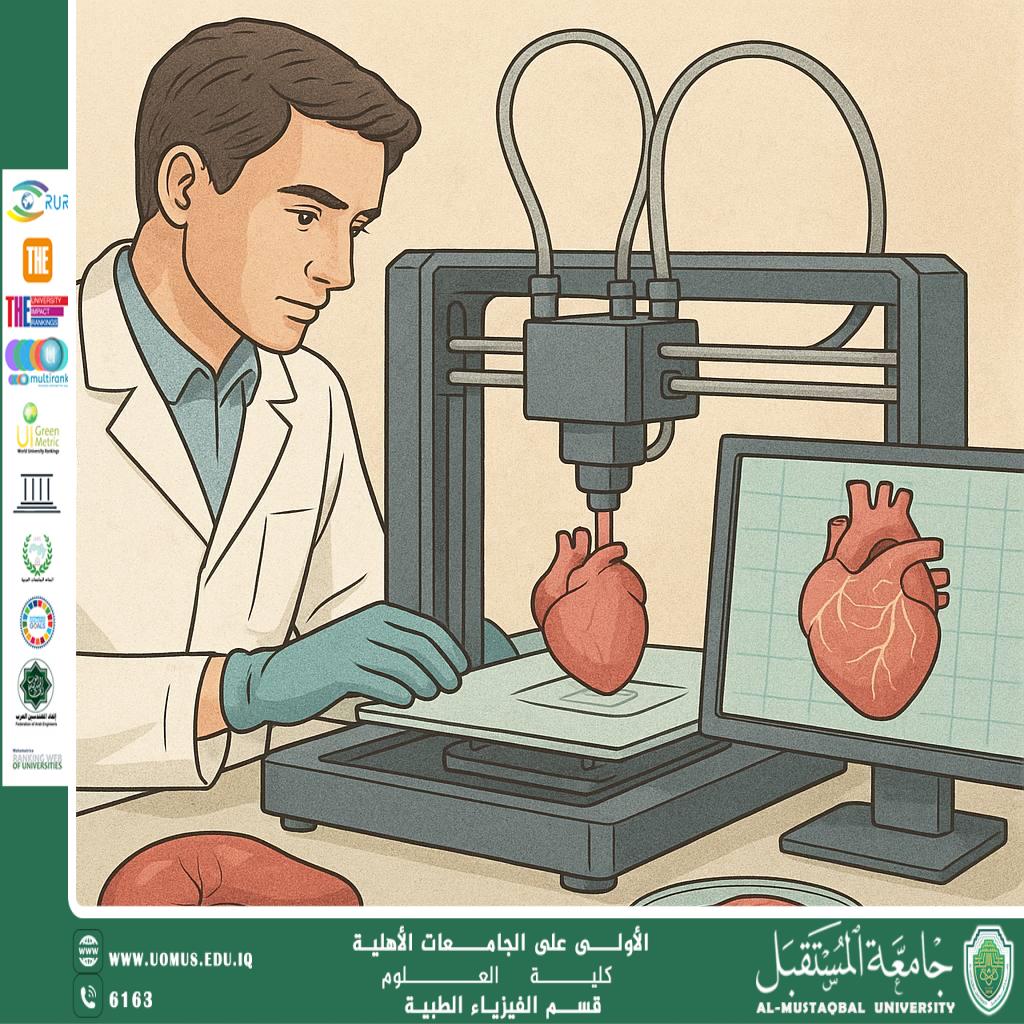
Organ transplantation is considered one of the most complex fields in modern medicine. With the growing demand for donor organs and their limited availability, alternative solutions have become critical for saving lives. Among the most promising innovations is 3D bioprinting technology, which is opening new horizons in the field of regenerative medicine.<br /><br />What is 3D Bioprinting?<br /><br />3D bioprinting is a technology that manufactures living tissues and organs using human cells as “bio-ink.” These cells are arranged in precise layers, based on specific digital designs, to mimic the intricate structures of natural organs. The ultimate goal is to produce fully functional, transplantable organs without the need for human donors.<br /><br />How Does the Technology Work?<br /><br />The bioprinting process involves several major stages:<br /> • Digital model design using medical imaging techniques such as MRI or CT scans.<br /> • Preparation of bio-ink, which contains stem cells and supporting biological materials.<br /> • Precise layer-by-layer printing, while maintaining a suitable biological environment for the cells to grow and differentiate into fully functional tissues.<br /><br />Applications of Bioprinting<br /><br />To date, laboratories have successfully printed various types of tissues, including:<br /> • Skin for burn victims.<br /> • Microvascular structures.<br /> • Cartilage and bone tissues.<br /> • Cardiac patches for heart repair.<br />Research is also underway to bioprint more complex organs such as kidneys and livers.<br /><br />Current Challenges<br /><br />Despite these promising advancements, there are still major challenges, including:<br /> • Difficulty in creating efficient vascular networks within printed organs.<br /> • Ensuring the viability and functionality of tissues after transplantation.<br /> • The complexity of engineering large and highly structured organs.<br /><br />A Promising Future<br /><br />Researchers predict that 3D bioprinting could become a practical solution within the next two decades, potentially revolutionizing healthcare. It could significantly reduce waiting lists for organ transplants and provide personalized treatment options tailored to individual patients.<br /><br /><br />"AL_mustaqbal University is the first university in Iraq<br/><br/><a href=https://uomus.edu.iq/Default.aspx target=_blank>al-mustaqbal University Website</a>