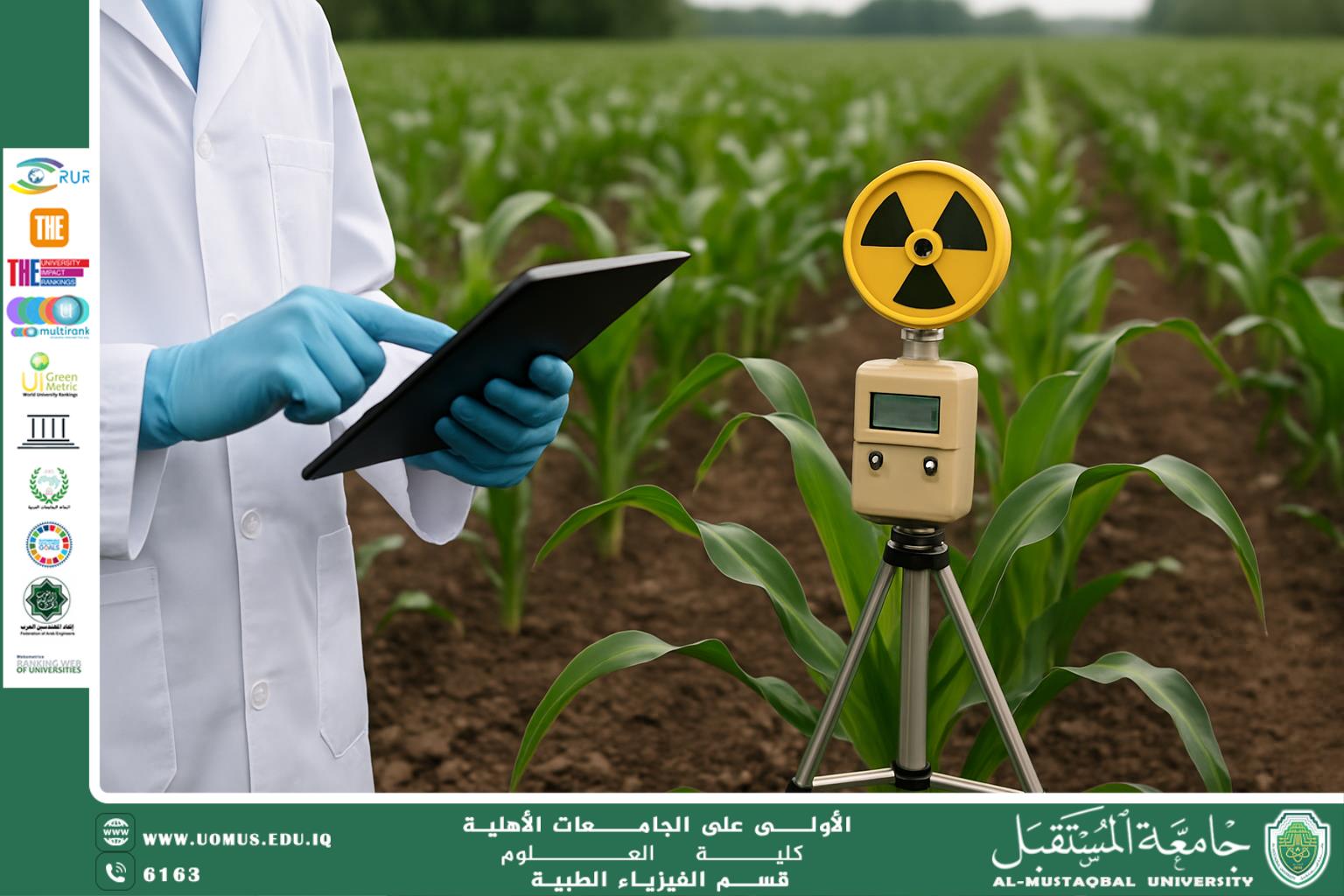
A scientific article by the administrator (Noor Issa) entitled “Applications of ionizing radiation in improving agricultural crops”
28/04/2025 Share :
Introduction<br /><br />Ionizing radiation has emerged as a modern tool used to improve agricultural crops, significantly contributing to the development of plant varieties with higher productivity and better resistance to harsh environmental conditions. Ionizing radiation refers to any type of radiation with enough energy to remove electrons from atoms or molecules, such as gamma rays, X-rays, and beta and alpha particles. Scientists have adopted this type of radiation as an innovative method to induce beneficial genetic mutations in plants.<br /><br />Principle of Operation<br /><br />Crop improvement using ionizing radiation involves exposing seeds or plant tissues to specific doses of radiation. This exposure causes changes in the genetic material (DNA), leading to mutations that may result in desirable traits, such as pest resistance, drought tolerance, or increased yield. After irradiation, plants that exhibit improved traits are selected and propagated using conventional methods.<br /><br />Key Applications<br /> 1. Development of Disease-Resistant Varieties<br />Ionizing radiation techniques have helped produce crops with increased resistance to fungal and bacterial diseases, such as rice resistant to blast disease and wheat resistant to rust.<br /> 2. Increased Productivity and Quality Enhancement<br />Radiation treatment has led to improvements in the yield of crops such as wheat, barley, and peanuts, along with enhancements in quality traits like protein and oil content.<br /> 3. Tolerance to Harsh Environmental Conditions<br />New varieties capable of withstanding drought and high salinity have been developed using ionizing radiation techniques, enabling the cultivation of marginal lands and expanding agricultural areas.<br /> 4. Improvement of Growth and Development Characteristics<br />Radiation has helped create plants with faster growth rates and earlier maturity, which is critical for reducing the cultivation and harvest periods.<br /><br />Real-World Examples<br /> • In India, more than 300 crop varieties have been developed through radiation techniques, including improved rice and black bean varieties.<br /> • In China, applications of radiation technology have increased wheat yields by 10–20%.<br /> • The International Atomic Energy Agency (IAEA), in collaboration with the Food and Agriculture Organization (FAO), runs programs to support the use of radiation-induced mutation techniques for crop improvement.<br /><br />Challenges and Risks<br /><br />Despite its advantages, ionizing radiation presents challenges, including the possibility of undesirable mutations, necessitating careful monitoring and strict selection of beneficial plants. Moreover, it is essential to ensure that final products are safe for human consumption and free from harmful effects.<br /><br />Conclusion<br /><br />Ionizing radiation has proven to be an effective and sustainable tool for crop improvement, contributing significantly to global food security. With technological advancements and a deeper understanding of plant genetics, the importance of this technique is expected to grow even further in the future.<br /><br /><br />"AL_mustaqbal University is the first university in Iraq"<br/><br/><a href=https://uomus.edu.iq/Default.aspx target=_blank>al-mustaqbal University Website</a>