A scientific article by the administrator (Nargis Jassim) entitled “Medical Imaging: The Foundation of Diagnosis and Treatment in Modern Medicine”
29/04/2025 Share :
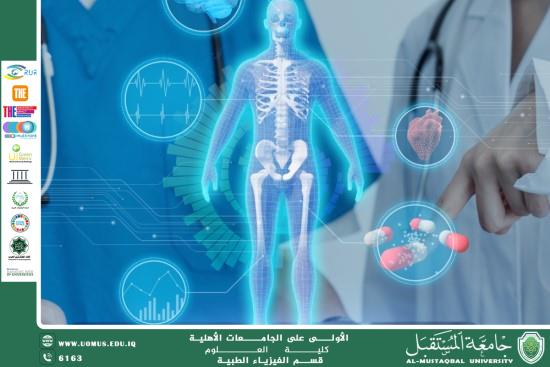
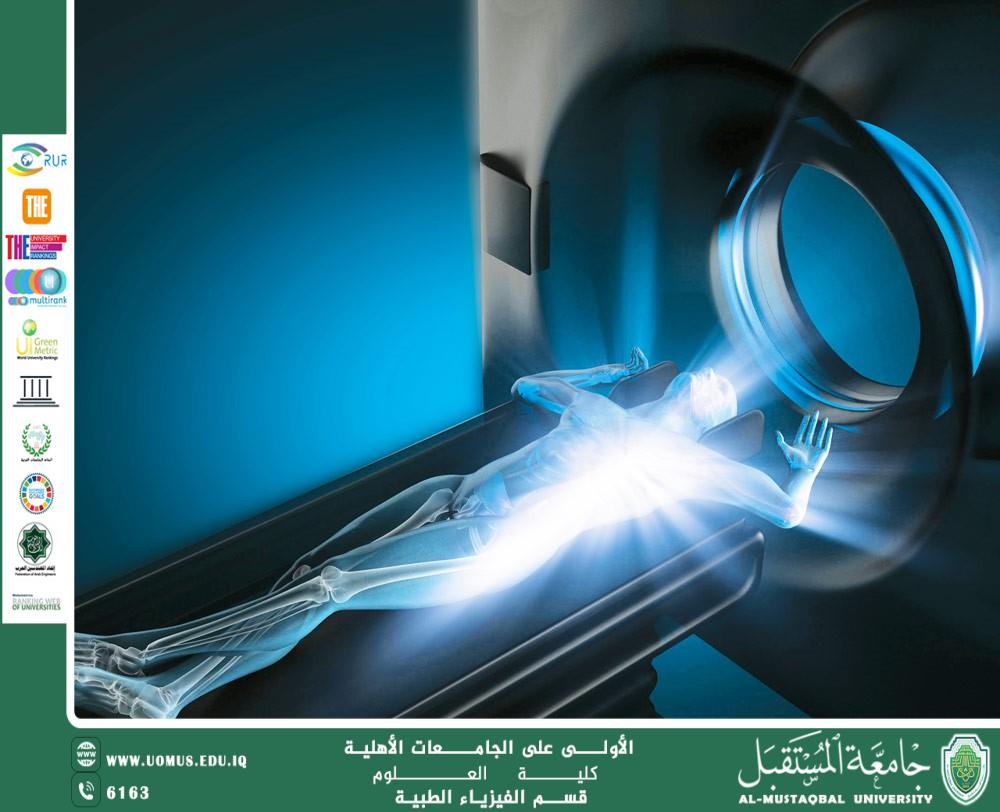
Medical imaging is one of the most vital fields in modern medicine, enabling physicians to visualize the internal structures of the body without surgical intervention. Technological advances in this area have led to the development of precise and efficient diagnostic tools used to detect diseases, assess their progression, and monitor treatment response. Medical imaging is also considered one of the most prominent applications of medical physics and biomedical engineering.<br /><br />Concept of Medical Imaging<br />Medical imaging refers to the use of imaging techniques based on sound waves, radiation, or magnetic fields to create detailed images of the body's organs, tissues, and internal structures. It can be broadly divided into two main categories:<br /><br />Structural imaging, such as X-rays<br /><br />Functional imaging, such as nuclear imaging.<br /><br />Types of Medical Imaging and Their Main Applications<br />X-ray Imaging<br /><br />One of the oldest imaging techniques, used to visualize bones, lungs, and teeth.<br /><br />It works by having X-rays penetrate tissues at varying densities.<br /><br />Computed Tomography (CT Scan)<br /><br />Combines a series of X-ray images taken from different angles and processes them with computer technology to create 3D images.<br /><br />It is particularly useful for imaging the brain, chest, abdomen, and blood vessels.<br /><br />Magnetic Resonance Imaging (MRI)<br /><br />Relies on strong magnetic fields and radio waves.<br /><br />Provides high-resolution images of soft tissues such as the brain, spinal cord, and joints.<br /><br />Does not use ionizing radiation, making it safer in certain cases.<br /><br />Ultrasound Imaging<br /><br />Uses high-frequency sound waves to image live tissues.<br /><br />Widely used for monitoring pregnancy and diagnosing conditions of the heart, liver, and kidneys.<br /><br />A safe and painless technique.<br /><br />Nuclear Imaging<br /><br />Includes techniques like Positron Emission Tomography (PET) and Single Photon Emission Computed Tomography (SPECT).<br /><br />Involves injecting or ingesting a radioactive substance and tracking its movement within the body to assess organ function.<br /><br />Used to evaluate tumor activity, heart disease, and brain disorders.<br /><br />Optical Imaging<br /><br />Emerging technologies that use light, such as infrared or fluorescence, particularly useful in biomedical research and surgical applications.<br /><br />Importance of Medical Imaging<br />Accurate and Rapid Diagnosis<br /><br />Enables the early detection of pathological conditions such as tumors, clots, and deformities.<br /><br />Treatment and Surgical Planning<br /><br />Assists physicians in developing precise plans before surgeries or radiation therapy.<br /><br />Monitoring Disease Progression and Treatment Response<br /><br />Used to assess whether patients are responding to treatments or require adjustments to their therapeutic strategies.<br /><br />Scientific Research<br /><br />Plays a crucial role in medical and pharmaceutical research to evaluate the effects of drugs on organs and tissues.<br /><br />Challenges in Medical Imaging<br />Radiation Exposure: Some techniques like X-rays and CT scans involve risks associated with cumulative radiation exposure, requiring careful dose management.<br /><br />High Costs: Advanced imaging devices such as MRI and PET scanners are expensive, limiting their availability in some regions.<br /><br />Need for Specialists: Image interpretation requires highly trained technicians and physicians.<br /><br />Future Developments in Medical Imaging<br />Artificial Intelligence (AI)<br /><br />Being used to analyze images, speed up diagnosis, and reduce human errors.<br /><br />3D and 4D Imaging<br /><br />Offers more detailed and dynamic visualization of biological processes inside the body.<br /><br />Fusion Imaging<br /><br />Combines data from different imaging modalities, like merging PET with CT or MRI, for a comprehensive functional and anatomical analysis.<br /><br />Molecular Imaging<br /><br />An advanced technique to observe biochemical processes in the body with high precision.<br />Medical imaging has revolutionized how diseases are diagnosed and treated, becoming an indispensable tool in modern healthcare. By integrating technology, physics, and artificial intelligence, this field will continue to evolve, promising more accurate, less invasive diagnostic methods that enhance patients' quality of life and accelerate recovery.<br /><br /><br />"AL_mustaqbal University is the first university in Iraq<br/><br/><a href=https://uomus.edu.iq/Default.aspx target=_blank>al-mustaqbal University Website</a>