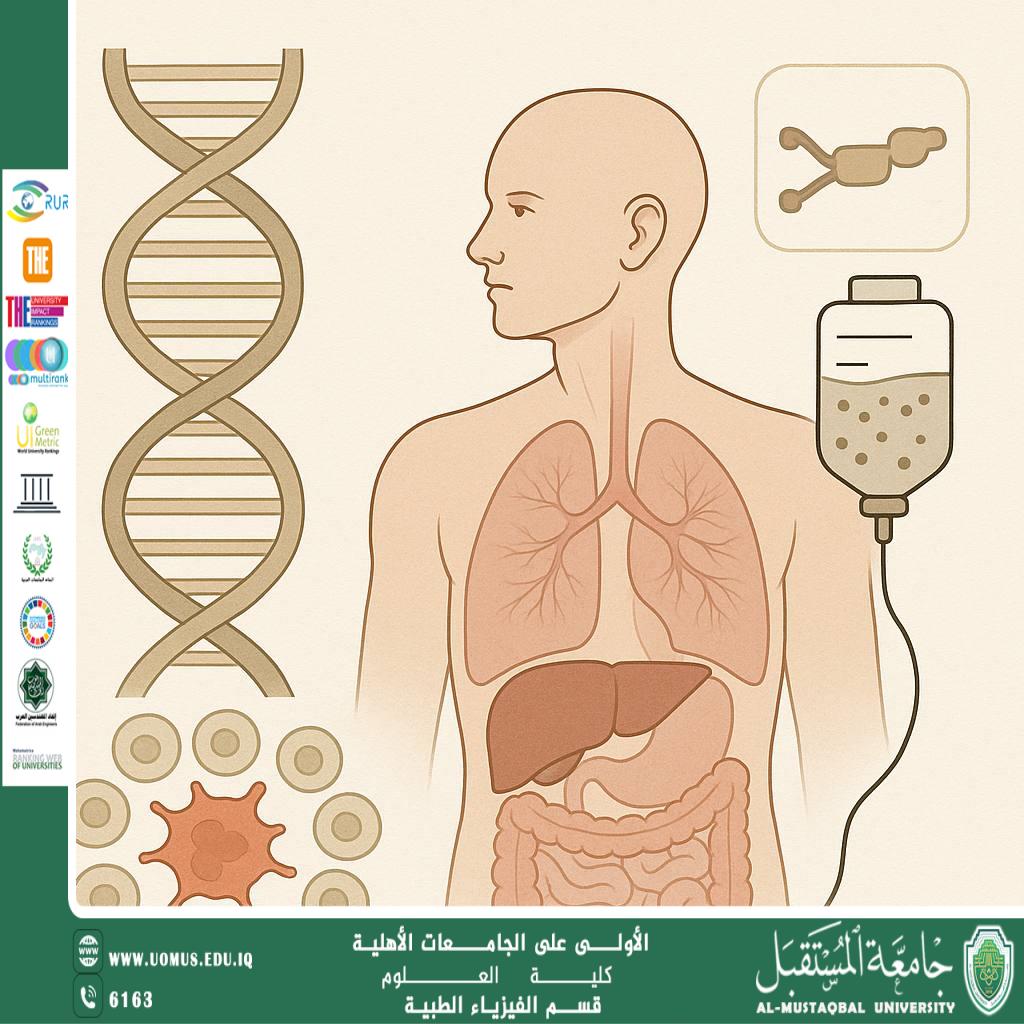
A scientific article by the teaching assistant (Hanin Hani) entitled "The role of genes in determining the response to chemotherapy"
03/05/2025 Share :
Introduction<br /><br />Chemotherapy is one of the most common treatments used in the fight against cancer. However, its effectiveness varies widely from one patient to another. These differences are not only due to the type or stage of the tumor, but are significantly influenced by genetic variations among individuals. This is where pharmacogenomics, the science that studies the relationship between genes and drug response, becomes crucial—forming a foundation for personalized medicine.<br /><br />Genetic Basis of Drug Response<br /><br />Genes play a central role in determining how drugs are absorbed, distributed, metabolized, and excreted by the body. For example, genes that regulate liver enzymes like CYP450 can affect how chemotherapy drugs are metabolized. Some individuals may carry mutations that slow down or speed up drug metabolism, which can reduce the drug’s effectiveness or increase its toxicity.<br /><br />Clinical Examples<br /> • TPMT gene: Controls the metabolism of the drug 6-mercaptopurine (6-MP) used in leukemia treatment. Mutations in this gene can increase the risk of toxicity if the dosage is not reduced.<br /> • BRCA1/2 genes: Mutations in these genes make cancer cells more sensitive to drugs such as Cisplatin and PARP inhibitors, especially in breast and ovarian cancers.<br /> • UGT1A1 gene: Affects the body’s response to Irinotecan, a chemotherapy agent used in colorectal cancer.<br /><br />Benefits and Challenges<br /><br />The importance of pharmacogenomics lies in its potential to offer tailored treatment for each patient, improving treatment outcomes and reducing adverse effects. However, challenges remain, including the high cost of genetic testing, the need for advanced laboratory infrastructure, and ethical concerns related to privacy and insurance coverage.<br /><br />Conclusion<br /><br />Understanding the genetic role in chemotherapy response represents a major breakthrough in modern medicine. As genetic analysis technologies continue to evolve, it becomes increasingly possible to predict treatment outcomes more accurately—paving the way toward effective and safe personalized medicine<br /><br /><br /><br />"AL_mustaqbal University is the first university in Iraq"<br/><br/><a href=https://uomus.edu.iq/Default.aspx target=_blank>al-mustaqbal University Website</a>