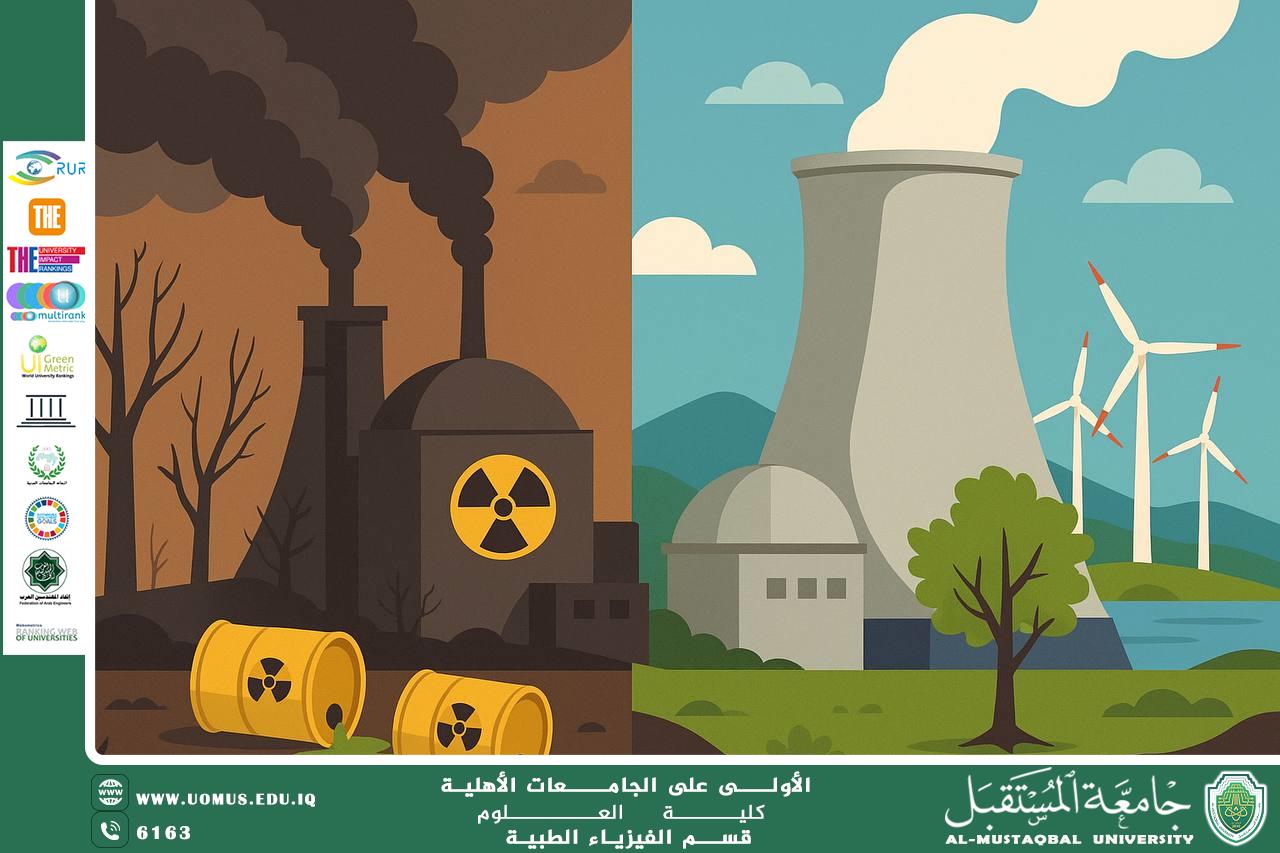
A scientific article by the lecturer ( Assistant Lecturer Samaher Saad) entitled "The Impact of Nuclear Energy on the Environment: Risks and Benefits"
03/05/2025 Share :
Introduction<br /><br />Nuclear energy is one of the most controversial sources of power in the modern world. On one hand, it provides a powerful and efficient means of generating electricity, and on the other, it raises environmental, health, and security concerns. This article aims to examine the environmental impacts of nuclear energy, both in terms of its benefits and risks, in order to provide a balanced scientific assessment of its sustainability and practicality.<br /><br />⸻<br /><br />1. Environmental Benefits of Nuclear Energy<br /><br />1.1 Low Carbon Emissions<br /><br />One of the most significant advantages of nuclear power is that it produces no carbon emissions during reactor operation. This makes it a climate-friendly option compared to fossil fuels like coal and natural gas.<br /><br />1.2 High Energy Efficiency<br /><br />Nuclear energy is capable of generating vast amounts of electricity from relatively small amounts of fuel, reducing the strain on natural resources and minimizing fuel consumption.<br /><br />1.3 Reliable Power Supply<br /><br />Unlike solar and wind energy, nuclear power does not depend on weather conditions, making it a stable and dependable source of base-load electricity supply.<br /><br />⸻<br /><br />2. Environmental Risks of Nuclear Energy<br /><br />2.1 Radioactive Waste<br /><br />One of the major environmental concerns with nuclear power is the generation of radioactive waste. These materials remain hazardous for thousands of years and require secure, long-term storage solutions.<br /><br />2.2 Nuclear Accidents<br /><br />Incidents like the Chernobyl disaster (1986) and Fukushima (2011) have highlighted the potential dangers of nuclear power plants in case of technical failure or natural disasters, leading to widespread radioactive contamination.<br /><br />2.3 Impact on Wildlife and Water Sources<br /><br />Nuclear power plants consume large amounts of water for cooling purposes, which can raise the temperature of nearby water bodies and disrupt aquatic ecosystems.<br /><br />⸻<br /><br />3. Nuclear Energy and Sustainability<br /><br />The long-term viability of nuclear energy as an environmentally sustainable option depends on the advancement of safer technologies, the development of effective radioactive waste management systems, and the enforcement of strict safety protocols. Innovations like Generation IV reactors offer hope for more efficient and cleaner nuclear power in the future.<br /><br />⸻<br /><br />Conclusion<br /><br />While nuclear energy poses serious environmental risks, its benefits in reducing carbon emissions and ensuring energy security are significant. The challenge lies in harnessing this energy safely and sustainably, while protecting the environment and human health. A balanced, science-based approach is essential to determine the role of nuclear power in a future low-carbon energy mix.<br /><br /><br /><br />"AL_mustaqbal University is the first university in Iraq"<br/><br/><a href=https://uomus.edu.iq/Default.aspx target=_blank>al-mustaqbal University Website</a>