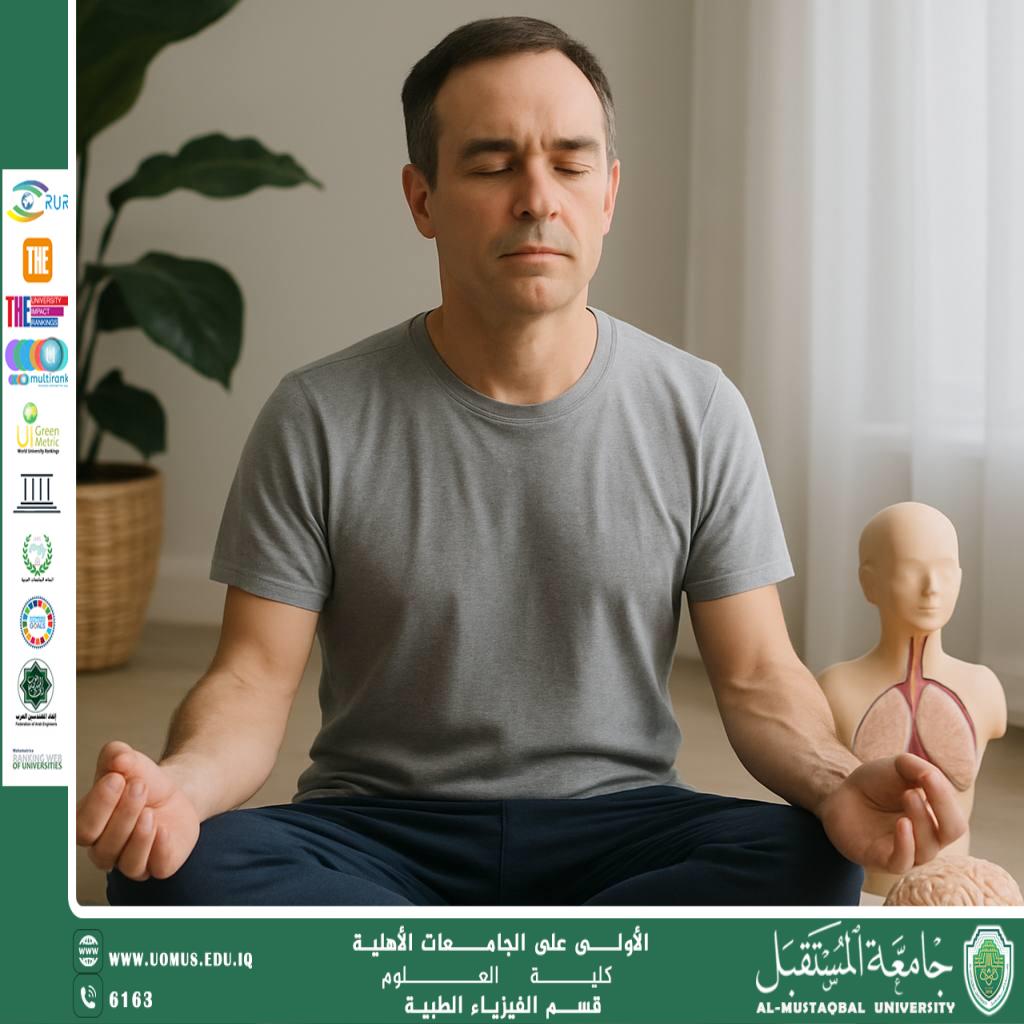
A scientific article by the teaching assistant (Ahmed Abdel Salam) entitled “The Benefits of Meditation: A Scientific Perspective on Mental and Physical Health”
03/05/2025 Share :
Introduction<br /><br />Meditation is an ancient mental practice with roots in Eastern traditions, particularly Buddhism and Hinduism. In recent decades, it has become a focus of scientific research due to its potential benefits for both mental and physical health. This article aims to present the most significant scientifically supported benefits of meditation and the mechanisms that may underlie these effects.<br /><br />⸻<br /><br />1. Meditation and Mental Health<br /><br />1.1 Reducing Stress and Anxiety<br /><br />Numerous studies indicate that regular meditation practices—such as transcendental meditation or mindfulness meditation—significantly reduce cortisol levels, the hormone associated with stress. It also helps alleviate symptoms of anxiety disorders.<br /><br />1.2 Enhancing Mood and Reducing Depression<br /><br />Systematic reviews and meta-analyses show that meditation can be an effective complementary therapy for depression, enhancing emotional regulation and improving overall mood.<br /><br />1.3 Increasing Self-Awareness<br /><br />Meditation promotes greater self-awareness and helps individuals observe their thoughts and feelings without judgment, enhancing resilience and adaptive coping skills.<br /><br />⸻<br /><br />2. Meditation and Physical Health<br /><br />2.1 Supporting Heart Health<br /><br />Research suggests that meditation can help lower blood pressure and improve heart rate regulation, which reduces the risk of cardiovascular disease.<br /><br />2.2 Boosting the Immune System<br /><br />Regular meditators have been found to exhibit stronger immune responses, likely due to reduced stress and improved sleep quality.<br /><br />2.3 Pain Management<br /><br />Meditation is increasingly used in chronic pain management programs. Brain imaging studies show that it alters how the brain perceives and processes pain.<br /><br />⸻<br /><br />3. Meditation and the Brain<br /><br />Neuroimaging techniques (such as fMRI) reveal that meditation leads to structural and functional changes in the brain, particularly in areas like:<br /> • Prefrontal cortex (linked to focus and decision-making)<br /> • Hippocampus (associated with memory)<br /> • Amygdala (involved in emotional responses and threat detection)<br /><br />⸻<br /><br />Conclusion<br /><br />Growing scientific evidence suggests that meditation is not merely a spiritual ritual but a powerful tool for enhancing mental and physical health. It can be integrated into healthcare, education, and daily routines. However, further long-term research is needed to fully understand its sustained effects.<br /><br /><br /><br />"AL_mustaqbal University is the first university in Iraq"<br/><br/><a href=https://uomus.edu.iq/Default.aspx target=_blank>al-mustaqbal University Website</a>