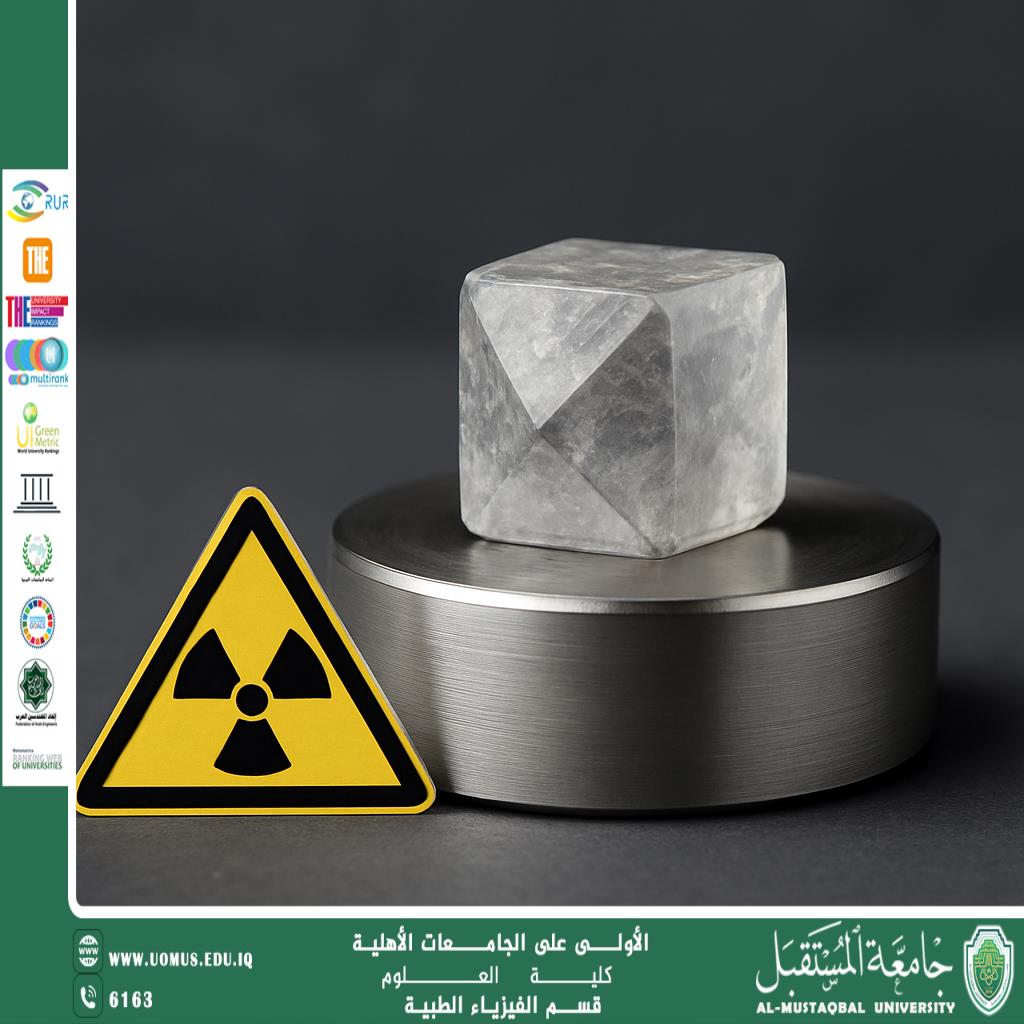
A scientific article by the teaching assistant (Mohamed Abdel Zahra) entitled “Energy Sustainability: Can Radioactive Batteries Achieve It or Pose a Danger?”
05/05/2025 Share :
With the global demand for sustainable energy sources rising, radioactive batteries—such as carbon-14 diamond batteries—have emerged as one of the revolutionary solutions that could reshape the energy sector in the future. Yet despite their astonishing promise of powering devices for thousands of years, these batteries also raise fundamental questions about safety, environmental sustainability, and potential risks.<br /><br />How Do Radioactive Batteries Work?<br /><br />Radioactive batteries rely on radioactive isotopes like carbon-14 or plutonium-238, which release energy through radioactive decay. This energy is converted into electrical current using semiconductor materials or via a synthetic diamond shell that acts both as a radiation barrier and an energy generator.<br /><br />Gains in Energy Sustainability<br /><br />Long Operational Life: Radioactive batteries can last for decades or even thousands of years without needing recharging or replacement.<br /><br />Recycling Nuclear Waste: Carbon-14 is extracted from the waste of nuclear reactors, contributing to the reduction of radioactive waste.<br /><br />Critical Applications: These batteries supply power in hard-to-reach environments such as space, deep-sea exploration, or implanted medical devices inside the human body.<br /><br />Risks and Challenges<br /><br />Radiation Safety: While the diamond casing prevents radiation leakage, industrial accidents or manufacturing defects could pose dangers.<br /><br />Limited Power Capacity: These batteries deliver relatively low energy, making them unsuitable for high-power applications like electric cars or industrial use.<br /><br />Environmental and Regulatory Issues: Handling radioactive materials requires advanced infrastructure and strict regulatory systems to avoid environmental contamination.<br /><br />Balancing Benefit and Risk<br /><br />Radioactive batteries appear to offer a sustainable solution for specific energy sector challenges, but they are not a universal fix. They should be viewed as a complementary tool within the global energy system, especially in applications where maintenance or recharging is impractical.<br /><br />Future Directions and Recommendations<br /><br />To maximize the benefits of this technology while minimizing its risks:<br /><br />Invest in research to improve energy conversion efficiency.<br /><br />Establish strict safety standards for manufacturing, storage, and transport.<br /><br />Raise public awareness about the advantages and risks of these batteries.<br /><br />In summary, radioactive batteries open new doors in the field of energy sustainability, but they require a careful balance between scientific ambition and responsible caution to ensure a safe and sustainable future.<br /><br /><br /><br />"AL_mustaqbal University is the first university in Iraq"<br/><br/><a href=https://uomus.edu.iq/Default.aspx target=_blank>al-mustaqbal University Website</a>