A scientific article by the lecturer (Dr. Karim Abis Handoul) entitled “The Fusion of Hydrogen and Nitrogen for the First Time in History: A Scientific Achievement with “Catastrophic” Implications”
07/05/2025 Share :
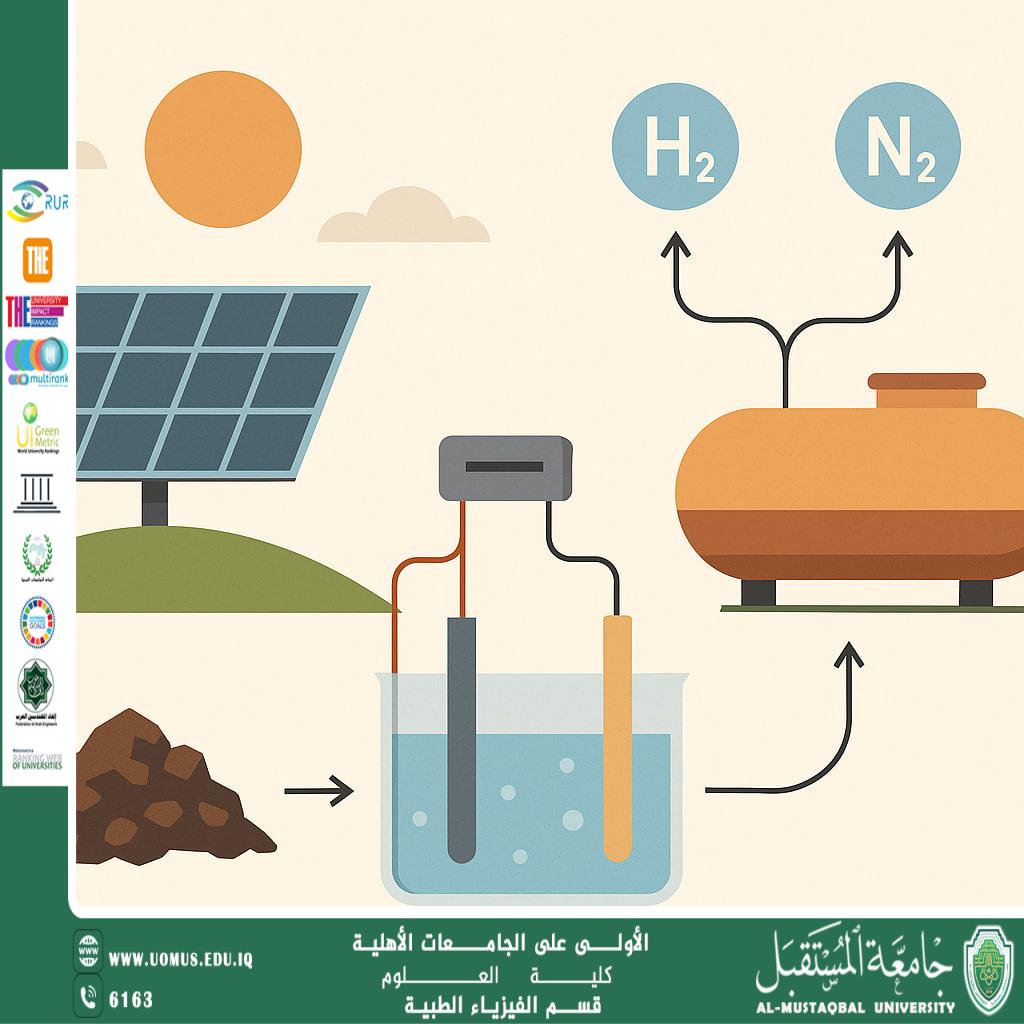
A groundbreaking scientific achievement has been made by researchers at the University of Illinois Chicago (UIC), who have successfully achieved the first-ever direct fusion between hydrogen and nitrogen. This breakthrough opens new horizons for improving ammonia production and hydrogen fuel. While the innovation promises enormous potential to reshape the energy and agriculture sectors, its potential environmental consequences could be “catastrophic” if not carefully managed.<br /><br />A New Method for Hydrogen Production Using Solar Energy and Agricultural Waste<br />Engineers at the University of Illinois have developed a pioneering technique to extract hydrogen gas from water using solar energy and agricultural waste. This method reduces the energy required to extract hydrogen from water by an astonishing 600%, paving the way for more sustainable approaches to producing this vital fuel.<br /><br />The technique relies on biochar, a carbon-rich material derived from agricultural waste such as cow manure and sugarcane husks. Biochar plays a crucial role in reducing electricity consumption during the water electrolysis process, making the process more efficient and less costly.<br /><br />Most importantly, this method combines improved production efficiency with reliance on renewable energy sources, enhancing the sustainability of the agricultural sector and opening new opportunities for farmers to generate their own energy needs and additional income streams.<br /><br />Efficiency and Environmental Impact<br />Experiments have shown that this technique can produce around 35% of hydrogen by combining biochar with solar energy. Surprisingly, the process requires less electrical energy than what is produced by small AA batteries.<br /><br />The researchers did not overlook the environmental aspect; the technology includes systems to capture the carbon dioxide (CO₂) generated during the process, allowing it to be later used in soft drink manufacturing and the production of chemicals for plastics, rather than being released into the atmosphere.<br /><br />These results pave the way for clean solutions to hydrogen production, relying on low-cost energy and agricultural waste, thereby supporting global sustainability goals.<br /><br />Revolution in Ammonia Production: Lithium-Mediated Approach<br />In addition to innovations in hydrogen production, the UIC team has also made significant progress in producing ammonia more cleanly. They developed a technique based on lithium-mediated synthesis, where nitrogen gas reacts with hydrogen-rich liquids using a charged lithium electrode.<br /><br />This process occurs under low-temperature, ambient conditions, compared to traditional methods that require high pressures and temperatures. Most importantly, the new technique produces ammonia at a cost of about $450 per ton, which is 60% lower than conventional methods, aligning with the U.S. Department of Energy’s requirements for industrial ammonia production.<br /><br />A Promising Future for Hydrogen Fuel<br />The benefits of the new technology extend beyond ammonia production, also supporting the future of hydrogen fuel. Ammonia can serve as a carrier to transport hydrogen more safely and efficiently. Once the ammonia reaches its destination, it can be converted back into hydrogen for use as clean fuel.<br /><br />This approach helps reduce the carbon emissions associated with transportation and storage, supporting global efforts to transition toward more sustainable and environmentally friendly energy sources.<br /><br />Environmental Challenges and Potential Risks<br />Despite the promising potential of this achievement, the fusion of hydrogen and nitrogen carries significant environmental risks. The production of clean ammonia and hydrogen, despite efforts to capture carbon, still generates amounts of CO₂ that could exacerbate global warming if not strictly controlled.<br /><br />Therefore, experts warn that expanding this technology without establishing strict environmental management strategies could lead to catastrophic consequences that outweigh its benefits.<br />Expected Economic and Social Impacts<br />These innovations have the potential to disrupt traditional industrial systems for producing ammonia and hydrogen. Existing sectors are expected to face major challenges as production shifts toward cleaner, lower-cost technologies, which could negatively impact employment and economic stability in certain communities.<br /><br /><br /><br />"AL_mustaqbal University is the first university in Iraq"<br/><br/><a href=https://uomus.edu.iq/Default.aspx target=_blank>al-mustaqbal University Website</a>