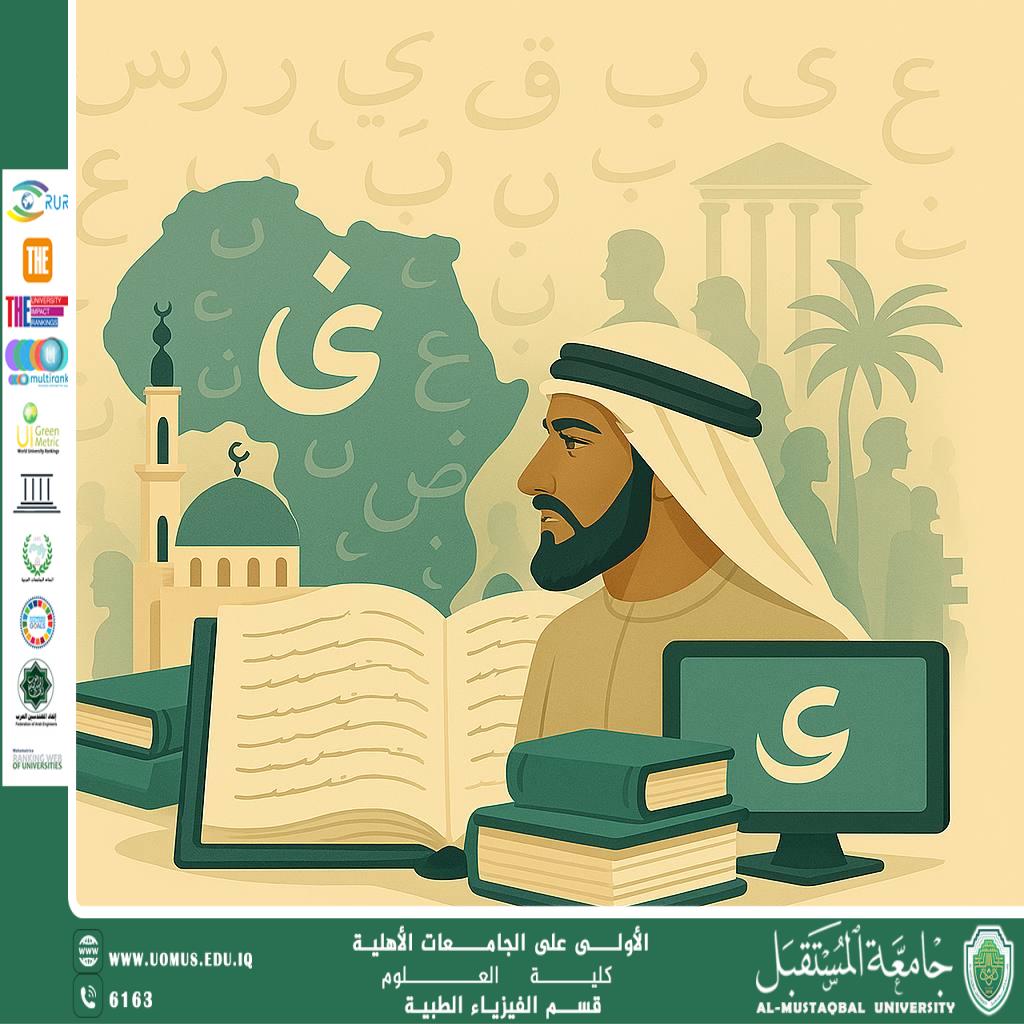
A scientific article by the lecturer (Assistant Lecturer Muhammad Ali Hussein) entitled “The Role of the Arabic Language in Preserving Cultural Identity in the Light of Globalization”
07/05/2025 Share :
Introduction<br /><br />Arabic is one of the oldest living languages in the world and a fundamental pillar of Arab cultural identity. With the rapid advancement of communication technologies and the intensification of globalization, the Arabic language faces numerous challenges that threaten its presence and influence. This calls for a deeper examination of its role in preserving cultural identity under these changing circumstances.<br /><br />Language and Cultural Identity<br /><br />Language is more than a tool for communication—it is a vessel that carries a society’s values, history, and intellectual legacy. Arabic, as the language of the Qur’an, literature, heritage, and traditional knowledge, plays a central role in shaping and expressing the Arab world’s cultural identity.<br /><br />The Impact of Globalization on Arabic<br /> 1. Spread of Foreign Languages: Especially English, which dominates technology, education, and media.<br /> 2. Decline in the Use of Standard Arabic: Local dialects and foreign languages increasingly replace Modern Standard Arabic (MSA) in daily communication, education, and media.<br /> 3. Cultural Marginalization: A noticeable reduction in Arabic-language cultural production in favor of foreign content.<br /><br />Arabic’s Role in Resisting Cultural Dissolution<br /> 1. Rooting Identity: Teaching and promoting Arabic deepens cultural belonging and identity in younger generations.<br /> 2. Modern Arabic Literature: Reflects the region’s social, political, and cultural transformations and preserves national consciousness.<br /> 3. Media and Education: Can play a vital role in revitalizing MSA and reinforcing its status in society.<br /> 4. Digital Arabic Content: Investing in quality digital content in Arabic helps protect and modernize cultural identity.<br /><br />Recommendations<br /> • Update Arabic language curricula to meet contemporary needs.<br /> • Support Arabic-language cultural and media production.<br /> • Promote scientific research in linguistics and Arab heritage.<br /> • Utilize technology to teach and spread the Arabic language globally.<br /><br />Conclusion<br /><br />Arabic is more than a spoken language—it is a bridge that connects Arab societies with their history, values, and identity. In the face of globalization’s challenges, preserving and promoting the Arabic language is a shared responsibility that requires commitment from individuals, communities, and institutions alike.<br /><br /><br /><br /><br />"AL_mustaqbal University is the first university in Iraq"<br/><br/><a href=https://uomus.edu.iq/Default.aspx target=_blank>al-mustaqbal University Website</a>