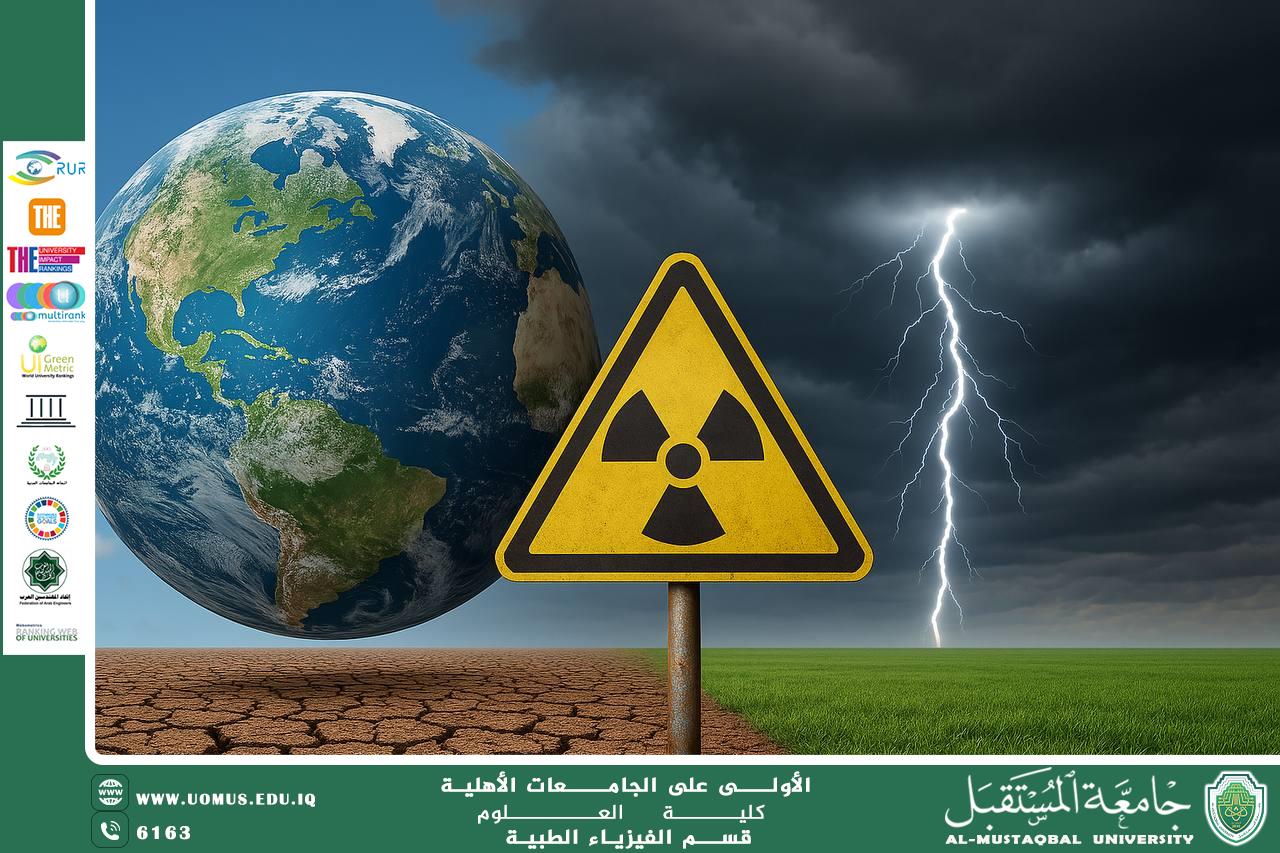
A scientific article by the teaching assistant (Mohamed Abdel Zahra) entitled “Environmental Physics: A Study of the Impact of Physical Factors on the Environment, Such as Climate Change and Radiation”
08/05/2025 Share :
Introduction <br />Environmental physics is a vital scientific field that examines the impact of physical factors on the environment, including climate change and radiation. As technological advancements continue, understanding these effects has become essential for maintaining ecological balance and mitigating the negative consequences of human activities. This discipline helps analyze natural phenomena and offers scientific solutions to environmental challenges. <br /><br /> The Impact of Climate Change on the Environment <br />Climate change results from various natural and human-induced factors, such as greenhouse gas emissions and increased industrial activity. Its effects on the environment include: <br />- Rising temperatures: Leading to the melting of polar ice and rising sea levels. <br />- Changing weather patterns: Causing unexpected droughts and floods, affecting biodiversity and agriculture. <br />- Ecosystem disturbances: Altering species distribution, leading to the extinction of certain organisms and disrupting ecological balance. <br /><br /> Radiation and Its Environmental Effects <br />Radiation significantly influences the environment, whether naturally occurring, such as cosmic rays, or human-generated, such as nuclear radiation. Some of its major effects include: <br />- Nuclear radiation: Contaminating soil and water, posing risks to human and animal health. <br />- Ultraviolet radiation: Resulting from ozone depletion, negatively affecting living organisms and increasing the risk of skin diseases. <br />- Chronic radiation exposure: Leading to genetic mutations and long-term health disorders. <br /><br />The Role of Environmental Physics in Addressing These Challenges <br />Environmental physics plays a crucial role in analyzing these factors and proposing scientific solutions to minimize their adverse effects, including: <br />- Developing technologies for precise climate monitoring and forecasting. <br />- Designing materials and methods to protect organisms from harmful radiation exposure. <br />- Implementing clean energy strategies to reduce dependence on polluting sources. <br /><br />Conclusion <br />Environmental physics is not just a scientific discipline but also a necessary tool for understanding ecological challenges and developing sustainable solutions. Through research and technological advancements, it is possible to achieve environmental balance and protect the planet for future generations. <br /><br /><br /><br />"AL_mustaqbal University is the first university in Iraq"<br/><br/><a href=https://uomus.edu.iq/Default.aspx target=_blank>al-mustaqbal University Website</a>