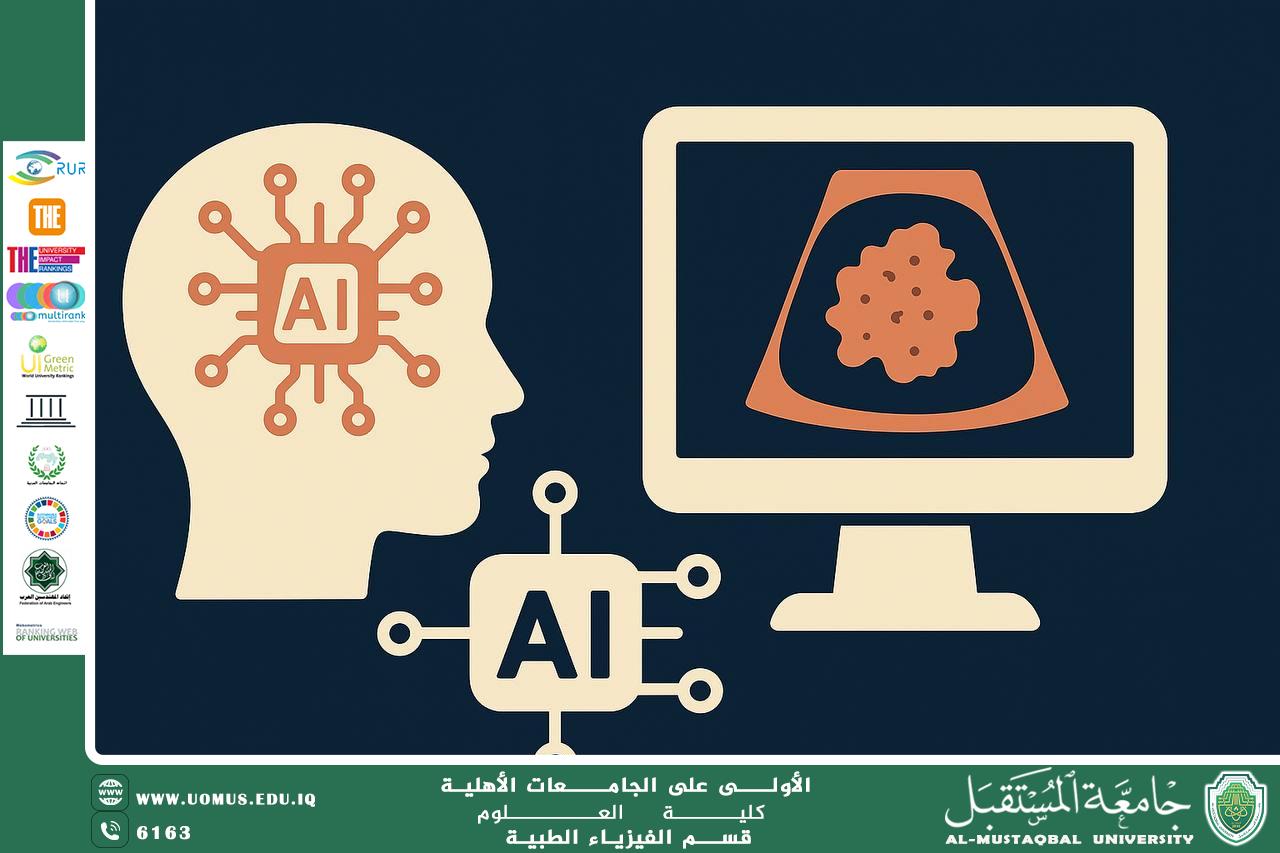
A scientific article by the administrator (Nargis Jassim) entitled “Applications of Artificial Intelligence in Radiological Tumor Diagnosis”
08/05/2025 Share :
Introduction <br />Artificial intelligence (AI) has revolutionized the field of medical diagnostics, particularly in tumor detection through imaging technologies. By utilizing deep learning and image processing techniques, AI enhances the accuracy and speed of diagnosing tumors in various medical scans such as MRI, CT scans, and X-rays. The integration of AI in this field helps reduce human errors, expedite diagnosis, and improve early cancer detection. <br /><br /> AI's Role in Tumor Diagnosis <br />AI plays a significant role in tumor diagnosis through various applications, including: <br />- Medical Image Analysis: Deep learning algorithms process medical images with high precision, detecting abnormal patterns indicative of tumors. <br />- Early Tumor Detection: AI can identify subtle tissue changes that suggest tumor formation, allowing for earlier intervention. <br />- Improved Diagnostic Accuracy: AI aids in reducing interpretation errors by radiologists, increasing reliability in medical assessments. <br />- Tumor Classification: AI algorithms analyze tumor characteristics to predict its type, assisting doctors in determining the most effective treatment. <br /><br /> AI Technologies Used in Tumor Diagnosis <br />Several AI techniques contribute to medical imaging advancements, such as: <br />- Deep Learning (Neural Networks): Uses artificial neural networks to process complex image data and extract critical features. <br />- Image Enhancement and Processing: Improves the resolution and quality of medical images for better diagnosis. <br />- Predictive Analysis: AI models predict tumor progression based on patient history and scan patterns. <br />- Big Data Integration: AI systems analyze vast medical datasets to refine diagnostic accuracy. <br /><br /> Challenges of AI in Tumor Diagnosis <br />Despite its promising potential, AI implementation in tumor diagnostics faces several challenges: <br />- Data Availability and Accuracy: AI models require large and well-annotated datasets for effective training. <br />- High Costs: Advanced AI technology and infrastructure demand significant investment. <br />- Privacy and Security Concerns: Patient data must be protected against unauthorized access. <br />- Dependence on Human Experts: AI assists radiologists but cannot fully replace human judgment. <br /><br /> Conclusion <br />AI in tumor diagnosis using medical imaging represents a significant leap in healthcare technology. By offering precision analysis, early detection, and improved classification, AI enhances medical diagnostics and facilitates better treatment decisions. As AI continues to evolve, its role in oncology and radiology will expand, making tumor detection faster and more efficient. <br /><br /><br /><br />"AL_mustaqbal University is the first university in Iraq"<br/><br/><a href=https://uomus.edu.iq/Default.aspx target=_blank>al-mustaqbal University Website</a>