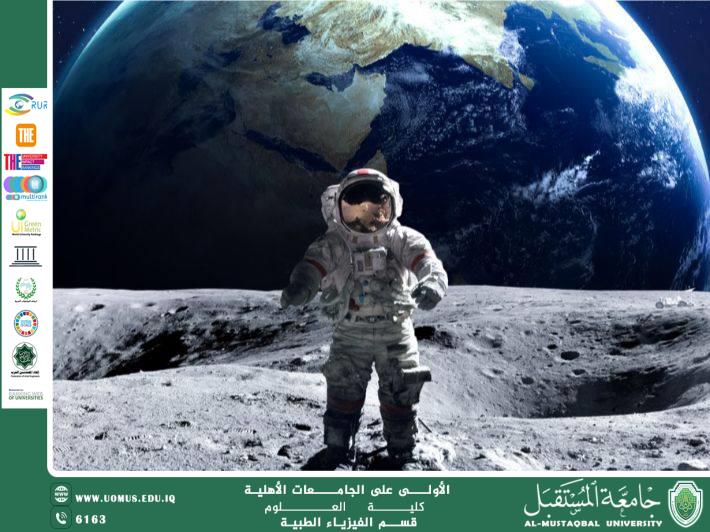
A scientific article by the teaching assistant (Iftikhar Thamer) entitled "The Effect of Space on the Human Body"
10/05/2025 Share :
Space travel is extremely challenging for a human being, as the body encounters several physical and biological effects that are different from those experienced in the Earth environment. Scientific research has shown that space has a variety of effects on the vital organs of the human body, starting from the musculoskeletal system to the nervous and hormonal systems. In this article, Centnaul highlighted the impacts that the human body experiences as a result of being in space.<br /><br />1. Effects on the musculoskeletal system<br /><br />Human muscles and bones in space undergo drastic changes due to the absence of gravity. On Earth, gravity works to maintain muscle and bone strength through the constant need to bear weight and move. But in space, the pressure caused by gravity decreases leading to progressive muscle and bone weakness.<br /> • Bone thinning: In the microgravity environment (microgravity), the body is subjected to a marked loss of bone density, with astronauts potentially losing about 1-2% of their bone mass per month. This bone weakness increases the risk of fractures when returning to the floor.<br /> • Muscle weakness: The lack of use of the muscles in space leads to their atrophy and poor strength. This is compensated for by forced exercises performed by astronauts on special exercise machines.<br /><br />2. Effects on the cardiovascular system<br /><br />In the absence of gravity, the heart is not assigned to pump blood to the lower body as on Earth, causing changes in blood circulation. Some of the most prominent impacts observed include:<br /> • Vasoconstriction: Due to the lack of need to pump blood against gravity, there may be a decrease in the volume of blood flowing to the lower extremities of the body.<br /> • Hypertension: Many astronauts experience low blood pressure upon return to Earth due to the impaired ability of blood vessels to adapt to Earth’s gravity.<br /><br />3. Effects on the Nervous System<br /><br />Space greatly affects the central nervous system. Astronauts experience changes in sensory and motor functions as a result of adaptation to the microgravity environment. The most prominent of these effects are:<br /> • Balance disorders: In the microgravity environment, astronauts have difficulty maintaining balance due to disruption of incoming signals from the inner ear, affecting their ability to navigate easily.<br /> • Psychological disorders: Isolation in space, combined with environmental changes, can affect the psychological state of astronauts. They may experience stress and anxiety, in addition to feelings of isolation as a result of separation from land and family.<br /><br />4. Effects on eyes and eyesight<br /><br />Some astronauts notice changes in their vision when in space for long periods of time. Among those changes:<br /> • Increased pressure on the eye: Altered fluid distribution in the body can lead to increased intraocular pressure, which may cause blurred vision.<br /> • Blurred vision: Some astronauts may experience blurred vision due to changes in eye shape after a long period of adaptation to the space environment.<br /><br />5. Effects on the immune system<br /><br />While the human immune system is blessed with the ability to protect the body from infection in the Earth environment, space causes changes that affect the effectiveness of this system:<br /> • Weakened Immune Response: Studies show that exposure to microgravity can lead to a weakened immune system response, making astronauts more susceptible to disease.<br /> • Environmental effects: Spending a long time in space exposes the body to several cosmic radiations, which may affect immune cells.<br /><br />6. Space Radiation<br /><br />One of the great dangers that man is exposed to in space is cosmic radiation and solar radiation, which are not blocked by the Earth’s atmosphere. This radiation can cause:<br /> • Cell and DNA damage: Excessive exposure to radiation can lead to DNA mutations, potentially increasing the risk of cancer.<br /> • Damage to tissues: Radiation may lead to the destruction of healthy cells in the body and affect the function of vital organs.<br/><br/><a href=https://uomus.edu.iq/Default.aspx target=_blank>al-mustaqbal University Website</a>