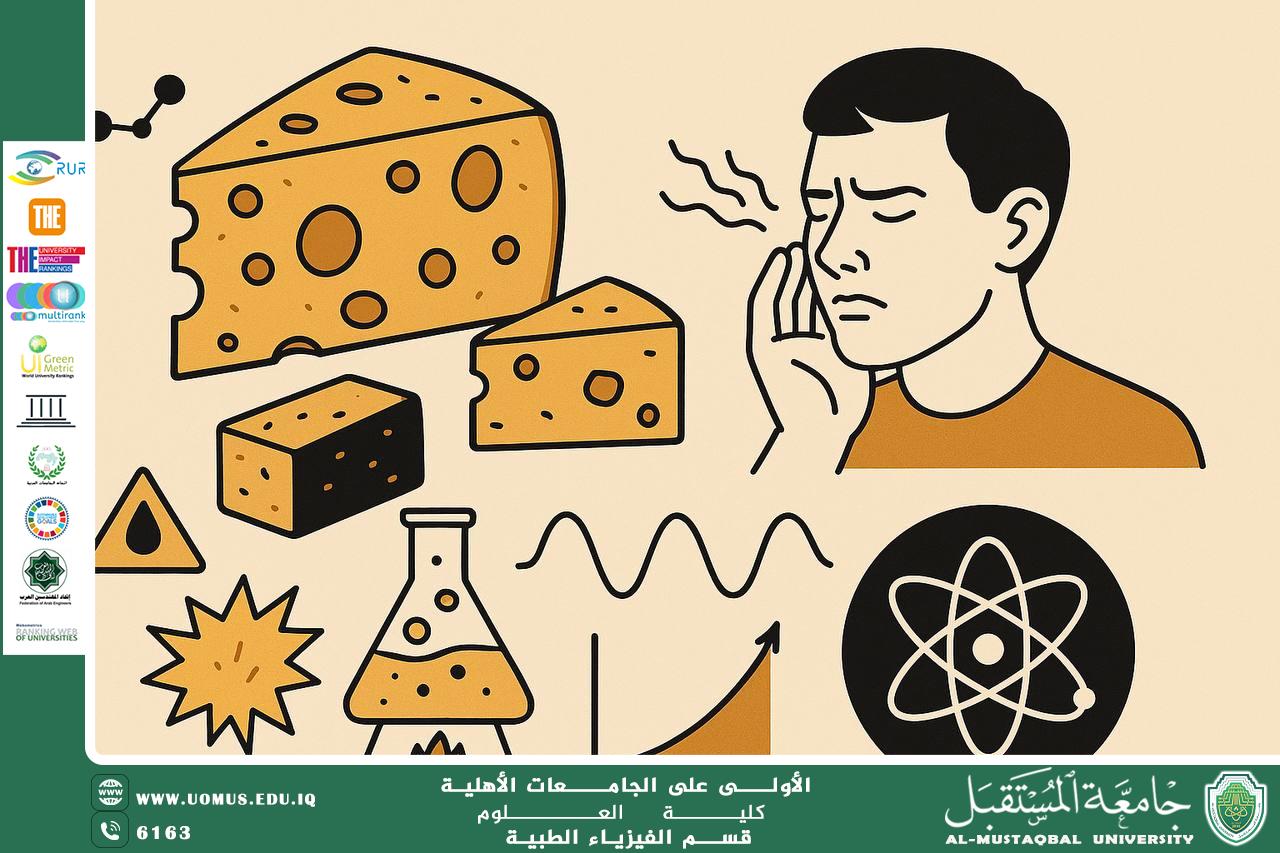
A scientific article by the teaching assistant (Ahmed Abdel Salam) entitled “The Harmful Effects of Cheese and Its Relationship to Physics”
13/05/2025 Share :
Introduction<br /><br />Cheese is a widely consumed food in many cultures around the world. Although it provides important nutritional value, excessive consumption or unhealthy processing methods can lead to health risks. What many may not realize is that physics plays a significant role in understanding cheese properties and how they might impact our health.<br /><br />⸻<br /><br />1. Potential Health Risks of Cheese<br /> 1. High Saturated Fat and Cholesterol Content<br />Most cheeses, especially aged or hard varieties, contain high levels of saturated fats, which may raise LDL cholesterol and increase the risk of cardiovascular diseases.<br /> 2. Excess Sodium<br />Large amounts of salt are used in cheese-making to preserve and enhance flavor. Excessive sodium intake is linked to high blood pressure and heart disease.<br /> 3. Lactose Intolerance<br />Individuals with lactose intolerance may experience digestive issues such as bloating or cramping when consuming cheese containing lactose.<br /> 4. Biogenic Amines in Aged Cheeses<br />Aged cheeses can produce compounds such as tyramine, which may trigger headaches or raise blood pressure in sensitive individuals.<br /><br />⸻<br /><br />2. The Relationship Between Cheese and Physics<br /> 1. Physical Transformations in Cheese Production<br />The process of cheese-making involves a crucial physical change—transforming liquid milk into a solid mass through coagulation by enzymes (like rennet) and heat. This involves phase transitions and changes in viscosity.<br /> 2. Thermal Conductivity in Cheese Storage<br />The rate at which different types of cheese cool down or age is influenced by their thermal conductivity. Soft cheeses cool quickly due to higher water content, whereas hard cheeses retain heat longer, affecting bacterial activity and the formation of potentially harmful compounds.<br /> 3. Elasticity and Texture: Mechanics of Materials<br />Cheese texture—whether soft, elastic, or hard—can be analyzed using mechanical physics. These properties are determined by the distribution of fat, water, and protein molecules, which in turn affect how the body digests the cheese and how nutrients are absorbed.<br /> 4. Thermal Degradation During Cooking<br />When cheese is heated, its proteins and fats begin to melt and separate. According to thermodynamic principles, high temperatures can cause thermal breakdown and release harmful compounds such as acrolein or heterocyclic amines, especially if the cheese burns or is overcooked.<br /><br />⸻<br /><br />Conclusion<br /><br />While cheese is a valuable source of protein and calcium, excessive or improper consumption may lead to health problems. By studying its physical characteristics, we can better understand its effects on human health. The intersection between nutrition and physics offers a deeper perspective on food science, enabling healthier and more informed dietary choices.<br /><br /><br /><br />"AL_mustaqbal University is the first university in Iraq"<br/><br/><a href=https://uomus.edu.iq/Default.aspx target=_blank>al-mustaqbal University Website</a>