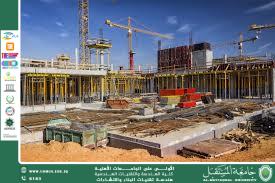
Smart Technologies in Civil Engineering Project Management
26/05/2025 Share :
Introduction<br />Managing civil engineering projects is a complex process involving precise planning, effective execution, and coordination among multiple disciplines and resources. With the rapid advancement of technology, smart technologies are playing an increasingly important role in improving the efficiency of these projects in terms of time, cost, quality, and safety. This article highlights the most prominent smart technologies and their role in modern civil engineering project management.<br /><br />1. What Are Smart Technologies?<br />Smart technologies refer to digital tools and systems that rely on artificial intelligence (AI), the Internet of Things (IoT), big data analytics, and cloud computing to enable more accurate decision-making and operational improvements.<br /><br />2. Key Smart Technologies Used in Project Management<br />2.1 Building Information Modeling (BIM)<br />Allows the creation of a 3D digital model containing detailed information about every part of the project.<br /><br />Facilitates coordination between different teams (structural, architectural, electrical, etc.).<br /><br />Reduces design clashes and improves cost and schedule accuracy.<br /><br />2.2 Artificial Intelligence (AI) and Machine Learning<br />Used to predict risks and project delays.<br /><br />Analyzes past project data to provide smart recommendations.<br /><br />Automatically detects patterns of inefficiency.<br /><br />2.3 Drones (Unmanned Aerial Vehicles)<br />Used for site monitoring and topographic surveys.<br /><br />Provide accurate aerial photos and videos for documentation and tracking.<br /><br />Reduce the need for frequent on-site visits.<br /><br />2.4 Sensors and Internet of Things (IoT)<br />Real-time monitoring of environmental conditions (e.g., temperature, humidity).<br /><br />Measuring structural vibrations or soil movements.<br /><br />Automatically tracking equipment and materials.<br /><br />2.5 Augmented and Virtual Reality (AR/VR)<br />Allows engineers to visualize the structure before actual construction.<br /><br />Used to train workers in safety and operational environments.<br /><br />Helps in presenting the project to clients and stakeholders.<br /><br />2.6 Cloud-Based Project Management Systems<br />Provide shared platforms for document and task exchange.<br /><br />Facilitate collaboration among geographically dispersed teams.<br /><br />Enable real-time progress updates and decision-making.<br /><br />3. Benefits of Using Smart Technologies in Project Management<br />Cost and waste reduction through precise planning and error avoidance.<br /><br />Enhanced safety through real-time monitoring and risk alerts.<br /><br />Improved execution quality due to effective coordination and continuous supervision.<br /><br />Faster project delivery thanks to automation and smart analytics.<br /><br />Better decision-making based on accurate and real-time data.<br /><br />4. Challenges of Implementing Smart Technologies<br />High initial investment for some systems.<br /><br />Lack of trained personnel to operate these technologies.<br /><br />Need for organizational culture change and digital transformation.<br /><br />Cybersecurity concerns regarding project data protection.<br /><br />Conclusion<br />The application of smart technologies in civil engineering project management is no longer a luxury but a necessity to keep up with modern demands and achieve high levels of efficiency and quality. Despite the challenges, the immense benefits of these technologies make them a cornerstone of the future of construction and infrastructure.<br /><br />