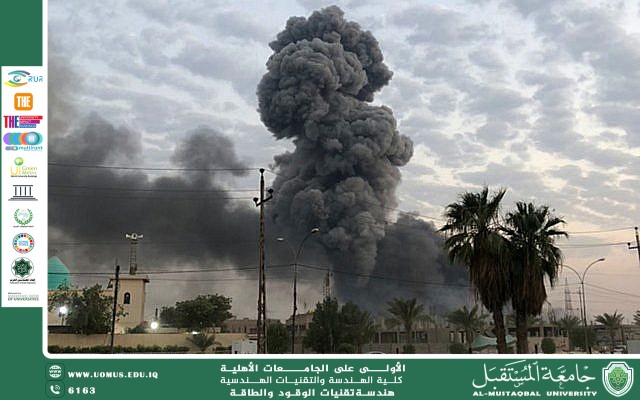
Pollution in Baghdad
03/06/2025 Share :
Pollution in Baghdad<br />Assist. Prof. Malik Mustafa Mohammed<br /><br />SDG 3: Good Health and Well-being<br />SDG 6: Clean Water and Sanitation<br />SDG: Sustainable Cities and Communities<br />As of the latest available data (up to 2023), Baghdad Governorate , the most populous and industrialized region in Iraq, faces significant pollution challenges due to urbanization, industrial activity, and inadequate waste management systems. While specific pollutant percentages are not systematically published, the following breakdown reflects estimated ranges based on regional environmental assessments , studies, and comparisons with similar cities in Iraq:<br /> Contributing Factors to Pollution in Baghdad <br />1. Urbanization and Traffic : <br /> - Over 7 million residents and rapid urban expansion contribute to high vehicle emissions. <br /> - Aging vehicle fleets and low-quality fuel exacerbate PM₂.₅ and NO₂ levels. <br />2. Industrial Activity : <br /> - Key industrial zones (e.g., Al-Dora, Al-Zaafaraniya) host oil refineries, cement plants, and metalworking facilities, releasing SO₂, PM, and heavy metals. <br />3. Waste Management Deficits : <br /> - Only 5–10% of waste is recycled , with most dumped in non-engineered sites like the Al-Doura Landfill , causing leachate contamination and air pollution. <br />4. Energy Reliance on Generators : <br /> - Frequent power outages force reliance on diesel generators, increasing CO and NO₂ emissions. <br />5. Seasonal Dust Storms : <br /> - Common in spring/summer, raising PM₁₀ levels by 30–50% during peak events. <br />6. Agricultural Runoff : <br /> - Pesticides and fertilizers from surrounding farmland contaminate water sources with nitrates and heavy metals. <br /> Health and Environmental Impacts <br />- Respiratory Diseases : High PM₂.₅ levels correlate with asthma, COPD, and lung cancer cases. <br />- Cardiovascular Issues : Long-term exposure to NO₂ and PM₂.₅ increases heart disease risks. <br />- Waterborne Illnesses : Contaminated drinking water linked to cholera outbreaks and diarrheal diseases. <br />- Soil Degradation : Industrial effluents reduce agricultural productivity and threaten food security. <br /> Data Gaps and Recommendations <br />1. Local Monitoring Needs : <br /> - Baghdad lacks a comprehensive air quality monitoring network. Establishing real-time sensors for PM₂.₅, NO₂, and SO₂ would improve data accuracy. <br />2. Policy Interventions : <br /> - Enforce Emission Standards : Regulate industrial zones and phase out leaded fuel. <br /> - Upgrade Waste Infrastructure : Invest in recycling plants, engineered landfills, and wastewater treatment facilities. <br /> - Promote Clean Energy : Reduce reliance on diesel generators through solar power incentives. <br />3. Public Awareness Campaigns : <br /> - Educate citizens on waste segregation, health risks of pollution, and the dangers of open burning. <br />4. International Collaboration : <br /> - Partner with organizations like the World Bank , UNDP , and WHO to fund pollution mitigation projects. <br />5. Dust Storm Mitigation : <br /> - Reforest degraded lands and collaborate with regional neighbors to address transboundary dust sources. <br /> Sources of Reference <br />- Iraqi Ministry of Environment Reports (limited recent data). <br />- World Bank Studies on urban pollution in Iraq. <br />- WHO Air Quality Guidelines for PM₂.₅/PM₁₀ thresholds. <br />- Local Academic Research (e.g., Baghdad University studies on water quality and industrial pollution). <br />For precise percentages, localized environmental assessments or real-time monitoring systems would be required. If you need further details, contacting the Baghdad Provincial Environment Directorate or reviewing recent academic journals on Iraqi pollution trends is recommended.<br />"Al-Mustaqbal University – The No. 1 Private University in Iraq"<br /><br /><br />