The Role of the Circular Economy in Reducing Poverty and Achieving Sustainable Production Patterns in Developing Economies
11/06/2025 Share :
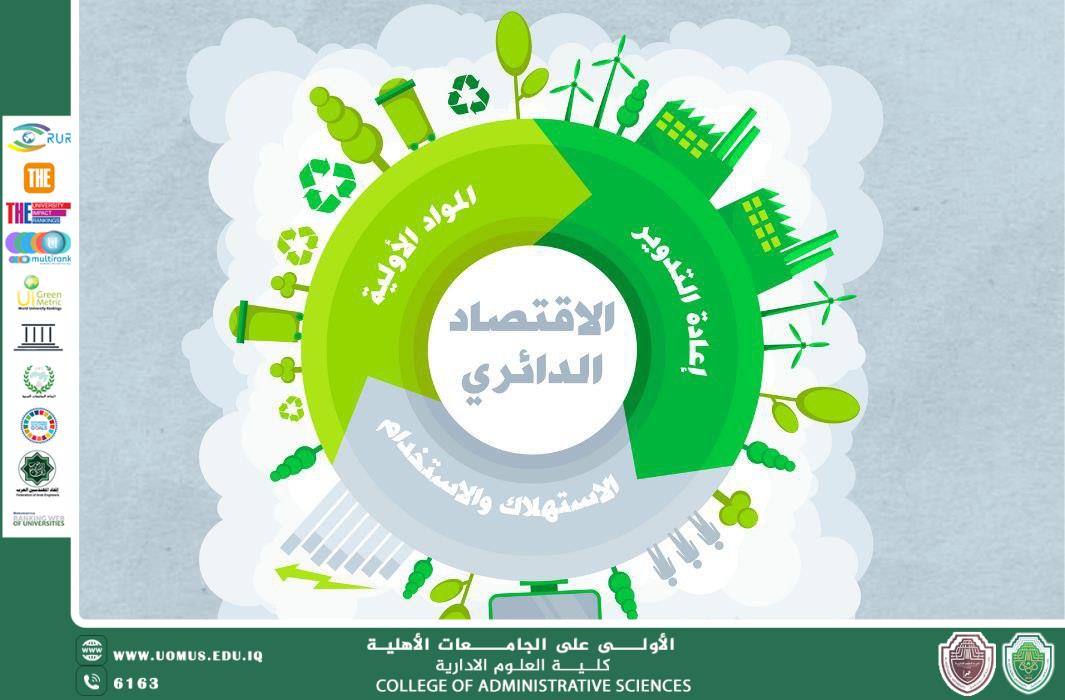
Prof. Dr. Haider Ali Al-Dulaimi<br />College of Administrative Sciences - Al-Mustaqbal University<br />In light of the economic and environmental challenges facing developing economies, the need for new development models that go beyond traditional patterns of production and consumption emerges. Among these models, the circular economy stands out as a promising approach to achieving sustainable development, as it focuses on reusing resources, reducing waste, and stimulating social and economic innovation. This model can play an effective role in reducing poverty, promoting social justice, and creating more sustainable production patterns.<br />First: The Concept of the Circular Economy<br />The circular economy is an economic system that aims to reduce waste and maximize the use of resources through recycling, repair, and reuse, instead of the traditional linear economic model based on (extraction-production-disposal). This model is based on the principle that (waste can be transformed into resources), opening up new economic and environmental prospects.<br />Second: Creating Job Opportunities and Promoting Economic Inclusion<br />One of the most prominent advantages of the circular economy in developing economies is its ability to create diverse job opportunities, especially in sectors suffering from weak investment. Activities such as recycling, appliance maintenance, and designing reusable products offer significant opportunities for entrepreneurs and informal sector workers, enhancing economic inclusion and reducing unemployment and poverty rates.<br />For example, United Nations reports indicate that the recycling sector in some African countries provides income for thousands of families and is a major source of livelihood, especially in low-income urban communities.<br />Third: Reducing Waste and Achieving Resource Efficiency<br />Developing economies suffer from resource scarcity and high environmental costs resulting from waste and weak waste management infrastructure. By applying circular economy principles, waste in raw materials and energy can be reduced and supply chain efficiency improved. This, in turn, leads to lower production costs, improved competitiveness of local products, and greater long-term sustainability. Fourth: Empowering Communities and Promoting Environmental and Social Development<br />The impact of the circular economy is not limited to economic aspects, but extends to social empowerment, through engaging local communities in collection processes, small-scale manufacturing, and environmental services. It also contributes to improving public health by reducing pollution and providing a clean and safe environment. This positively impacts quality of life and supports the Sustainable Development Goals (SDGs), particularly Goal 1 (Eradicate Poverty) and Goal 12 (Ensure Sustainable Consumption and Production Patterns).<br />Fifth: Challenges and Opportunities Facing Developing Economies<br />Despite the great potential of the circular economy, its implementation in developing countries faces a number of challenges, including weak infrastructure, lack of community awareness, and the absence of supportive legal and regulatory frameworks. However, these challenges can be transformed into opportunities for development through:<br />• Supporting local initiatives and small projects in the field of reuse.<br />• Developing government policies that encourage circular practices.<br />• Building public-private partnerships to support innovation and sustainable technologies.<br />• Integrating circular economy principles into educational curricula and community awareness programs.<br />Adopting a circular economy model in developing economies is not only an environmentally sustainable option, but a practical path to reducing poverty, enhancing productivity, and achieving social justice. By supporting innovative policies and community initiatives, developing countries can achieve a qualitative shift toward a more inclusive and sustainable economy that balances economic development with environmental conservation and human dignity.<br />Al-Mustaqbal University is ranked first among private universities.