A scientific article by the teaching assistant (Amir Sobhi Ismail) entitled “Automotive Cooling Systems: Principles, Malfunctions, and Maintenance Methods”
25/06/2025 Share :
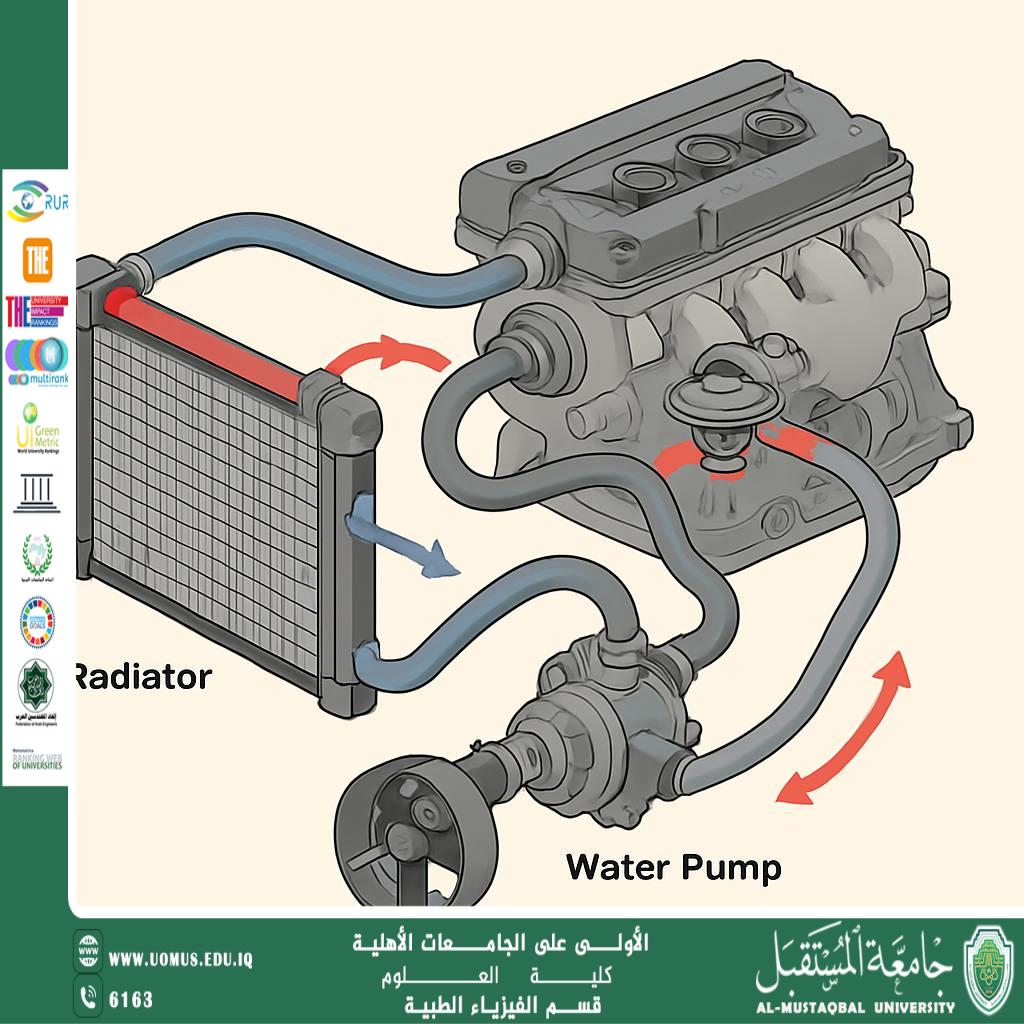
Introduction<br />Cooling systems play a vital role in maintaining the engine’s temperature within optimal limits. Internal combustion engines generate enormous amounts of heat due to combustion and friction, requiring an efficient system to dissipate this heat and prevent engine overheating. Any malfunction in this system can lead to serious engine damage or complete failure.<br /><br /> 1. Principle of Operation<br />The cooling system operates on a closed-loop cycle, where coolant fluid circulates through the engine components to absorb heat, then flows to the radiator, where the heat is released into the surrounding air.<br /><br />Main Components:<br />Radiator: Disperses heat from the coolant to the outside air.<br /><br />Water Pump: Circulates the coolant through the engine continuously.<br /><br />Thermostat: Regulates coolant flow based on temperature.<br /><br />Hoses: Transport the coolant between system components.<br /><br />Cooling Fan: Assists in heat dissipation, especially at low speeds.<br /><br /> 2. Types of Cooling Systems<br />Water-Cooling: The most common in modern vehicles.<br /><br />Air-Cooling: Found in some smaller engines (e.g., older motorcycles).<br /><br />Electronic Cooling Systems (E-Cooling): Used in hybrid and electric cars, relying on sensors and smart electric pumps.<br /><br /> 3. Common Cooling System Malfunctions<br />Coolant Leaks: Often due to damaged hoses or a cracked radiator.<br /><br />Low Coolant Level: Can cause overheating.<br /><br />Radiator Blockage: Reduces heat dissipation efficiency.<br /><br />Thermostat Failure: Keeps the valve stuck open or closed, leading to improper cooling.<br /><br />Water Pump Failure: Interrupts coolant circulation.<br /><br />Blown Head Gasket: Can occur from prolonged overheating.<br /><br /> 4. Maintenance and Prevention<br />Regularly check coolant level and replace it every 2–3 years or as recommended.<br /><br />Inspect hoses and clamps for leaks or wear.<br /><br />Clean the radiator periodically to remove dirt and mineral buildup.<br /><br />Replace the thermostat if temperature regulation issues occur.<br /><br />Test the electric fan to ensure it activates when the car stops.<br /><br />Use high-quality coolant with anti-freeze and anti-corrosion additives.<br /><br /> 5. The Future of Cooling Systems<br />With automotive technology advancing, cooling systems are evolving toward:<br /><br />Smart thermal control via sensors and software.<br /><br />Programmable electric water pumps for improved energy efficiency.<br /><br />Advanced radiator materials (e.g., coated aluminum) for better heat transfer.<br /><br />Integrated cooling for batteries in electric vehicles.<br /><br /> Conclusion<br />The cooling system is essential for engine performance and longevity. Understanding its components and how it works, combined with regular maintenance, helps prevent costly breakdowns. As technology progresses, cooling systems are expected to become more efficient, intelligent, and reliable in the near future.<br /><br /><br /><br /><br />"AL_mustaqbal University is the first university in Iraq"<br/><br/><a href=https://uomus.edu.iq/Default.aspx target=_blank>al-mustaqbal University Website</a>