مقاله بقلم .د حسنين عبد مسلم في كلية الصيدلة جامعة المستقبل بعنوان The Emerging Role of Artificial Intelligence in Pharmacovigilance: A Transformative Approach
25/06/2025 Share :
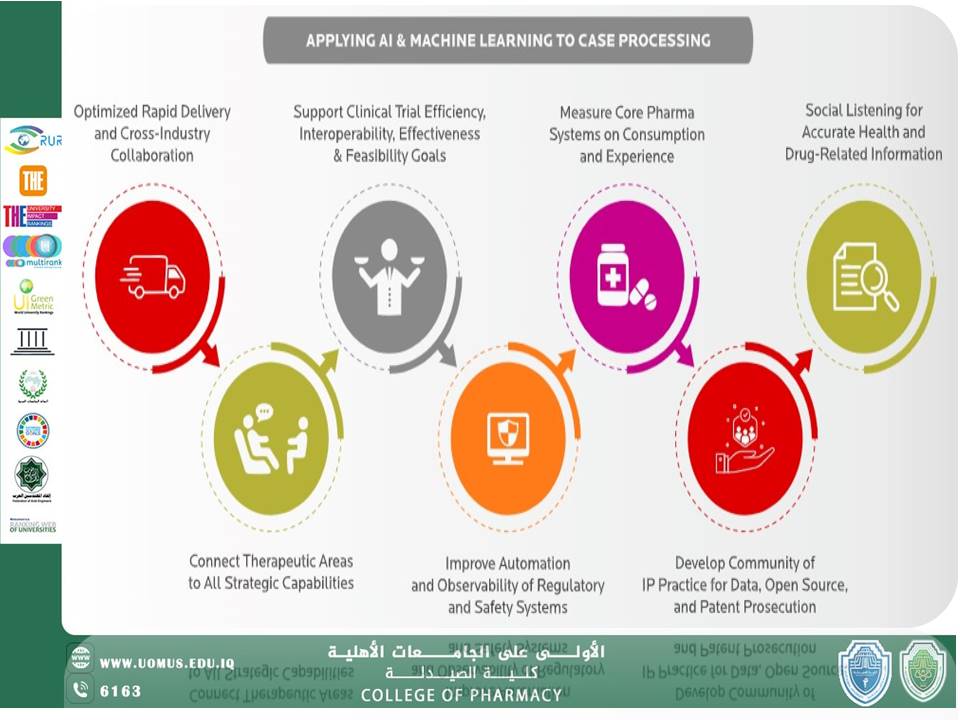
Pharmacovigilance (PV), the science of monitoring, detecting, and preventing adverse drug reactions (ADRs), is a cornerstone of patient safety in modern healthcare. Despite its critical importance, traditional PV systems are hindered by significant challenges, including underreporting, manual data processing inefficiencies, and delays in safety signal detection. In recent years, Artificial Intelligence (AI) has emerged as a powerful tool to transform pharmacovigilance practices through advanced data analytics, machine learning (ML), and natural language processing (NLP).<br /><br />AI technologies offer several advantages over conventional methods. Machine learning algorithms can analyze vast datasets from electronic health records (EHRs), clinical notes, and even social media platforms to identify potential ADRs with improved speed and accuracy. Natural language processing enables extraction of meaningful data from unstructured sources, thereby broadening the scope of surveillance. Predictive analytics, another AI innovation, can forecast potential adverse events based on historical and real-time data, significantly improving early detection and preventive strategies.<br /><br />This review under my supervision explores the integration of AI in PV and highlights its impact on ADR detection, personalized medicine, and public health. It demonstrates that AI-enhanced pharmacovigilance systems not only support timely signal detection but also facilitate regulatory decision-making by automating case processing and improving data accuracy. Tools like BERT and other deep learning models have also shown promise in classifying ADRs from patient-generated content, enabling proactive and patient-centric monitoring.<br /><br />Nevertheless, the implementation of AI in PV is not without challenges. Data standardization, ethical concerns, and the need for robust regulatory frameworks are critical hurdles, particularly in low- and middle-income countries. Issues of algorithmic bias, data privacy, and system integration must be carefully addressed to ensure equitable and safe deployment.<br /><br />In conclusion, AI represents a paradigm shift in pharmacovigilance, offering scalable, accurate, and proactive drug safety monitoring systems. For successful integration, strategic investments in infrastructure, workforce training, and interdisciplinary collaboration are essential. As this field evolves, AI is poised to enhance the quality of healthcare delivery, ensuring safer therapeutic outcomes for patients worldwide. <br /><br /><br />Al-Mustaqbal University, the number one university in Iraq College of Pharmacy, the top among private colleges<br />