A scientific article by the teaching assistant (Iftikhar Thamer) entitled “The Effect of Smoking on Non-Smokers (Passive Smoking)”
27/06/2025 Share :
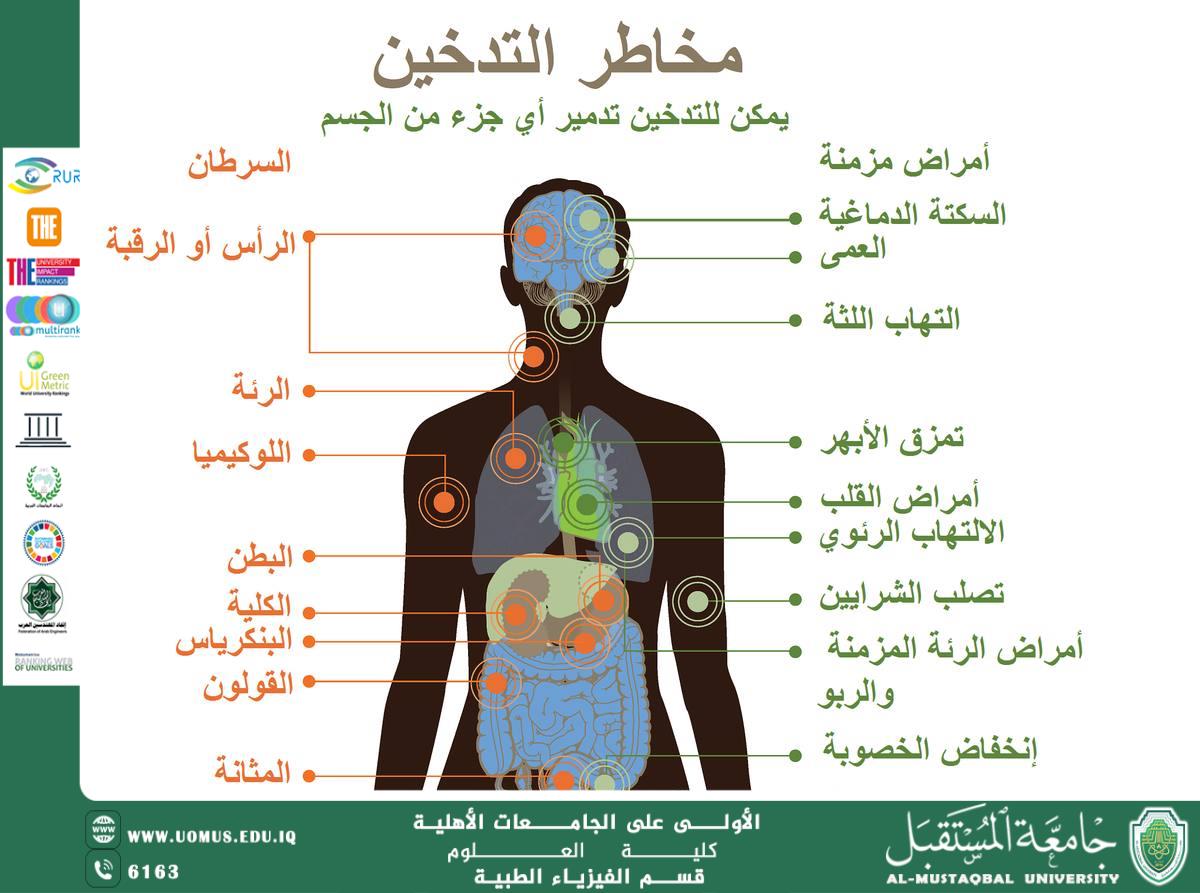
Abstract:<br /><br />Secondhand smoke is one of the most significant public health threats, affecting individuals who do not smoke themselves. Non-smokers are exposed to tobacco smoke from burning cigarettes and exhaled air from smokers. Scientific evidence increasingly confirms that secondhand smoke causes chronic and serious health problems, including heart disease, lung cancer, and respiratory disorders. This article aims to highlight the public health impacts of secondhand smoke, clinical consequences, and preventive measures.<br /><br />1. Introduction:<br /><br />Smoking is one of the most harmful habits worldwide. Its dangers are not limited to smokers but also extend to those around them through what is known as secondhand smoke or passive smoking. Global statistics indicate that millions of people suffer from health complications caused by involuntary exposure to tobacco smoke in both public and private settings.<br /><br />2. Composition of Tobacco Smoke and Its Effects:<br /><br />Tobacco smoke contains over 7,000 chemicals, including more than 70 known carcinogens, such as:<br /> • Carbon monoxide<br /> • Formaldehyde<br /> • Arsenic<br /> • Nicotine<br /><br />Even low-level exposure to these substances can harm non-smokers, especially children, pregnant women, and the elderly.<br /><br />3. Health Effects of Secondhand Smoke:<br /><br />A) On Children:<br /> • Increased risk of asthma and respiratory infections<br /> • Reduced lung function<br /> • Higher incidence of sudden infant death syndrome (SIDS)<br /> • Cognitive and developmental delays<br /><br />B) On Adults:<br /> • Up to 30% increased risk of coronary heart disease<br /> • Increased likelihood of lung cancer in non-smokers<br /> • Irritation of the eyes, throat, and lungs, worsening allergies and asthma<br /><br />4. Social and Economic Impacts:<br /> • Rising healthcare costs due to secondhand smoke-related illnesses<br /> • Reduced workplace productivity from recurrent illness<br /> • Lower quality of life in family settings, especially in enclosed environments<br /><br />5. Preventive Measures and Recommendations:<br /> • Enforce strict regulations banning smoking in public and enclosed spaces<br /> • Promote community awareness through health education campaigns<br /> • Designate separate, well-ventilated smoking areas away from non-smokers<br /> • Support smoking cessation through counseling and public health programs<br /><br />6. Conclusion:<br /><br />Secondhand smoke represents a serious public health issue that significantly impacts non-smokers. Effective prevention requires coordinated efforts from governments and communities. Protecting future generations from the harmful effects of tobacco smoke should be a public health priority.<br /><br /><br /><br />"AL_mustaqbal University is the first university in Iraq"<br/><br/><a href=https://uomus.edu.iq/Default.aspx target=_blank>al-mustaqbal University Website</a>