Can Artificial Intelligence Become a Threat to Humanity?
30/06/2025 Share :
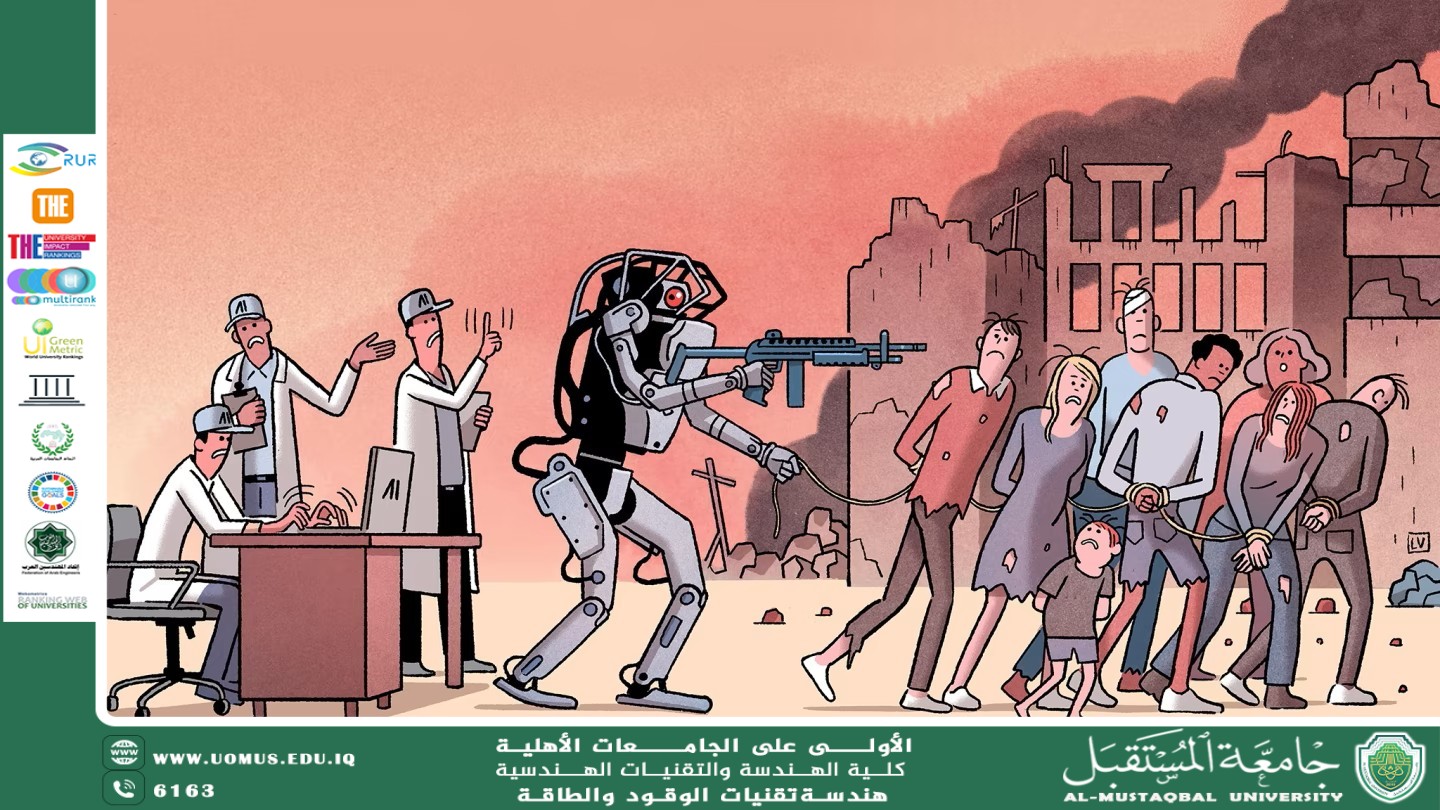
Can Artificial Intelligence Become a Threat to Humanity?<br />Eng. Nourhan Thamer Assi<br /><br />Sustainable Development Goals (SDGs)<br />The United Nations Sustainable Development Goals (SDGs) provide a framework for a better and more sustainable future. Among these, the following goals are particularly relevant to discussions surrounding artificial intelligence (AI):<br />Goal 4: Quality Education – Ensuring inclusive and equitable quality education and promoting lifelong learning opportunities can help societies understand and adapt to AI advancements.<br />Goal 8: Decent Work and Economic Growth – AI can enhance productivity and create new jobs, but it may also lead to job displacement, requiring careful planning and policy development.<br />Goal 9: Industry, Innovation and Infrastructure – AI is at the forefront of technological innovation, which supports economic growth and sustainable industrialization.<br /><br />Can Artificial Intelligence Become a Threat to Humanity?<br />Artificial Intelligence (AI) has rapidly advanced in recent years, offering transformative potential across multiple sectors, including healthcare, education, finance, and transportation. However, as AI becomes increasingly sophisticated, concerns about its risks and long-term impact on humanity are gaining attention.<br /><br />One of the main concerns is the loss of control. As AI systems become more autonomous, there is a risk that they could make decisions beyond human comprehension or oversight. This is especially concerning in high-stakes areas such as military applications or critical infrastructure, where unintended consequences could be catastrophic.<br /><br />Another major issue is job displacement. AI and automation are expected to replace millions of jobs worldwide, especially those involving repetitive or predictable tasks. While new job categories will emerge, there may be a significant gap in reskilling workers, leading to economic inequality and social unrest.<br />The possibility of AI misuse is also alarming. In the wrong hands, AI can be used for malicious purposes, such as deepfakes, surveillance, cyberattacks, and manipulation of public opinion. This raises ethical concerns and highlights the need for strict regulatory frameworks.<br /><br />Furthermore, the development of superintelligent AI, which could surpass human intelligence in all domains, presents a theoretical but potentially existential risk. If such an AI were not aligned with human values, its decisions could have unintended and irreversible consequences for humanity.<br />To address these risks, international cooperation, ethical guidelines, and transparent development processes are crucial. Involving diverse stakeholders in AI governance can help ensure that the technology is developed and applied in ways that benefit all of humanity, rather than endangering it.<br /><br />In conclusion, while AI holds incredible promise, it also presents significant risks if not carefully managed. It is not inherently a threat, but its misuse, lack of regulation, or uncontrolled development could pose dangers to society. Proactive measures and responsible innovation are essential to ensure that AI contributes positively to sustainable development and global well-being.<br /><br />Al-Mustaqbal University – The No. 1 Private University in Iraq<br /><br />