Title: How Do Fossil Fuel Power Plants Generate Electricity?
30/06/2025 Share :
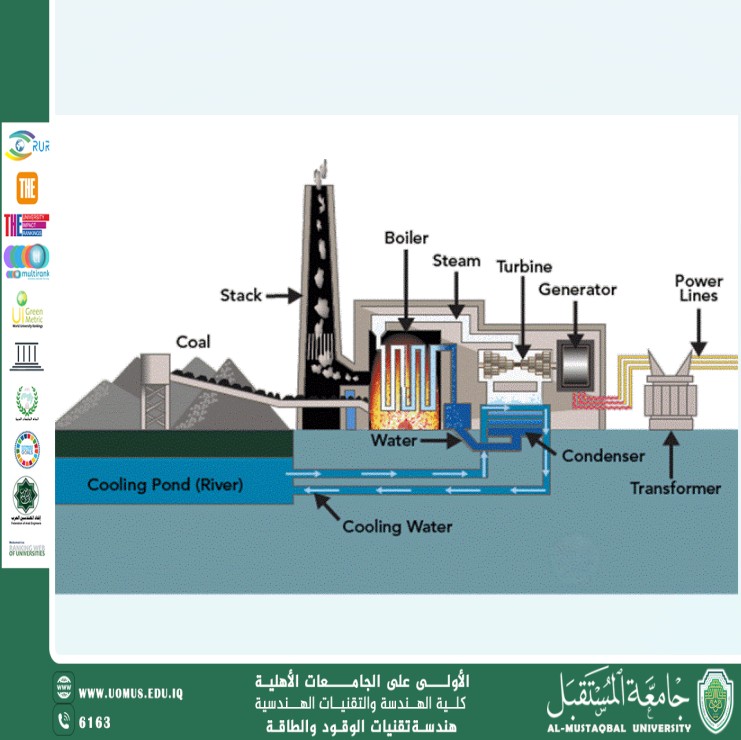
Title: How Do Fossil Fuel Power Plants Generate Electricity?<br />Eng. Nourhan Thamer Assi<br /><br />Sustainable Development Goals (SDGs):<br />The operation of fossil fuel power plants is linked to several important SDGs, including:<br />Goal 7: Affordable and Clean Energy – promoting cleaner and more efficient energy production methods.<br />Goal 9: Industry, Innovation and Infrastructure – improving infrastructure to reduce emissions.<br />Goal 12: Responsible Consumption and Production – encouraging more sustainable use of natural resources.<br />Goal 13: Climate Action – reducing greenhouse gas emissions and addressing global warming.<br /><br />How Do Fossil Fuel Power Plants Generate Electricity?<br />Fossil fuel power plants play a major role in global electricity production. They convert the chemical energy stored in fossil fuels like coal, oil, and natural gas into electrical energy. But how exactly does this process work?<br />The process begins with burning the fuel in a large furnace or boiler. When fossil fuels are burned, they release a great amount of heat. This heat is used to boil water, creating high-pressure steam.<br />This steam is then directed at turbines—large metal blades arranged in a wheel. As the steam strikes the blades, it causes the turbine to spin rapidly. The spinning turbine is connected to a generator, which uses electromagnetic induction to convert the mechanical energy into electrical energy.<br /><br />After passing through the turbine, the steam loses pressure and must be cooled. It flows into a condenser, where it is cooled down—often using water from nearby rivers or cooling towers—and returns to liquid water. This water is then reused in the cycle.<br /><br />This method of electricity generation is reliable and has powered industries and cities for over a century. However, it comes with significant environmental costs. The combustion of fossil fuels releases carbon dioxide (CO₂), a major greenhouse gas, as well as pollutants like sulfur dioxide (SO₂) and nitrogen oxides (NOₓ), which contribute to air pollution and acid rain.<br />In response, scientists and engineers are working on cleaner combustion technologies, carbon capture and storage (CCS), and gradually shifting towards renewable energy sources such as solar and wind power.<br /><br />Understanding how fossil fuel power plants work helps us make informed decisions about energy use and sustainability. As we strive toward global climate goals, reducing dependence on fossil fuels is a critical part of building a greener future.<br /><br />Al-Mustaqbal University – The No. 1 Private University in Iraq<br /><br />