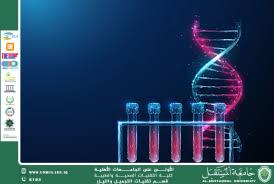
Mechanism of Toxins’ Effect on Genetic Materials
01/07/2025 Share :
It is known that DNA is composed of a double helix of the four bases and nucleotides: Guanine (G), Cytosine (C), Thymine (T), Adenine (A), which are connected by hydrogen bonds. During the replication process of the DNA molecule, the two helical strands separate from each other, where each strand or thread synthesizes its complementary strand. If one of the bases is replaced by another, it becomes inherited as a result of the replication process because the sequence of bases in successive triplets (triplet sequence) determines the sequence of amino acids involved in the formation of the protein whose inheritance supervises its composition. Thus, replacing one base with another in the genetic inheritance makes the newly formed protein different from the normal or wild-type protein, and we say in this case that the inheritance has become mutated (mutagens).<br />A mutation is the result of a modification or change in the physical or chemical nature of the genetic inheritance DNA.<br />Physical or chemical alterations of DNA.<br />AL_mustaqbal University is the first university in Iraq