Between the Sky and the Crosswind: Aircraft Under Lateral Wind Pressure
01/07/2025 Share :
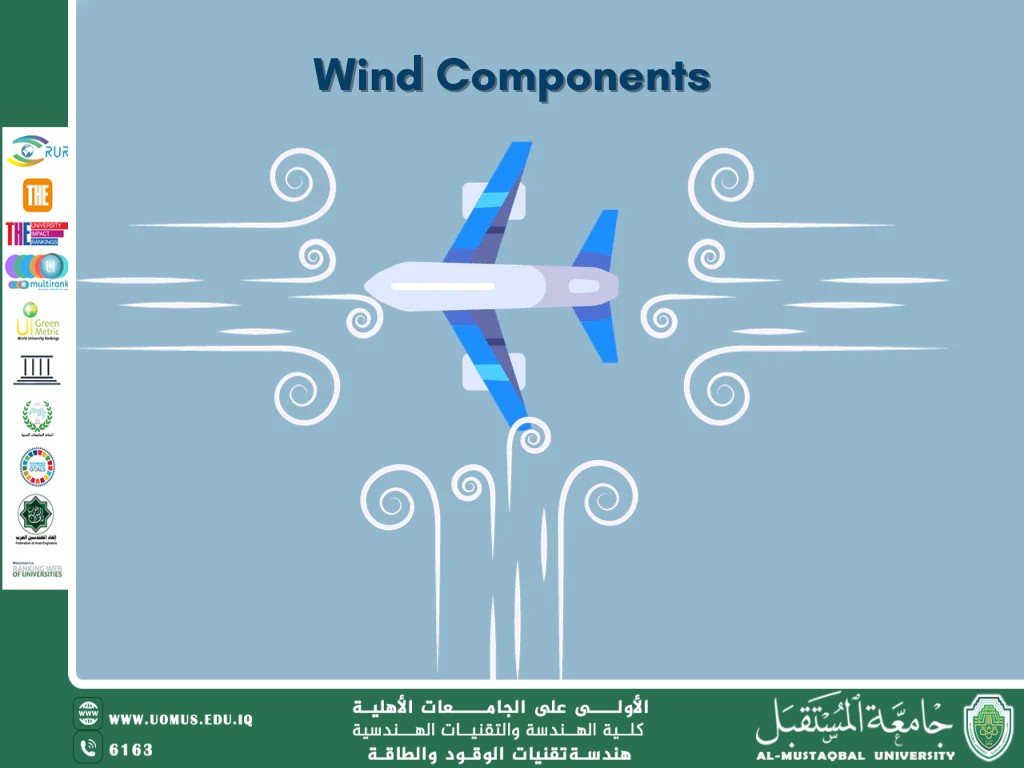
Between the Sky and the Crosswind: Aircraft Under Lateral Wind Pressure<br />Eng. Nourhan Thamer Assi<br /><br />Sustainable Development Goals (SDGs)<br />This topic supports several UN Sustainable Development Goals:<br />Goal 9: Industry, Innovation, and Infrastructure – Improving aircraft performance and safety through aerodynamic research.<br />Goal 11: Sustainable Cities and Communities – Enhancing air traffic safety in urban airports often affected by variable winds.<br />Goal 13: Climate Action – Adapting aviation systems to withstand the growing impact of climate-driven weather extremes.<br /><br />Introduction<br />High above the ground, where precision meets unpredictability, aircraft often face an invisible yet formidable opponent: crosswinds. These lateral winds challenge not only the aircraft’s aerodynamics but also the pilot’s skill, especially during critical phases of flight like takeoff and landing. Between the open sky and the sideways push of the air, modern aviation is constantly balancing performance, control, and safety.<br /><br />The Physics of Crosswinds<br />Crosswinds are winds that blow at an angle relative to the aircraft’s heading. Unlike headwinds or tailwinds, which align with the flight path, crosswinds exert lateral pressure that can:<br />Push the aircraft off its runway centerline.<br />Induce yawing motion, turning the nose away from the intended direction.<br />Cause uneven lift distribution, particularly hazardous during low-speed flight.<br />Aircraft must counteract these effects through control inputs—rudder, ailerons, and precise thrust management—to maintain a stable trajectory.<br /><br />The Pilot’s Challenge<br />Crosswinds are a true test of pilot skill and decision-making. During strong gusts or inconsistent wind directions:<br />Landing becomes more technical, often requiring techniques like “crabbed approaches” or “sideslip landings”.<br />Pilots must constantly adjust controls to maintain alignment and avoid hard landings.<br />In some cases, pilots may perform a go-around or divert to an alternate airport for safety.<br />Even seasoned pilots consider strong crosswind landings among the most stressful maneuvers in aviation.<br />Engineering Responses and Design Strategies<br />Aircraft designers and aerodynamicists continue to innovate to reduce the impact of crosswinds:<br />Engine intakes and landing gear are being optimized to maintain stability under lateral loads.<br />Fly-by-wire systems allow precise, computer-assisted control in turbulent air.<br />Crosswind limits are included in aircraft manuals to guide safe operations.<br />Airports also adapt by aligning runways with prevailing winds and installing advanced wind monitoring systems.<br /><br />Conclusion<br />Flying between the open sky and the resisting force of crosswinds is a delicate balance of technology, human skill, and natural elements. Understanding the dynamics of lateral wind and preparing both machines and pilots for its challenges are essential to ensuring safer, more reliable aviation in an era of increasingly unpredictable weather. It is a reminder that even in our most advanced machines, we remain subject to the power—and temperament—of the wind.<br /><br />"Al-Mustaqbal University – The No. 1 Private University in Iraq"<br /><br /><br />