An Unexpected Angle: How Crosswinds Alter Airflow Paths
01/07/2025 Share :
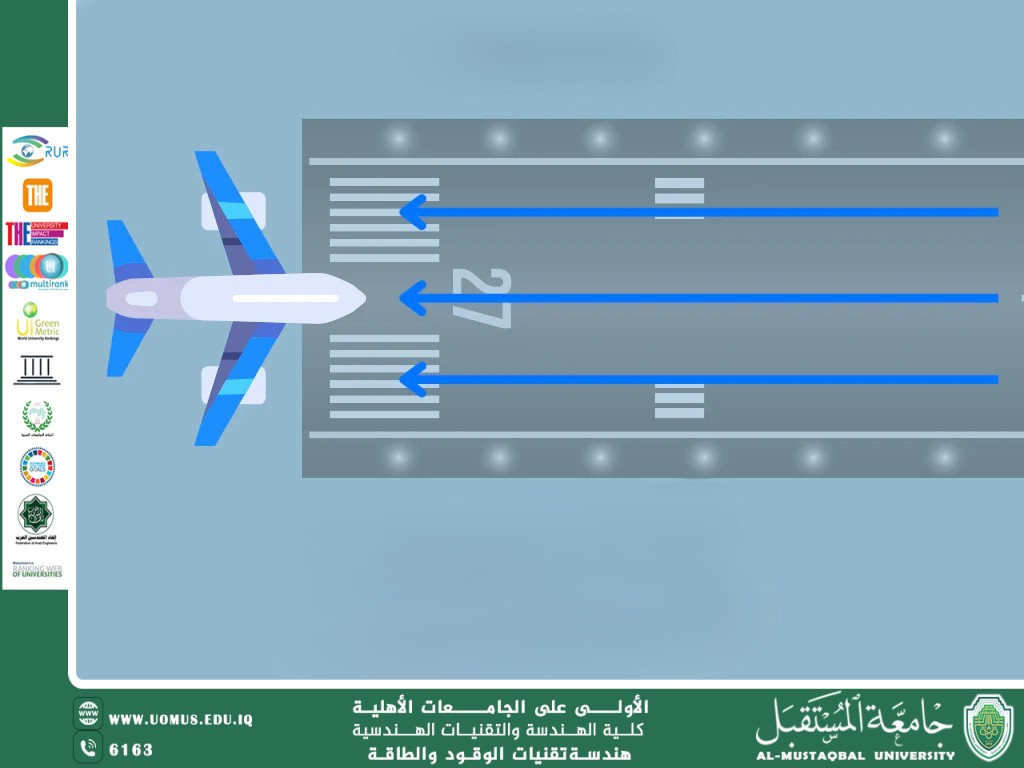
An Unexpected Angle: How Crosswinds Alter Airflow Paths<br />Dr. Hussein Kadhim Halwas<br /><br />Sustainable Development Goals (SDGs)<br />This topic contributes to:<br />Goal 9: Industry, Innovation, and Infrastructure – Enhancing aerodynamic performance in aviation design.<br />Goal 13: Climate Action – Addressing atmospheric variability in aircraft operation.<br />Goal 12: Responsible Consumption and Production – Improving fuel efficiency by minimizing aerodynamic losses.<br /><br />Introduction<br />In controlled environments, air behaves predictably—flowing cleanly along the contours of an aircraft’s structure. But in the real atmosphere, crosswinds introduce sudden, non-linear angles, forcing air to deviate from its intended path. This change in flow direction, even by a few degrees, can have major implications for aerodynamics, engine performance, and overall flight stability.<br /><br />The Aerodynamics of Flow Direction<br />Aircraft and their systems are typically designed to perform optimally with aligned, head-on airflow. When the wind approaches at an angle—commonly known as a crosswind—it changes:<br />The relative wind direction experienced by different surfaces.<br />The angle of attack on wings, control surfaces, and engine intakes.<br />The symmetry of airflow into critical systems.<br />These shifts cause flow distortion, which affects pressure distribution, lift generation, and engine intake efficiency.<br />Effects on Engine Air Intakes<br />For jet engines, especially at subsonic speeds, crosswinds can:<br />Skew the incoming airflow, reducing pressure recovery.<br />Create vortices or flow separation at the intake lip.<br />Introduce non-uniform pressure fields across the engine face, increasing the risk of compressor stall or surge.<br />Even small angular deviations—caused by 5–15° of crosswind—can lead to noticeable aerodynamic losses and mechanical stress inside the engine.<br />Wing and Control Surface Dynamics<br />On the wings and tail:<br />Asymmetric airflow alters lift and yawing moments.<br />The aircraft may require constant rudder or aileron correction, increasing pilot workload.<br />Crosswinds during approach or departure can cause sudden shifts in attitude, especially during gusty conditions.<br />These shifts are not only challenging for pilots but also increase fuel burn and wear on flight control systems.<br /><br />Modeling and Mitigation<br />To understand and reduce the impact of crosswind-altered flow paths, engineers rely on:<br />CFD simulations of off-axis wind conditions.<br />Yawed wind tunnel testing to visualize flow deviations.<br />Adaptive designs, such as variable-geometry intakes or active flow control.<br />Flight planning algorithms that account for expected lateral wind components.<br /><br />Conclusion<br />Crosswinds may seem like a minor weather detail, but from an aerodynamic perspective, they introduce unexpected angles and turbulent paths that can disrupt even the most finely tuned aircraft systems. Recognizing and adapting to these changing flow directions is crucial—not only for pilot control and passenger comfort, but also for engineering safer, more efficient aircraft in an increasingly unpredictable atmosphere.<br /><br />"Al-Mustaqbal University – The No. 1 Private University in Iraq"<br />