A scientific article by the teaching assistant (Mohamed Abdel Zahra) entitled “Using nanotechnology to deliver medicine directly to infected cells”
05/07/2025 Share :
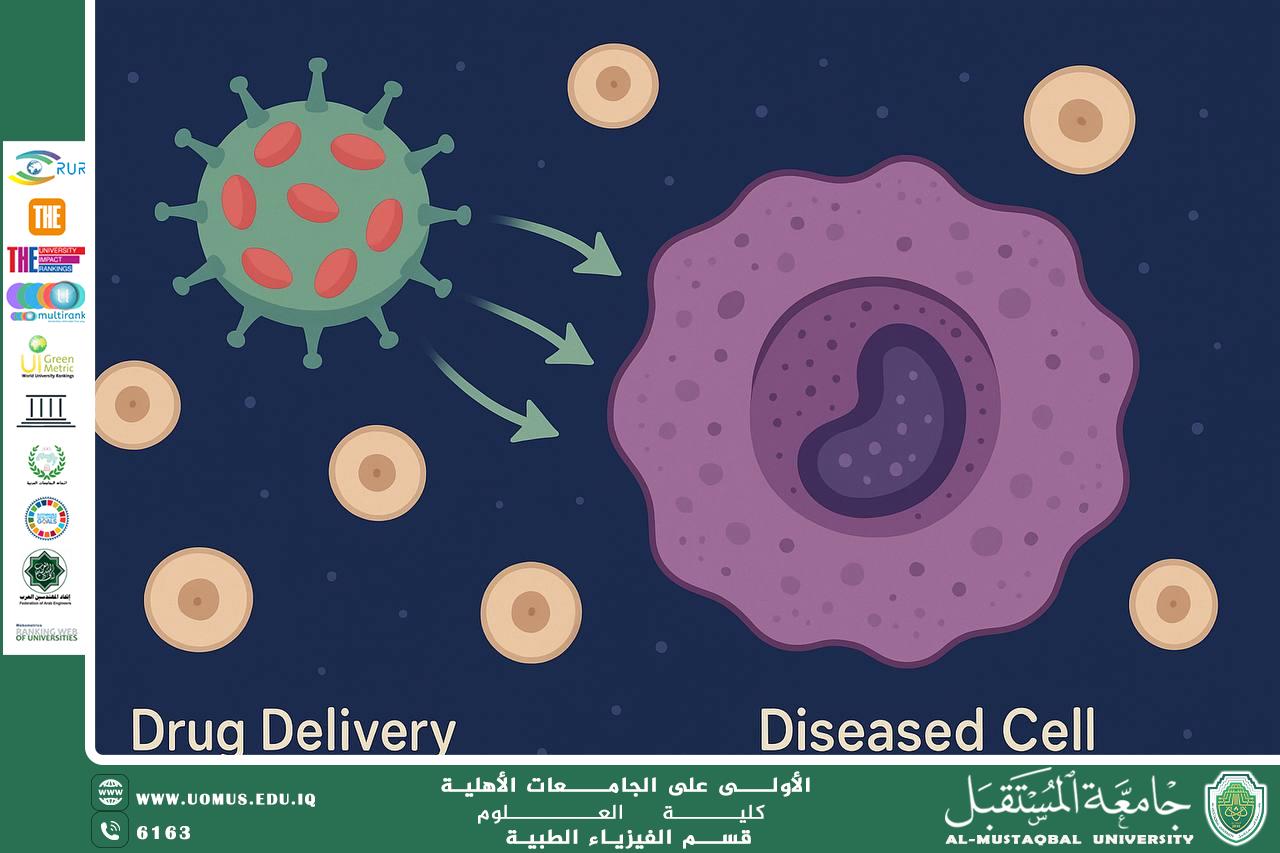
Introduction:<br />Nanomedicine represents a breakthrough in disease treatment by revolutionizing drug delivery methods. Unlike traditional approaches that often cause significant side effects, nanotechnology enables precise delivery of therapeutic agents directly to targeted cells.<br /><br />Key Points:<br /> • What is Nanotechnology-based Drug Delivery?<br />It involves using nanoparticles, typically sized between 1 to 100 nanometers, as smart carriers that specifically bind to diseased cells.<br /> • Types of Nanocarriers:<br />Examples include nanocapsules, nanoshells, nanotubes, and liposomes, which can encapsulate drugs inside or attach them to their surface.<br /> • Mechanism of Action:<br />These nanocarriers are engineered to recognize specific receptors on the surface of target cells, allowing them to bind and release the drug directly inside the affected cells.<br /> • Advantages:<br />This approach reduces the required dosage, minimizes side effects, enhances treatment efficacy, and improves targeting of tumors, infections, and other diseases.<br /> • Challenges:<br />Issues include safety concerns, biodistribution control, immune system interactions, and manufacturing costs.<br /> • Practical Applications:<br />Widely researched for cancer therapy, inflammatory diseases, cardiovascular conditions, and neurological disorders.<br /><br />Conclusion:<br />Nanotechnology-based drug delivery systems offer promising prospects for more precise and effective treatments. However, further research and development are essential before these methods can become widespread clinical practice.<br /><br /><br /><br /><br />"AL_mustaqbal University is the first university in Iraq"<br/><br/><a href=https://uomus.edu.iq/Default.aspx target=_blank>al-mustaqbal University Website</a>