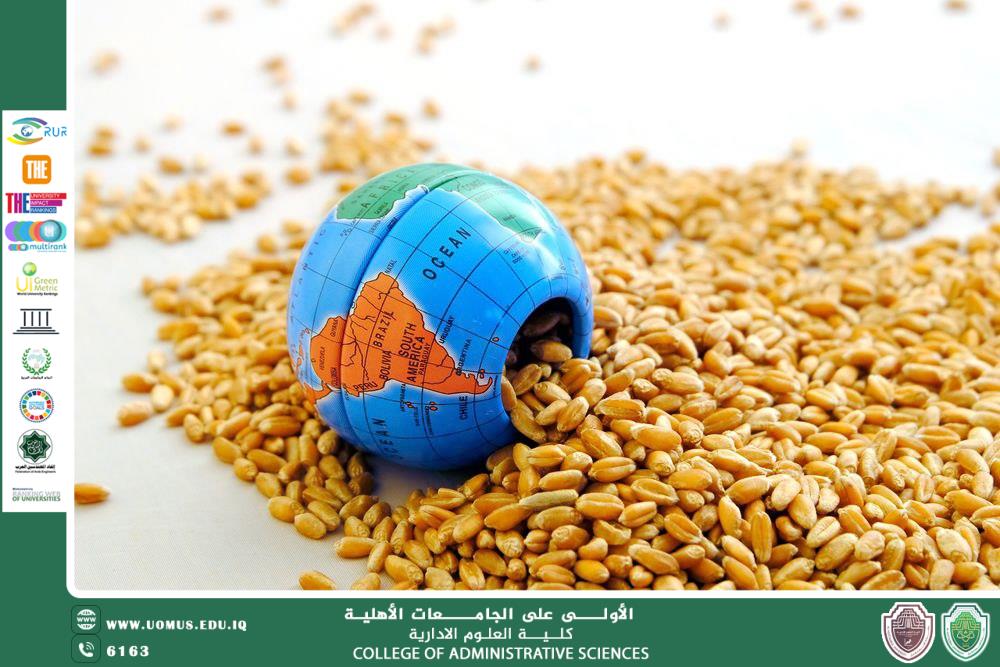
Food Security in the Face of Global Crises: Prospects for Achieving Sustainable Development Goal 2 in Developing Countries – With Special Reference to Iraq
07/07/2025 Share :
Prof. Haider Ali Al-Dulaimi<br />College of Administrative Sciences – Al-Mustaqbal University<br />Food security is one of the pillars of social and economic stability in any country. The 2030 Sustainable Development Goals have paid great attention to this aspect, with Goal 2 stating, "End hunger, achieve food security, improve nutrition, and promote sustainable agriculture."<br />With the increase in global crises—such as wars, climate change, pandemics, and economic turmoil—achieving this goal has become more complex, especially in developing countries that face complex challenges in this area. In this context, Iraq stands out as an important case study, reflecting the reality of food security in the face of multiple internal and external pressures.<br />The Reality of Food Security in Developing Countries:<br />Many developing countries suffer from structural problems that hinder the achievement of food security, including:<br />• Overreliance on food imports.<br />• Weak local production due to the lack of modern agricultural technology.<br />• Deterioration of agricultural and water infrastructure.<br /> • Poverty and unemployment, which reduce access to food.<br />• Climate change, which negatively impacts agriculture and livestock production.<br />Recent global crises, such as the COVID-19 pandemic and the Russia-Ukraine war, have made food access more difficult due to rising global prices and disrupted supply chains, making the goal of eliminating hunger even more unattainable for many countries.<br />Food Security in Iraq: Challenges and Opportunities<br />Iraq faces multiple challenges in food security, despite its vast natural, water, and agricultural resources. The most prominent challenges include:<br />1. Water scarcity due to the decline in the water levels of the Tigris and Euphrates rivers and the decline in water revenues from neighboring countries.<br />2. Weak local production due to chronic neglect of the agricultural sector and the lack of support for farmers with modern technologies or financing facilities.<br />3. Heavy reliance on imports, with more than 50% of food needs imported from abroad.<br />4. Rural-urban migration, which has reduced the agricultural labor force and led to a decrease in cultivated areas.<br /> 5. Security and political instability, which has affected the continuity of agricultural development programs.<br />However, there are potential opportunities that can be exploited:<br />• Implementing national agricultural projects that rely on modern irrigation and smart agriculture technologies.<br />• Promoting sustainable agricultural policies and stimulating local production.<br />• Directing a portion of oil revenues to support rural development and improve food security.<br />• Cooperating with specialized international organizations to implement technical support programs and build agricultural capacity.<br />Prospects for achieving Goal 2 in Iraq and developing countries:<br />Achieving Goal 2 of the Sustainable Development Goals requires a number of steps:<br />• Developing national food security strategies based on scientific and economic foundations, with the involvement of the public and private sectors.<br />• Strengthening local supply chains and developing agricultural infrastructure (storage facilities, refrigerated transportation, local marketing).<br />• Combating food waste through community awareness and enacting binding laws.<br />• Encouraging sustainable agriculture by supporting agricultural research, training farmers, and providing improved seeds and fertilizers.<br />• Strengthening social protection systems to ensure a minimum level of food for vulnerable groups in times of crisis.<br /> Achieving food security in the face of global crises is no longer an option, but rather a strategic necessity that affects national stability. For Iraq and developing countries in general, striving to achieve Sustainable Development Goal 2 requires clear political will, international cooperation, and serious investment in agricultural and rural infrastructure.<br />Moving in this direction not only ensures food for all, but also lays the foundation for more just, stable, and sustainable societies.<br />Al-Mustaqbal University is ranked first among private universities.